Kyle Mccall Reflects on UTMB, Community, and the Future

In the heart of the stunning Alps, where rugged mountain trails beckon adventurous spirits, the UTMB (Ultra-Trail du Mont-Blanc) stands as a pinnacle of endurance and scenic beauty. This year, we catch up with Kyle McCall, Social Media Manager and a dedicated member of the HOKA team, to delve into his overall experience at UTMB, the brand’s remarkable presence, and the unique connection between HOKA and the trail-running community. As HOKA continues to thrive in this challenging terrain, Kyle shares insights into the role of innovation, athlete partnerships, and the brand’s future endeavors, shedding light on what makes HOKA a trailblazing force in the world of trail running. Join us as we explore the world of UTMB through Kyle’s perspective and uncover the shared passion that fuels both runners and the HOKA brand.

Can you start by sharing your overall experience at UTMB this year? What were the highlights for you personally? 

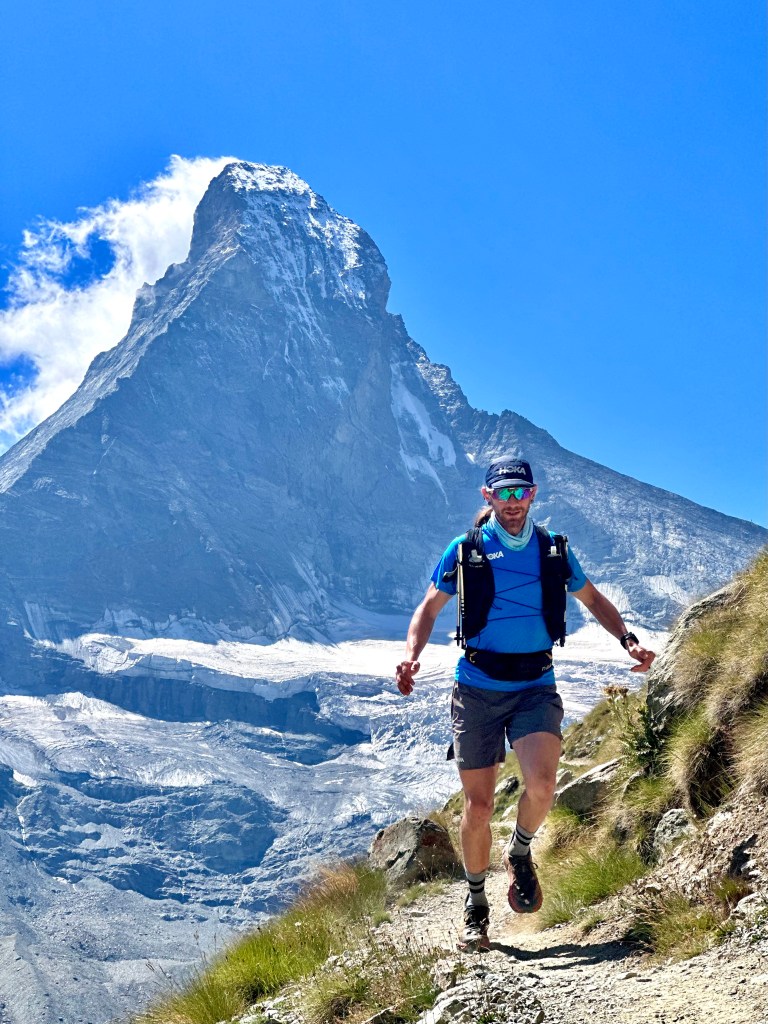
 Well, my wife and I took two weeks of vacation in the Alps for our honeymoon before UTMB week so that has to be the highlight for me! We did a hut-to-hut trek along the Via Valais, ending at the Matterhorn. Last year we did the Trail Mont Blanc (over 6 days, not all at once!) and we got engaged on the last day. We live in California, so we’re spoiled for quality trails near us, but the history and geography of the Alps are unlike anything else.  

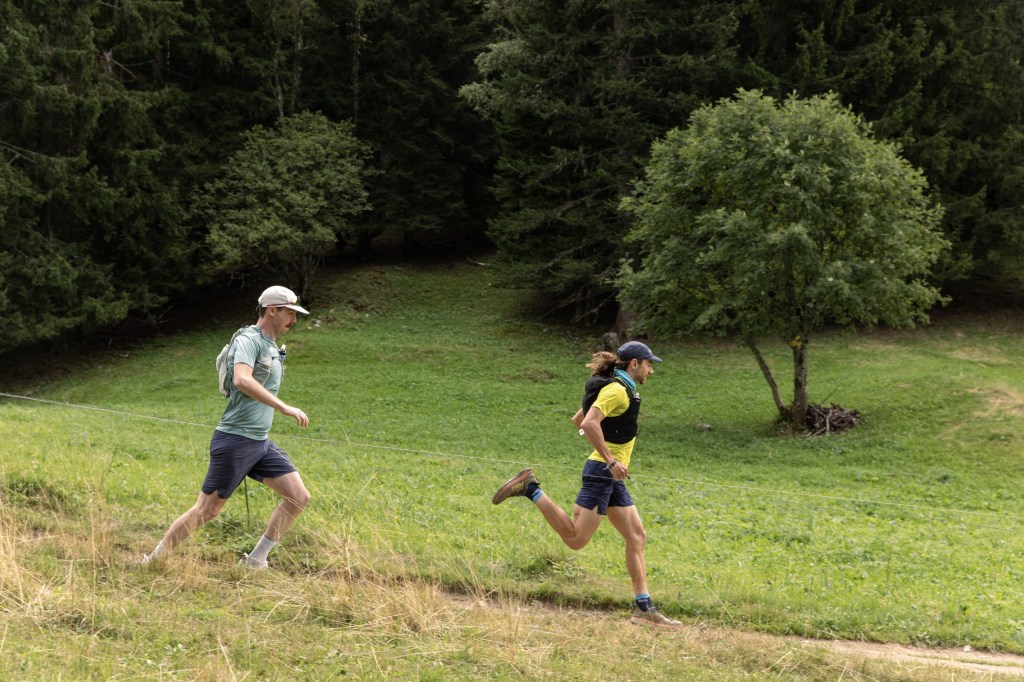
First, you’ve got the people and the services – you could be in the middle of a 15-mile run and come upon a small farm serving tourists as a make-shift café, with coffee and pastries you’d be satisfied to find in Paris. And then there’s the way the trails are built. Even in the more mountainous regions of the US like the Eastern Sierra or the San Juans, it’s hard to find the sort of steep sustained climbing they have in the Alps. Over here we like to build switchbacks, but over there they seem to prefer the direct route straight up the side of the mountain. 
HOKA has been a prominent presence at UTMB in recent years. How do you think the brand’s involvement has evolved, and what distinguishes HOKA from other brands in the trail running space? 

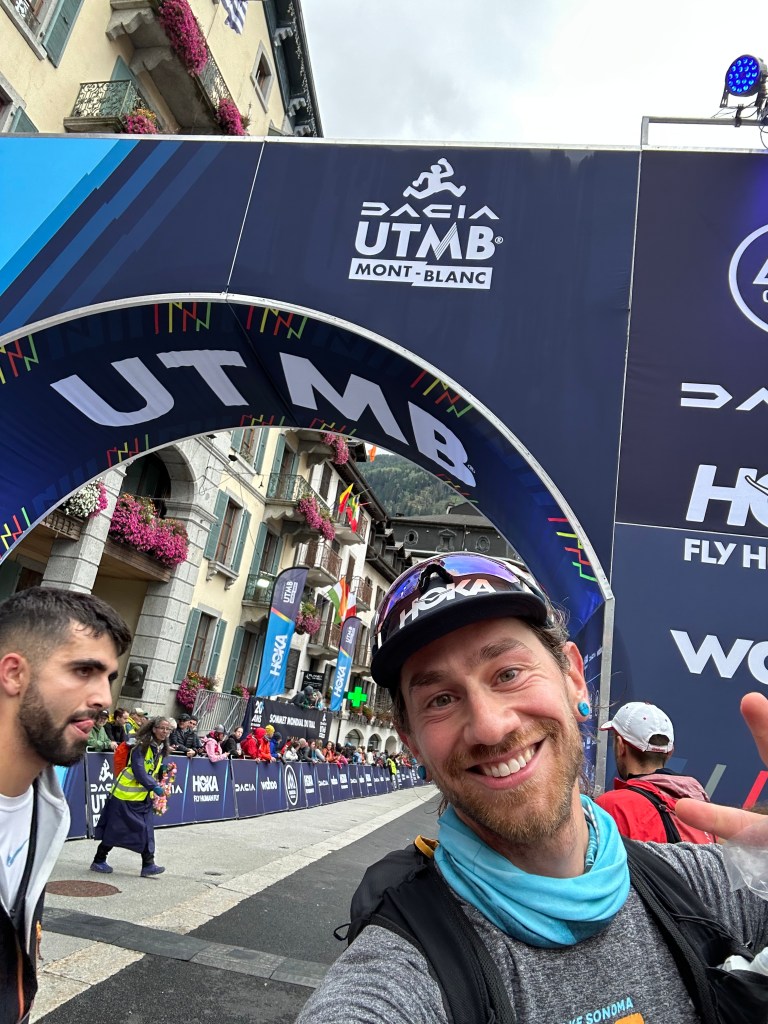
HOKA had a massive presence at UTMB this year: from the expo, to brand marketing around Chamonix, to the on-course activations, it was unmissable. But what the local community really appreciates is the ways we have built on existing traditions. Take the HOKA Fly Zone near Notre Dame de la Gorge – you know the one with the multi-colored light tunnel. There’s a history of the locals having a giant, Burning Man-esk bond fire in the gorge the night of the race, but that practice was discontinued. The bright Fly Zone is a safe alternative to that blaze that still brings light and energy to the runners’ first night on the trail. And it fits perfectly with the party scene on the climb out of the gorge. If you think the Fly Zone looks high-energy, you should have seen the kilometer long tunnel of people with smoke flairs, noise makers and boomboxes! One of the HOKA co-founders Christophe Aubonnet was there, and he told me he’s been coming up to this climb since the first years of the race, and back then it was just a handful of people. That’s what I think makes the HOKA brand’s involvement unique– this community is embedded in our DNA, and we are able to support them so authentically because of it.  

What role did innovation play in HOKA’s performance at UTMB this year? Were there any specific technologies or product developments that stood out? 

The HOKA Lab in Annecy can work with our athletes to develop products specifically for their needs and for this race. It was exciting to see some of the prototype shoes and apparel that Jim Walmsley raced in that could serve as the basis for future in-line products. Ultimately, the commitment to building the best tools for this unique and challenging terrain benefits the growing number of runners who are trying to tackle it. Those athletes showed their appreciation of our efforts by keeping HOKA as the most prevalent shoe brand at the race. 

UTMB is known for its challenging courses and unpredictable weather conditions. How did HOKA’s footwear and gear perform in these conditions, and how did it contribute to the athletes’ success? 

Fortunately, the weather for the OCC, CCC, and UTMB were clear, but I had a chance to test out some of our cold weather kits myself earlier in the week. I did the 40-kilometer MCC race on Monday and we had freezing rain that turned to snow on the high point of the course. Before heading to Europe, I’d ordered our ultralight waterproof jacket and pants on a whim and I’m so glad I did. I ended up wearing that jacket for most of the race and it was clear that it was developed with these conditions in mind. Not only was it breathable and completely waterproof, but it was so lightweight and packable compared to any other jacket I’ve owned that I had no qualms about carrying it even if I wasn’t sure I’d wear it the whole time. That same quality and thoughtful design is evident in all the new apparel I’ve had the pleasure of testing, as it’s been in our shoes for many years.  
HOKA has a strong roster of sponsored athletes who compete in events like UTMB. How do these athletes contribute to the brand’s success and reputation? 

The roster of athletes on our team are not just competitive, but they are pillars of the trail community. That is clear in the crowd reactions at the finish line as well as in the comments on their social media posts. From new-signing Helen Mino Faukner, who finished 3rd at CCC, to the electric reactions to Jim Walmsley’s historic UTMB win, the athletes we support are fan favorites. If you want to get a better sense of who these runners are, I’d highly recommend listening to the race coverage from the Freetrail podcast which gave in-depth interviews of many of our athletes throughout the race week.  

UTMB is not just a race but also a gathering of trail running enthusiasts from around the world. How did HOKA engage with the trail running community during the event, and what kind of feedback did you receive from participants and fans? 

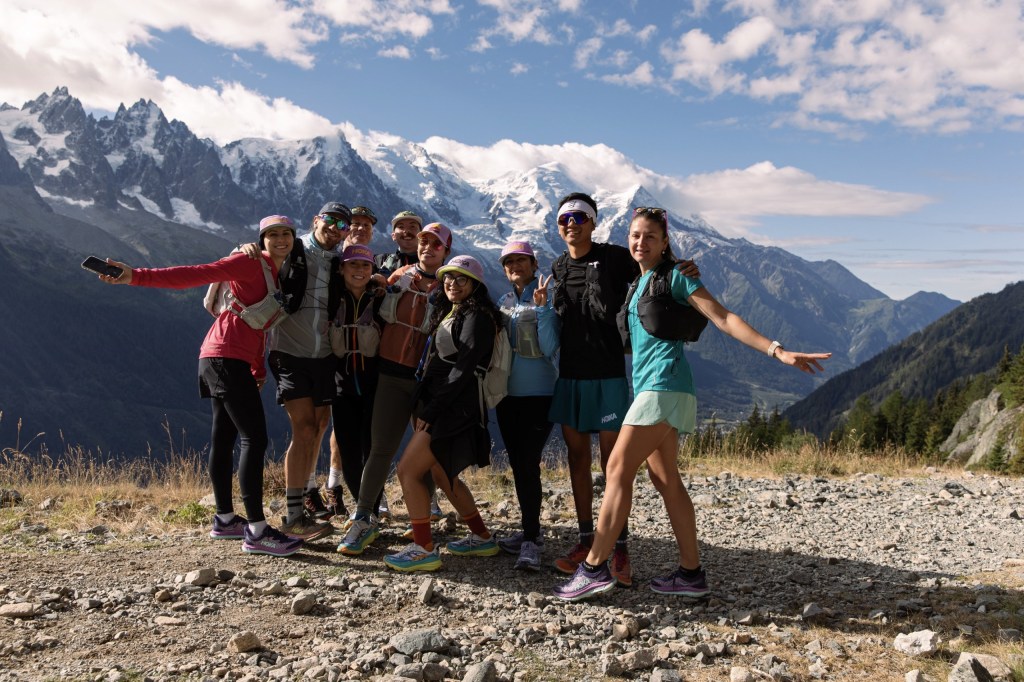
What’s incredible about UTMB week is how many people come out to Chamonix who aren’t racing, but just want to experience the atmosphere. Two of my friends from the Bay Area came over, just to hang out and watch the races. HOKA showed up for these enthusiasts as well as the athletes racing. We had a morning group run with over 200 participants, including some of our elite athletes. Our expo space provided demos of a wide range of trail shoes, and the opportunity to customize shoe purchases with airbrushed names. And we provided even more exclusive experiences to our retail partners, including a tour of the HOKA Lab and the first-ever party at the Aiguille du Midi gondola station. From what I heard, people loved these activations, and I have no doubt even those who haven’t run in HOKA will be considering the brand in a new way.  
Looking ahead, what does the future hold for HOKA at UTMB? Are there any new initiatives, partnerships, or strategies that you can share with us? 

The activations our European team brought to the race the past couple of years really raised the bar, but as UTMB grows in prominence there’s pressure to continue innovating to stay on top. Next year’s event presents opportunities to activate around the launch of the new products and an ever-deepening athlete roster and to create more premium experiences for runners. I’m not aware of any specific plans yet, but for anyone lucky enough to be there it’ll be as impressive as always.  

UTMB is just one of many prominent trail-running events globally. How does HOKA plan to continue its involvement in the trail-running community and maintain its presence at these events? 

Trail running is a rapidly growing part of the sport and HOKA has the strongest reputation in that community. But as Trail gains prominence, other big brands are trying to close on our advantage. This desire to win with trail was evident from the activations these brands had in Chamonix this year. However, being the official sponsor of the race series gives us a clear advantage both at UTMB Mont-Blanc and in the ever-growing number of UTMB events around the world. The UTMB World Series is only a couple of years old, but it already has 38 events on six continents. The challenge for us is to bring the authenticity and commitment that was on display at Mont Blanc to every one of these unique markets. With the strength of our global marketing and distributor teams, we have a way to use these aspirational events to continue positioning HOKA as the best product for not only ultra trail runners, but anyone who wants to explore their limits, adventure further, and experience the joy of movement.  

How has working for HOKA impacted your own passion for running? 

I was a runner before I started working for HOKA, but this job has introduced me to so many more outlooks on the sport. One of the biggest impacts for me personally is the way we work to create a more inclusive environment for runners with our products and through our marketing has expanded my own horizons. One way this manifested at UTMB Mont-Blanc was that our PR team brought a diverse group of media and influencers to Chamonix to expand how the event is covered. I got to spend a few days exploring with them and felt like I was able to see the event week with fresh eyes. There’s still a long way to go to make these spaces, and running more generally, safer and more inclusive for all runners, but being able to contribute to that mission has been one of the most personally meaningful parts of my work here.  

It’s a significant achievement for HOKA to have a sponsored athlete win UTMB. Can you tell us more about Jim Walmsley’s performance and how HOKA supported their journey to success at this prestigious event?  

Jim has displayed his singular commitment to running since he first broke into the ultra-scene at Western States in 2016. During those early years, he stayed in a California friend’s garage so he could become familiar with the course. Now he’s a bigger name and he’s got better accommodations, but he’s still fully committing himself to audacious goals like becoming the first American man to win UTMB Mont-Blanc. With the support of HOKA, he was able to live in France to train in the Alps, a change he’s cited as essential to his breakthrough performance. Jim also worked closely with Christophe at the HOKA Lab in Annecy, racing and training in prototype shoes and apparel. Everyone knows what a strong runner Jim is, but he is also a total gear nut. There’s a symbiotic relationship with his passion that can help inform better products for all runners and keep HOKA at the forefront of innovation.  
Behind the Scenes of ‘Art of Kindness’ Week: A Q&A with Anne Spangenberg

As we shed light on the impactful “Art of Kindness” week, we’re reminded of the power that emerges when a company rallies around the ethos of giving back. Don’t miss our Q&A with Anne Spangenberg, where we gain insights into her perspective on the “Art of Kindness” week! Her leadership, much like the heart of this endeavor, exemplifies the remarkable influence individuals have in shaping a commitment to community involvement. As we celebrate this dedicated week of giving back, let’s draw inspiration from the authentic stories and experiences born from this initiative, propelling the momentum for positive change within our company and beyond.

Art of Kindness aims to inspire and encourage acts of goodwill. As a leader, how do you plan to personally participate and inspire others within our organization to get involved during this week? 

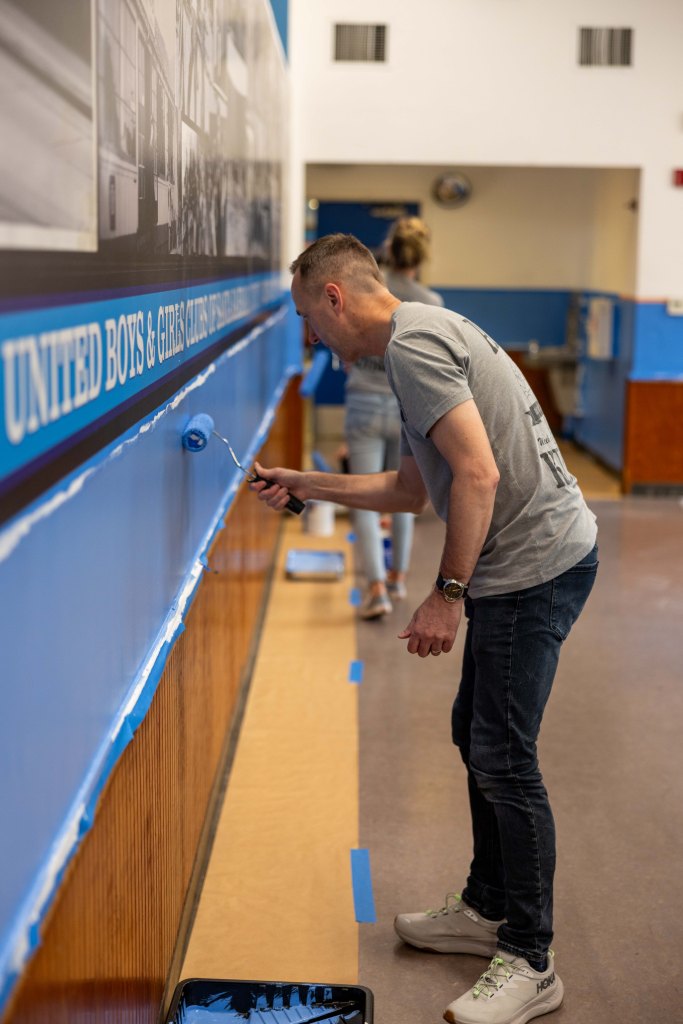
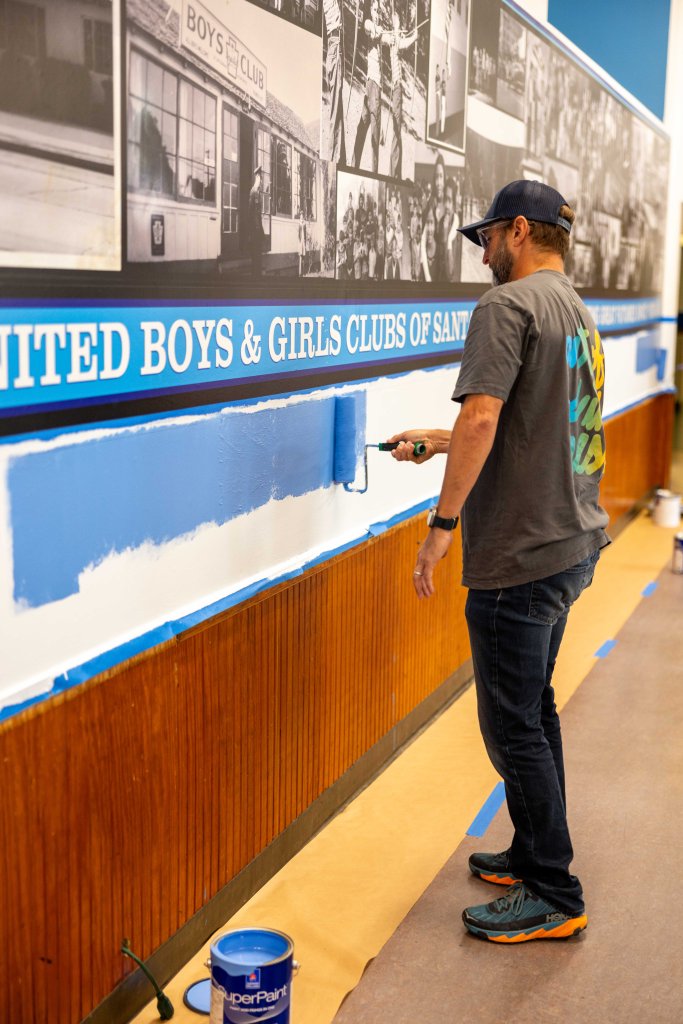
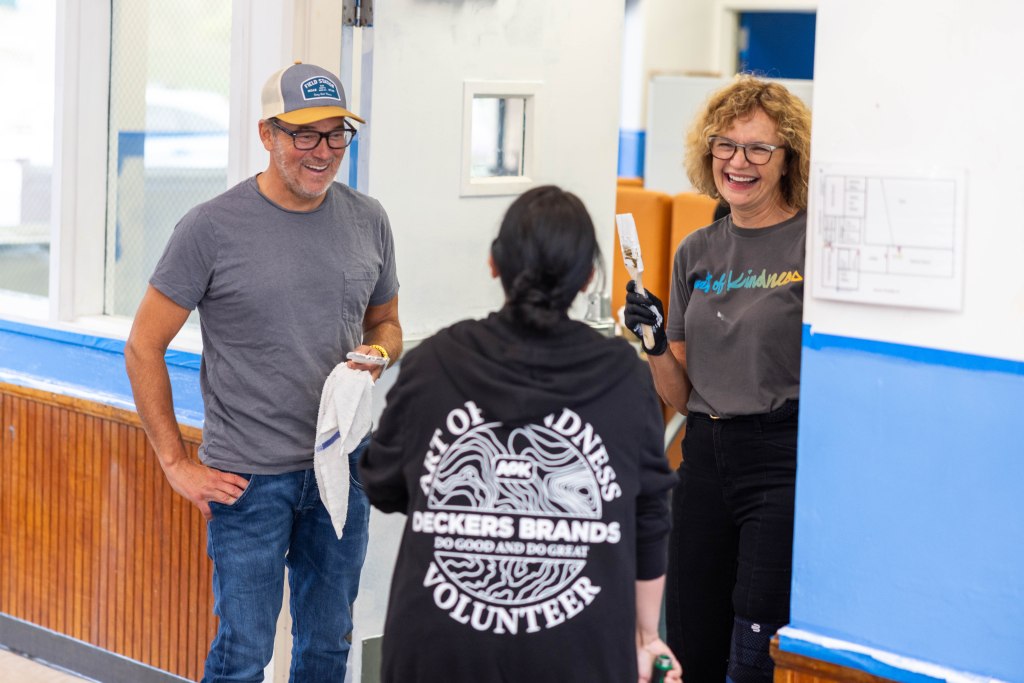
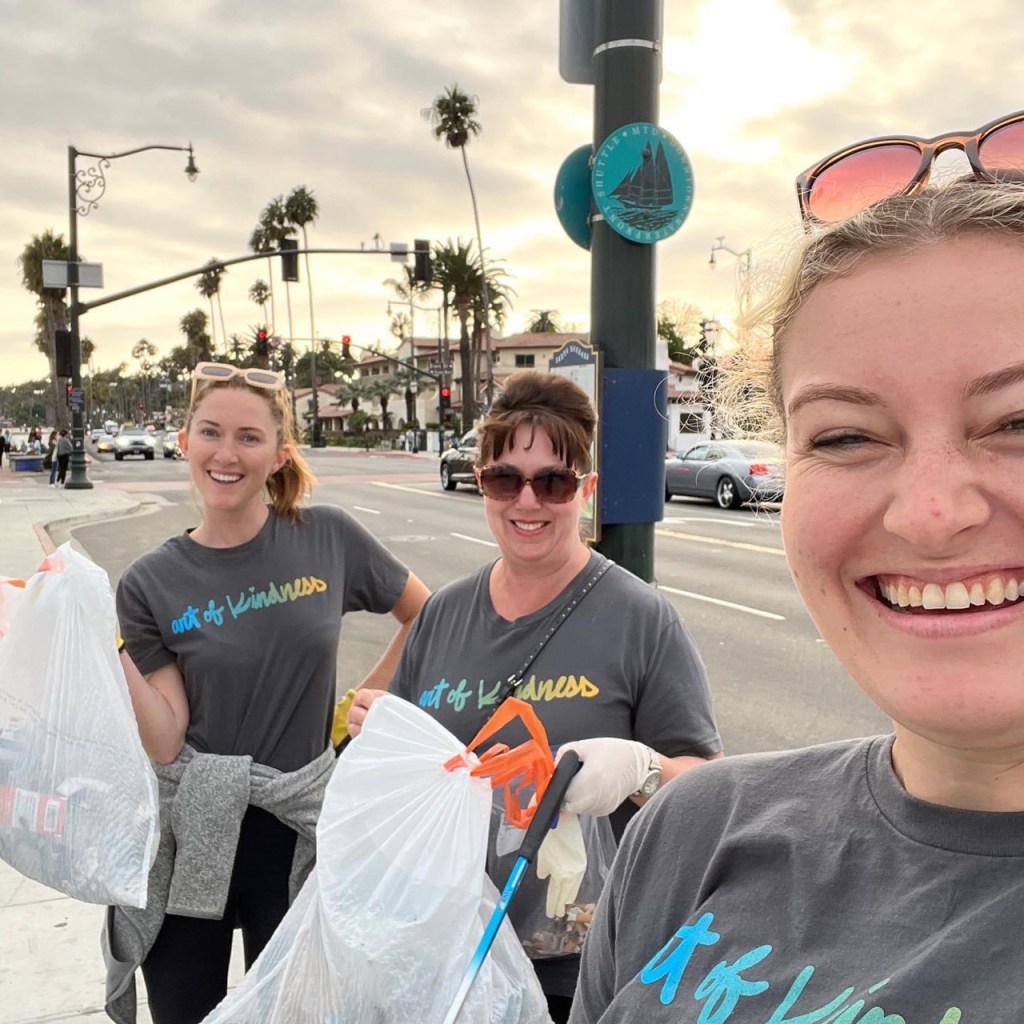
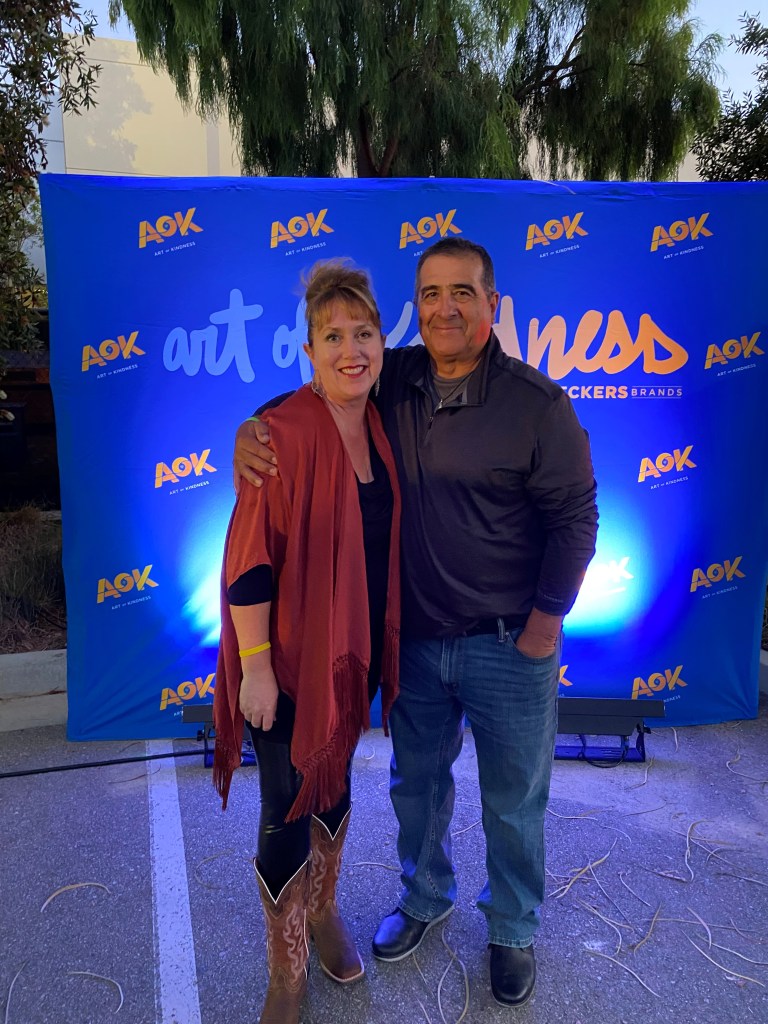
I am volunteering twice during the week, starting my week on Monday at the Eastside United Boys & Girls Club with my ELT partners and ending the week participating in the Santa Barbara Bucket Brigade with my team and my niece Claire, who is coming down from San Francisco to experience both AOK week and our 50th Anniversary party!  

I’ll be sending out messaging sharing my plan with the team and encouraging each and every team member to find the time to contribute in a way that is meaningful to them.

What does Art of Kindness mean to you? How does this initiative align with our core values and mission? 

I was drawn to the community spirit and positive energy of Deckers through this idea of “Do Good and Do Great.” I love this week of focus on giving back to each other and the community through a range of projects across the globe.  I also love that there are both virtual and in-person opportunities and that we are flexible enough as an organization to understand that the week can be extended if necessary given team members’ personal commitments and needs.

During the “Week of Art of Kindness,” we’re focusing on volunteerism and community support. How do you see this initiative contributing to team cohesion and employee satisfaction? 

It is so satisfying and so much fun to see the impact you can make with hands-on volunteering and community support as a group.  Spending time with teammates who you may know very well and see every day, and maybe some you know a little less well, allows you to view them in a different light and experience their gifts and capabilities in new ways. Last year during Bucket Brigade, I learned so much about people through the stories they shared. I loved hearing what they loved about the parks we were cleaning up, and why those parks mattered to their families and even the awesome dogs they brought along!   

Giving back to communities can take various forms, such as volunteering, donations, or skills-sharing. How do you believe our company can leverage its unique strengths and resources to make a meaningful contribution? 

We can leverage our unique strengths and resources to make meaningful contributions by allowing our team members to let their passions guide their impact.  I appreciate the fact that there is no one set model for contribution.  We are encouraging the time off to volunteer – but you can choose whether to do it individually or as a team, and to volunteer for something that is meaningful to you or that you want to learn more about.  It’s less about what you do and how you do it, and more about showing your care in your own unique way for others and your community.   

I worked for a company many years ago that insisted that we support a specific large charitable organization with money.  Their heart was in the right place, but it felt much less personal and authentic than my experience with Deckers.

Community initiatives often provide valuable opportunities for employee development and growth. How can our engagement in Art of Kindness enhance employee skills and leadership capabilities? 

There is so much to explore here.  These one-time experiences can lead to a lifetime of contribution and development.  If you are volunteering for something that you are curious about, that you want to go deeper into, you can choose something that will allow you to share your unique skills with others, or you can choose something that you want to learn about that will allow you to build skills in a new way.  When I worked at Nike,  I was part of a group of Leaders sent to the Portland Public Schools to help their Principals build strategic keynote decks. These decks were built to request funding, lead teacher initiatives, and drive more impactful communication with their communities.  It’s funny to think about volunteering to make a strategic presentation (since we all would love fewer meetings!) but to the school’s community, we were creating magic and valuable support.  

Beyond the “Week of Art of Kindness,” how can we ensure that the spirit of giving back becomes an integral part of our company culture and is sustained throughout the year? 

We talk a lot as a team about “vacuuming our own house” – which essentially means that Kindness begins with each other and in our own home (or office!).   I see this spirit of giving back and kindness which we focus on during this week as nurturing those seeds of gratitude for what we’ve been given, appreciation for each other and our community, and care for the planet that extends to what we deliver to each other and our communities year-round.  

The Heart Behind Art of Kindness: A Q&A with Michelle Apodaca

In celebrating Deckers’ 50th year, we honor those who embody our values. Michelle Apodaca, with 18 years at Deckers, exemplifies dedication and our spirit. Her impact, from founding Art of Kindness to upholding our company value “do good and do great,” is undeniable. Michelle’s journey reminds us that a company’s heart lies in individuals who live its values, inspiring us all at Deckers Brands and beyond. 

Deckers is celebrating its 50th anniversary. How does it feel to be a part of a company with such a rich history and longstanding commitment to making a positive impact on the world?  

I’m incredibly proud to be a part of a company that has such a rich history, one that is truly an inspiring entrepreneurial story of two young UCSB students who had a dream to start their own business and likely never imagined it being what it is today. I have been fortunate enough to know one of our founders personally and have heard so many stories of struggle and victory. I thank Doug Otto all the time for his relentless efforts to ensure Deckers was successful, despite many hiccups and bumps along the way. He got it to the point where he could hand it over and let it grow from there. We wouldn’t be here today without his passion and commitment. I think the longstanding commitment to making a positive impact on the world was inherent in the culture of Deckers from the start and that’s what has inspired me to keep doing what I do. Doug’s commitment to ensure Deckers’ continued success was evident when he selected Angel Martinez to take the helm. Under his leadership the company grew from just over $200M to $1.8B. Then Angel, also committed to and passionate about Deckers’ continued success, passed the baton to Dave who has successfully led us to where we are today and guiding us into the future. I’ve been fortunate to have been a partner to all these great leaders in our company’s history and have also shared their commitment to making a positive impact on employees and the world. 

Can you tell us about your journey at Deckers and how you went from being an executive assistant to the Director of Deckers Gives?

I was hired in May 2005 as the Executive Assistant to the President & CEO at the time, Angel Martinez, as well as our Chairman and Founder Doug Otto. I had never heard of Deckers despite being raised in Santa Barbara, so my interest was piqued. I had no idea that this would be a life-changing interview for me. During my interview, I felt an instant connection and chemistry that drew me in. I had found a company that valued my skills and offered a healthy work environment. I had been looking for a company and career where I was respected and allowed to shine. I was immediately considered a partner in making Deckers a great place to work and my opinions mattered. I’ll admit, In the beginning, I was walking on eggshells in disbelief that this was true but after a while, I realized, I could be me and make a solid contribution. Being in the CEO and Chairman’s offices, I was responsible for our Board of Directors, which was new to me as I had never worked for a public company prior to Deckers. I was exposed to an incredible amount of information and the learning curve was steep, but I learned quickly the cadence of public company financial reporting and governance around the Board. We have had remarkably intelligent Board Members, from whom I learned a lot and with whom I still value and respect those relationships today. I was also exposed to the world of investor relations and learned what was important about our business and what set us apart from other companies. In addition, our President & CEO had a strong desire to have Deckers form a robust giving program that also encouraged our employees to donate. He wanted oversight of our giving program so that became part of my job. I had built some relationships with local nonprofits in my previous employment but nothing like what was to come. Over the course of my tenure at Deckers, I’ve held three roles simultaneously until the last five years when I stepped away from the C-Suite to focus on Deckers Gives. My role with the Board is also now being transitioned freeing me up to further focus on our global Deckers Gives program. It’s been a natural progression for me to this role as Director, Deckers Gives and one I’m passionate about. It’s not an easy job as we always want to do more, but one I take seriously, and I am proud of the impact we make with each of our brands and as a company.

How has your personal journey at Deckers, from an executive assistant to the Director of Deckers Gives, influenced your perspective on the importance of corporate philanthropy and employee engagement in giving back to the community?

The last 18 years have been an incredibly influential journey for me. Over those years, I’ve sat on nonprofit boards, many committees, spoken on countless panels, and have served as a board member of our local Santa Barbara South Coast Chamber of Commerce, as well as an advisory member of our local Business Giving Roundtable. These associations, as well as spending the time to build relationships with the nonprofit partners we have, have rounded out my learning. Aside from building the relationships that I have today, being part of the Business Giving Roundtable was probably the most influential experience. Each of us was able to share our respective company’s giving programs, influence and assist other companies to form giving programs, if they were absent of one, as well as bring in speakers on corporate philanthropy which enhanced the discussion of the importance of corporate giving. Without corporations’ support, nonprofits are then solely reliant on the generosity of private foundations and wealthy individuals. Corporations employ people and often those very people are reliant on the nonprofits that serve the community. I view it as an obligation for corporations to give back, knowing that they are profiting from the communities in which they operate. I have many friends who work for companies that have no giving program or don’t promote volunteering and they are disheartened. They all wish their companies did what Deckers does. It’s a great sense of pride for our employees that Deckers actually lives our value of “doing good and doing great” and encourages them to do so as well. This is our differentiator and one that draws people to want to work at Deckers. It’s the foundation for our culture.

The Art of Kindness event seems to be a cornerstone of Deckers Gives. Could you share with us how this initiative started and how it has evolved over the years?

In 2019 Adam Druckman and I took a trip back to New Hampshire to visit our friends at Timberland and to take part in their service event “Servapalooza” based on our CEO Dave Powers’ recommendation. He wanted us to experience what he had experienced during his days at Timberland. He was very proud of that service aspect while he was there and wanted to create it also at Deckers. While we had volunteer events, it wasn’t exactly what he knew we had the capability of doing. Adam and I left that visit so inspired and full of great ideas and how we could “Deckerize” a similar experience. In early 2020, Adam Druckman, Ben Wahler and I were discussing creating these company volunteer events on our own instead of continuing with the Backyard Collective, which we had done in previous years. We wanted to better engage our employees, keep it more local, as well as make it truly Deckers. Noodling on what service meant to our company, the conversation centered around kindness. After more conversations around branding our own service events, Adam coined “Art of Kindness” and it was born. April 2020, we had our first Art of Kindness event scheduled with 8 different in person projects coordinated around town for our entire company to volunteer. When COVID hit, we had to cancel those plans and rethink how we could still engage our employees. There were many obstacles along the way, yet I found many virtual opportunities that our team could still feel engaged and feel like they were making a difference. Once it opened up that we were able to come back to in person volunteering, and employees felt comfortable doing so again, AOK week has become a highly anticipated week. 
As the Director of Deckers Gives, how do you inspire and engage employees to participate in the Art of Kindness event? What strategies have you found most effective in driving employee involvement?

Art of Kindness week is one that our employees now know the outcome. They know how they will feel after giving their time and energy to those who need uplifting. This is the driver of AOK, the mental boost we all get from living with purpose and seeing beyond ourselves. Our employees know that service is a cornerstone of our culture and often they haven’t been exposed to that before at previous companies. They are excited to participate, especially after experiencing their first volunteer experience. Strategies that are most effective in driving engagement really come from engaging the support of our Executive Leadership Team and upper management. By participating themselves as well as promoting participation across their teams, we see a big lift in participation. I also find that there is power in numbers, wanting to connect with colleagues in person, as well as finding fun things for them to do in our community.  There is a fun and friendly competitive nature around AOK to see which team can achieve and log the most hours, but from the employee reflections, I think the greatest measurement of engagement, although intangible, comes from how they feel after volunteering. They catch “the bug” and want to do it again and again or more the next AOK. The flexibility to volunteer during the week whenever it works for them also leads to greater participation. There is also the freedom and encouragement for any employee to jump in and lead activities. Those are truly our AOK Champions and rally fellow employees to join.  
Corporate social responsibility has become increasingly important to employees and consumers. How do you ensure that Deckers Gives remains relevant and addresses the evolving needs of the communities it serves?

Employees want to work for companies who are good corporate citizens. It’s a new generation of the workforce who says this is incredibly important to them. Who they align with personally is seen as a direct reflection of who they are. Consumers also want to ensure that they are supporting companies that make great products but who are socially responsible. The Deckers Gives program, along with the other two pillars of our ESG program – our sustainability and compliance initiatives and DEI efforts, is directly addressing that and both our employees and our consumers see that. We are a company that draws people in due to our values and outward display of responsibility. 

Tell us about a particularly challenging situation you encountered while organizing an Art of Kindness event and how you and your team overcame it to achieve success.

The greatest challenge was getting AOK off the ground initially. While COVID sent us all home and apart and took the wind out of our sails for a bit, I took the time to figure out how to continue to engage our employees to volunteer together while everyone was physically separated. By offering some virtual opportunities as well as encouraging employees who weren’t on any lockdown to do simple walks around the neighborhood to clean up, we were able to come together as a team and still feel like we were doing good. Our initial AOK logged over 2600 volunteer hours. I considered that a huge win considering the year prior we reported just over 1,000 volunteer hours. 

As a leader in corporate social responsibility, what advice would you give to other companies looking to establish or enhance their own giving-back programs?

My advice to other companies looking to establish or enhance their own giveback programs would be to first find someone passionate about being a servant leader – setting the example of being in service to employees as well as in service to nonprofit partners. You must have a heart for this and an understanding of what this means to your company. You need a leader to focus on the program and not just leave it up to a committee of people who may come and go. Each company’s why” could be different, so that should start at the Board and Executive level to determine why they would start a program. Is it to impact the lives of your employees and your company culture or is it to solve a need like hunger or housing that makes sense for your business? Or is it going back to being socially responsible corporate citizens, an obligation that the company feels a need to start to give back? All of those are determining factors of why a company would establish a program and fuel the fire to keep it going. For some companies, it makes sense to give only in-kind donations and for some, it makes sense to only give grants. Some companies may simply only be able to implement having their employees volunteer or mentor others. It can be small or it can be a robust program but, whatever seems to be the best fit for your company, just do something! 

How does Deckers Gives integrate sustainability principles into its volunteering efforts and charitable initiatives?

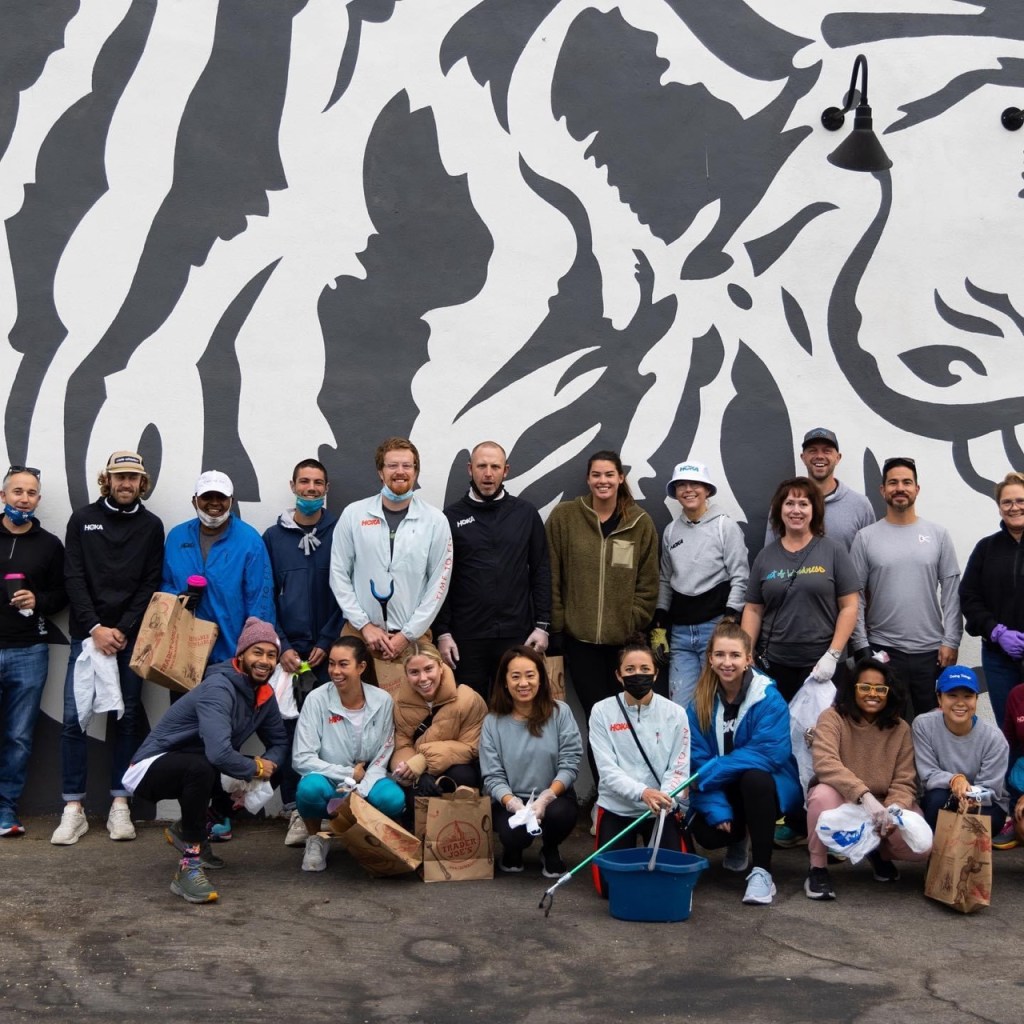
For every AOK, we always promote beach, creek, or river cleanups, neighborhood trash pickup or some type of restoration project. Environmental projects align with our company’s values, which are aligned with our UNGC goals and bleed into our charitable giving. One of the pillars of our charitable giving program is environmental impact mitigation and our brands, namely UGG, Teva and Sanuk, have strong partnerships in that area. We have partnered with Surfrider Foundation several times for these cleanups, but often it’s our employees who gather their teams for an outing to clean up around their communities. All are very proud of the haul they bring in and so proud when passersby thank them for cleaning up. Our employees may just inspire someone watching to do the same. In addition, we always recommend employees donate gently worn footwear and clothing to extend the life of those items to avoid ending up in the landfill, and instead helping someone in need.

What are you most proud of when reflecting on the impact of Deckers Gives and the Art of Kindness event on the communities and causes it supports?

I am most proud of the impact that our giving program and AOK weeks have had on our company’s culture. Our company’s culture is my passion as I truly believe that sets us apart from other companies. It’s one of the things that makes Deckers a great place to work and enriches the lives of our employees, as well as those in our community who we impact with our service. Culture is what keeps people at Deckers and what draws new employees to come to work at Deckers. Companies can certainly have a negative culture as well, but when the cornerstone of your culture is based around service and kindness, there can only be positive coming from that. I’m also proud of the recognition and countless awards that have been bestowed upon Deckers for the great work we’ve done. We are seen as leaders in our communities for giving back and that lends to greater employee pride in our company. One can certainly argue our employees are happier and more productive due to the pride in our company and the part they play in our giveback.  We have made great impacts on organizations in our communities during Art of Kindness with beautification projects, as well as donating products to those in need and issuing grants to enhance and support their programming. 

As we celebrate Deckers’ 50th anniversary, what legacy do you hope Deckers Gives and the Art of Kindness event will leave behind in the years to come?

The legacy I hope that Deckers Gives and AOK leaves behind is one that continues long after all of us and grows beyond our imagination. Our intention is to have our giving budget grow, as our company’s revenue grows. My goal is to have a formal Deckers Charitable Foundation as we evolve and grow to that level. My vision for AOK is to have our employees continue to lead events around the world. While we are growing our company and hiring employees outside of the Santa Barbara area, I believe that we can have hubs of employees all over the US and cities around the globe doing exactly what we are doing here locally. It’s beyond me and what I can do, but together we can do great things and leave a legacy of working together in purpose for future generations of employees at Deckers. Sounds cliché but it’s true. The legacy we are leaving regarding our partners and suppliers as they continue to join us each AOK has an incredible impact on the lives of their employees and their families. It’s truly a domino effect that can be felt and seen now but can easily turn out to be one of immeasurable impact. I’d love to have both our City of Goleta and City of Santa Barbara make proclamations of Art of Kindness weeks as well and thus inspiring other companies to join in with their employees. Then we know we’ve truly left a legacy to our local community and impacted thousands more lives. 
ON THE ROAD AGAIN with Adam Druckman

Celebrating Deckers’ 50th year as a company, we proudly acknowledge the individuals who embody our core values, as they are the driving force behind our success. Adam Druckman stands out as an exceptional example of such greatness, having dedicated an impressive 30 years to Deckers Brands. His unwavering commitment, unmatched dedication, and passionate spirit have not only propelled his personal achievements but have also significantly influenced the fabric and triumphs of our organization. Join us as we delve into Adam’s remarkable journey, gain insights from his invaluable experience, and celebrate his outstanding contributions that have helped shape an exceptional legacy at Deckers Brands. Together, we prove that great people are the cornerstone of a truly remarkable company.
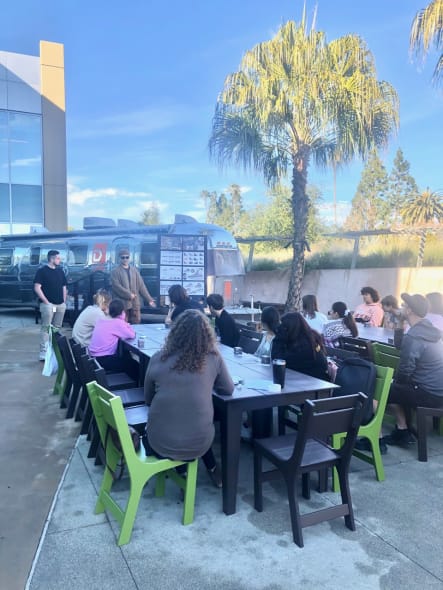
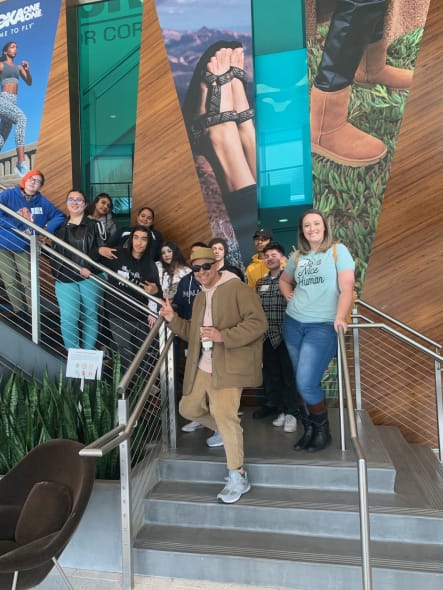
Adam, congratulations on reaching your 30th year at Deckers! It’s truly an incredible milestone. Looking back, how has your journey at Deckers transformed you both personally and professionally?

On a personal level, my tenure at Deckers has impacted me profoundly. I met my amazing wife at Deckers, and we now have two incredible children. My list of lifelong friendships resulting from my journey at Deckers is dizzying, and my business travels have taken me from Bali Indonesia to Bern Switzerland, and countless places in between. Professionally, Deckers allowed me to find my calling, what a college professor of mine termed, a “charismatic vocation.” As a kid, my dad always told me to make my living doing what I enjoyed because I was going to do a lot of it. Hindsight, his words are extremely wise. Deckers has been a vehicle that allowed me to do what I love. The last 30 years have felt more like a calling rather than a job and I feel incredibly blessed and grateful. 

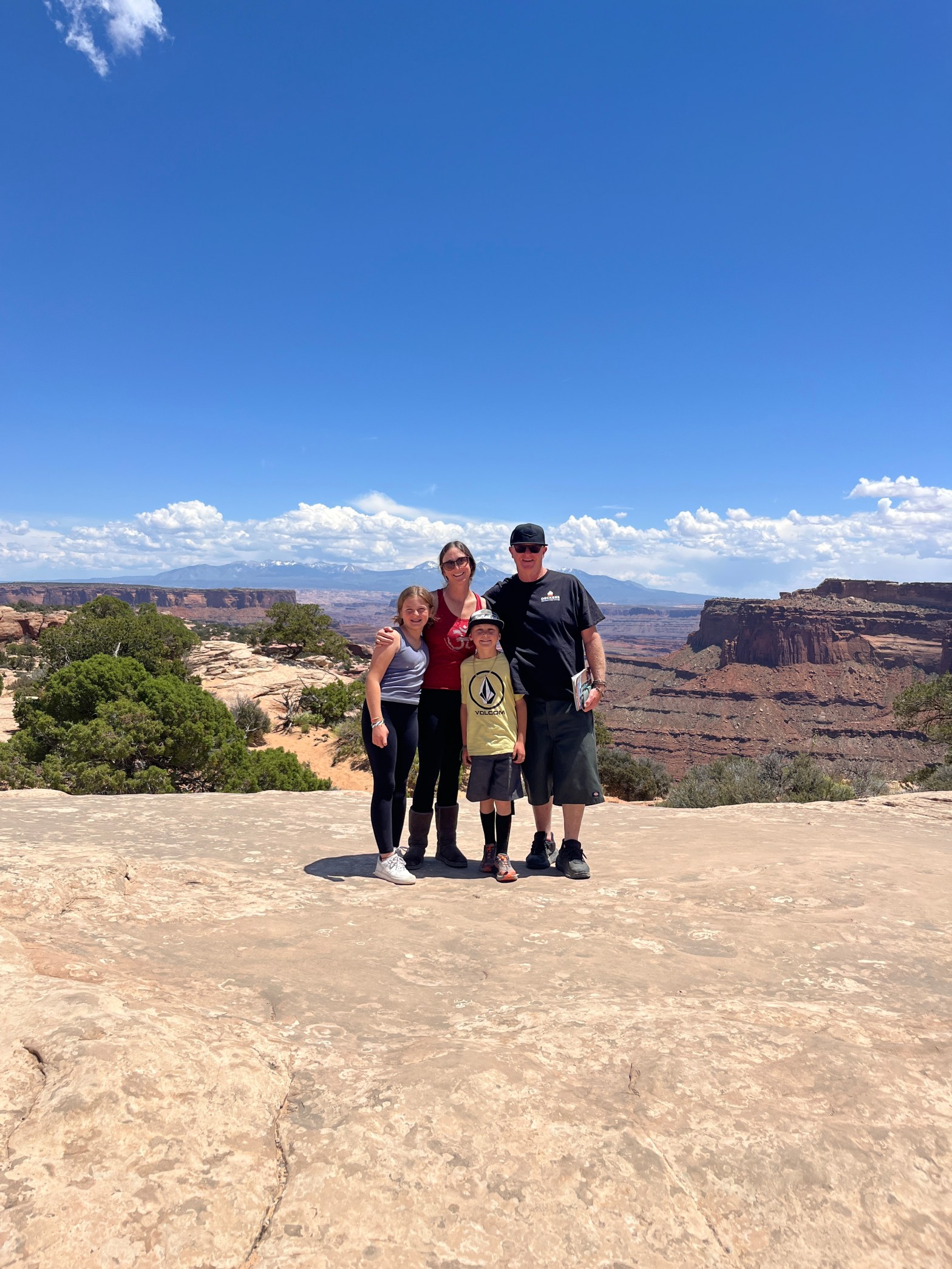
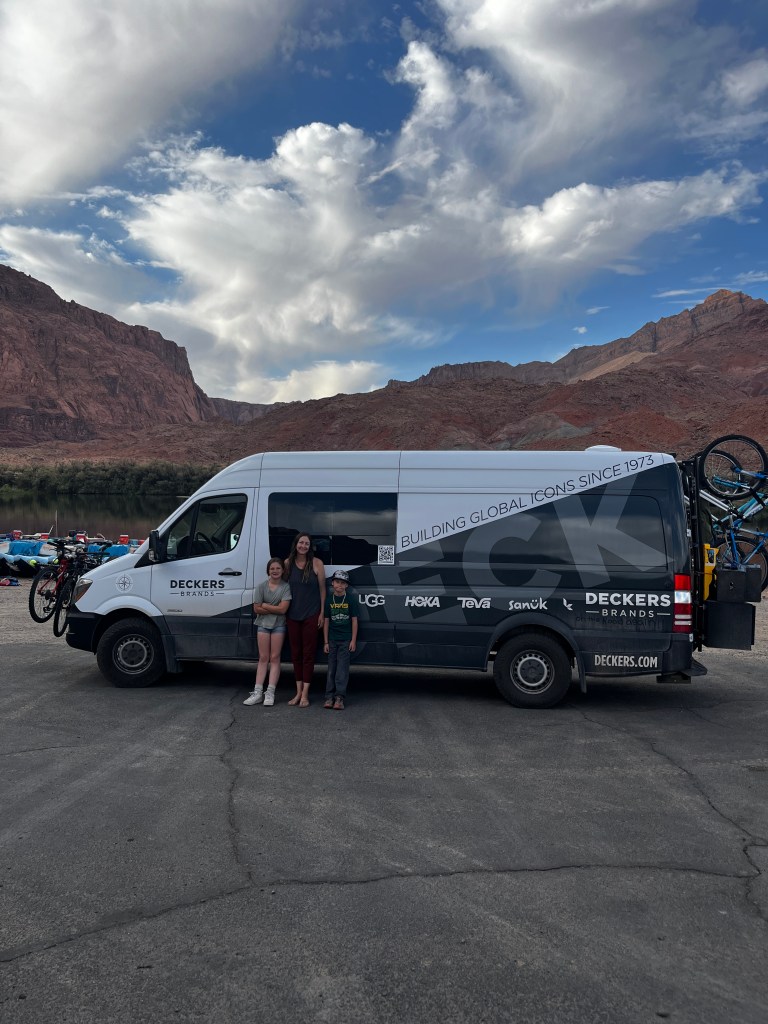
Adam’s recent road trip with his wife and kids.

Starting as a Tech Rep for Teva, you’ve come a long way to now leading corporate events like the Deckers annual party and managing the Deckers Production House studio. How do you feel about this progression, and what lessons have you learned along the way?  

I started at Deckers after spending 13 years working as a Grand Canyon River Guide. It is my guiding experience that taught me about event planning. My river time trained me to be self-reliant, but team oriented and to always approach my work with a service heart. Taking on the role of the original tech rep for Teva was relatively easy. I exchanged living on a raft for living in a van. I traded river time for highway time. I often refer to my 16 years with the Teva brand as the years I lived in my van down by the river! Those years honed my understanding of our customers, our retailers, and footwear design. The countless road miles, trunk shows, clinics, tradeshows, and live events endowed me with a visceral understanding of marketing and promotions. 

I’m most proud of two things I’ve done at Deckers; the DPH (Deckers Production House) and AOK (Art-of-Kindness). Codeveloping the Deckers Production House with Ben Wahler, Director of Global Comms has been a dream come true and I firmly believe the DPH has helped build the Deckers culture and has enabled Deckers to communicate with our teams worldwide using a single voice. I’m confident that the Deckers Production House will continue to evolve and provide Deckers Brands with a center of excellence for generations to come. I consider the Deckers Production House my legacy contribution to the organization, and I’m over the moon to be tasked with managing it.  

Secondly, I’m pleased to have come up with the name, “Art of Kindness” and I’m proud to have helped build that service event alongside Michelle Apodaca and many other passionate team members.  

Being gifted with the opportunity to curate annual celebrations for Deckers has been a huge joy and creative outlet.  

Here are three simple things I’ve learned during my time at Deckers, 

Budget, budget, budget. I say this jokingly, but it’s true, the first thing I always ask stakeholders is where’s the money coming from? Other important things I’ve learned along the way are: be flexible, pay attention to the details, set “world-class” as your standard, content is king, never stop learning, always ask what’s next, take chances, never be afraid to get your hands dirty and believe in yourself, but do for others. 

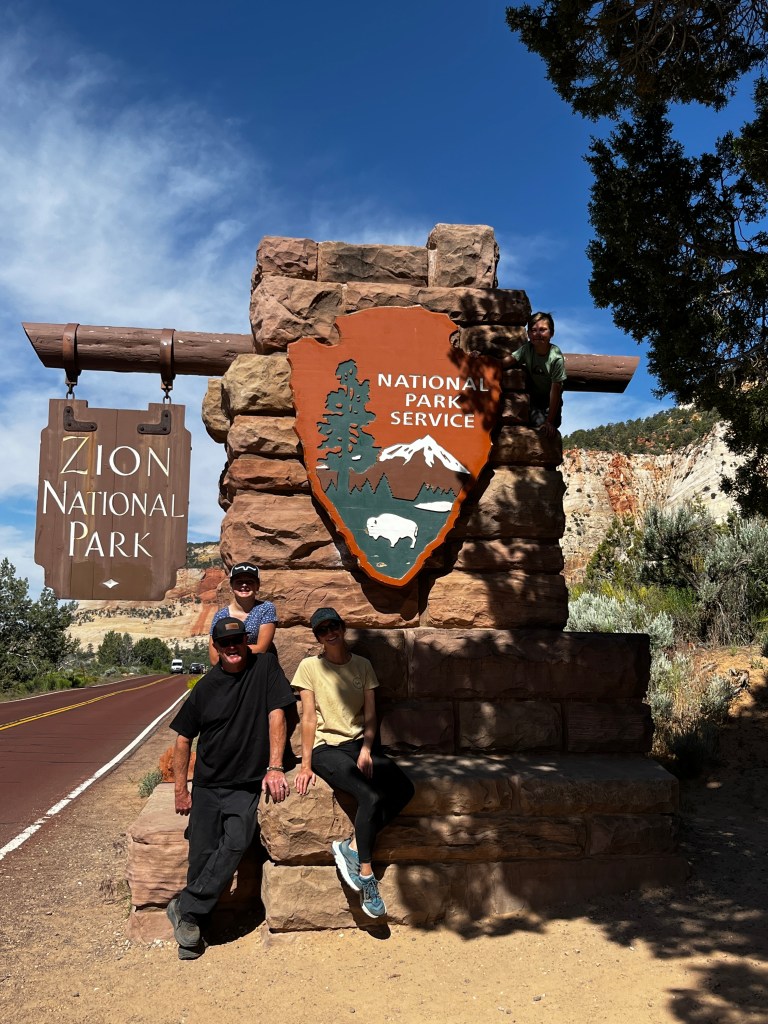
Adam and his family at Zion National Park.

As you reflect on your journey from driving a van as a tech rep to now embarking on memorable road trips with your loved ones, how do you see the importance of work-life balance and creating lasting memories outside of work?

I am doing my best as a dad to set a good example for my kids. I do not tell them to be a certain way I try instead to let them witness me being a certain way. I believe in maintaining a strong work ethic, so I work hard, and my kids see that. I am also a believer in being passionate about my pursuits whether they be work related or non-work related. Much of my life I have spent adventuring and becoming familiar with this world. My journeys have taught me respect and appreciation for this planet and the cultures that inhabit it. Road trips with my family are both a way to share how I lived much of my life but also a way to expose my kids to a diversity of landscapes as well as the infinite expressions of life experiences and lifestyles that exist. I role model work-life balance for my children by letting them see that work and life go hand in hand. I want my kids to see that life is work and work is life. I would love for my kids to learn that true balance comes from maintaining peace of mind no matter where you find yourself.  

Recently, you drove a van to Austin for the HOKA brand conference and then returned with your family, stopping at seven different national parks along the way. How did it feel to revisit that van-dwelling lifestyle, and what impact did it have on your family?

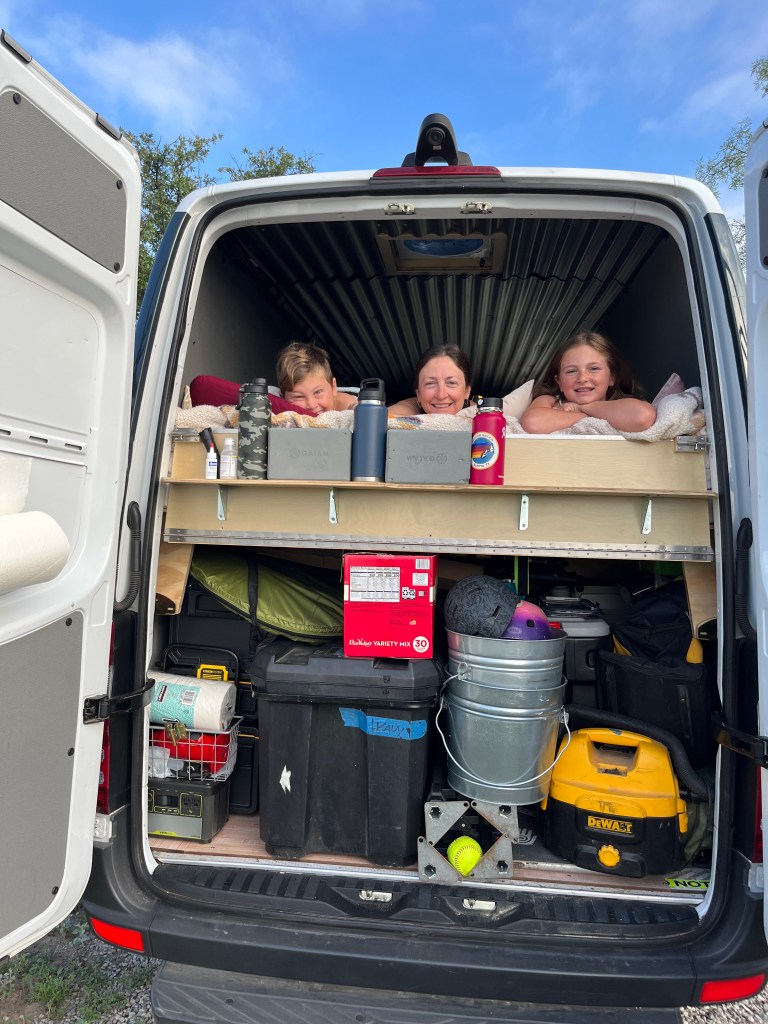
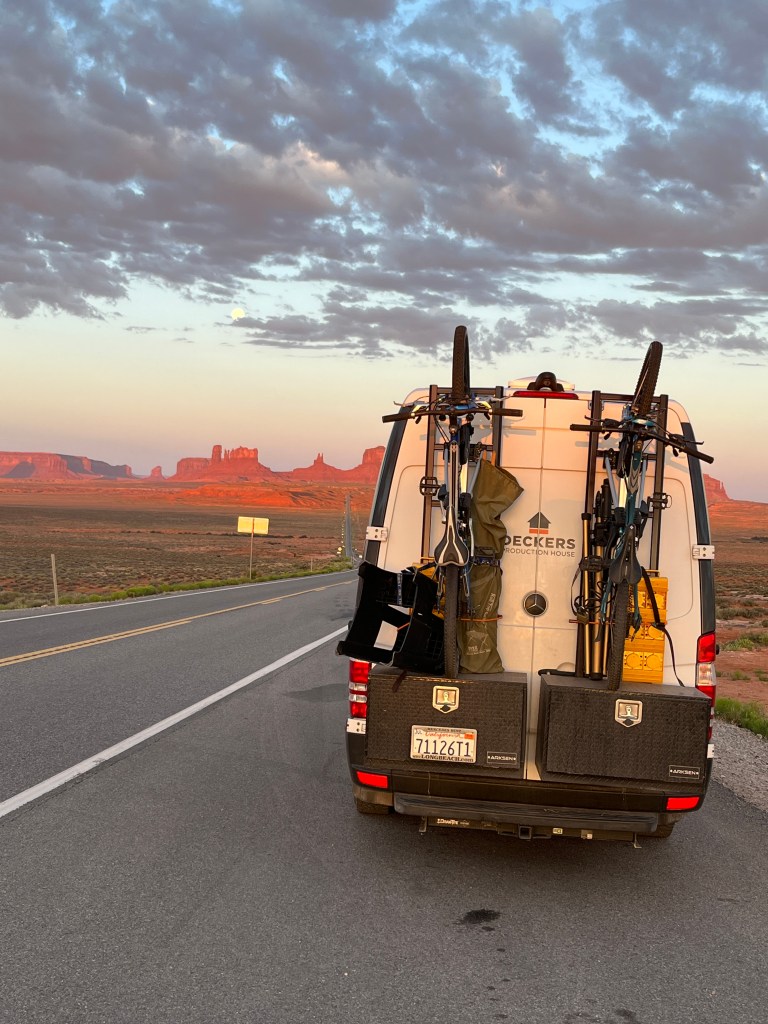
What a delight the entire journey was. Firstly, my kids got to see months of preparation because I personally outfitted the DPH Sprinter van with some comprehensive improvements. I did all the work in our driveway using my tools and knowledge. Secondly, I drove the van solo from Goleta to Austin full of gear for the HOKA Global Brand Conference. The drive afforded me some quality alone time and I had a chance to reconnect with my inner road warrior. Thirdly, and most importantly, my family flew to Austin, and we ventured into the unknown together. I called the trip the 50/30 Tour since Deckers turned 50 this year and I am celebrating 30 years at Deckers this year. My daughter called it the “On the Road Again Tour” since Dad and a promotional rig were back on the road. It was a magical trip packed with firsts for my kids. What a bonding experience it was and what a joyful way to celebrate our family and my 30-year career!    

Deckers’ 50th year as a company is a remarkable achievement, and it’s incredible to witness how the company has evolved and adapted over the past three decades. Throughout your tenure, you must have encountered various challenges and successes. Could you please share a particular story that truly exemplifies the spirit of Deckers and its dedicated employees?

Without question, the pandemic was the biggest challenge that I’ve faced during my 30 years at Deckers. Luckily, I had long been imagining a stronger content capture solution and virtual toolbox for Deckers. When the Covid avalanche hit, and we were buried with an endless list of unknowns, I set about making lemonade out of lemons. I worked hard to breathe life into the Deckers Production House Rotunda Studio in the ominous shadow of the pandemic. Luckily, employees from every corner of the company were willing to pivot and they quickly embraced the DPH Rotunda Studio as a virtual connectivity tool. Everyone stepped up to own their part and together we were able to keep our business strong.

Taking the Deckers van back from the HOKA conference in Austin, TX.

In your role leading corporate events, what do you find most fulfilling? How do you ensure that the events you organize align with the core values and culture of Deckers?

I am most fulfilled when I see my team’s efforts creating positive vibes. I love to stand in the shadows of a celebration and to watch our employees smiling and enjoying the moment because of all the hard work my team and I have invested in. It is moments like these that make all the hard work worthwhile.  

To stay aligned with the Deckers culture, I listen to feedback from opinion leaders, I make sure to keep our core values at the heart of the planning process and I create from a place of love and passion.   

On the road again.

As Deckers continues to grow and adapt to changing times, what advice would you give to new employees who are just starting their journey with the company?  

Speak up, ask questions, turn on your camera during meetings, take ownership, strive to do your job at a world-class level, and do your best to generate a service heart. 

What does it mean to you personally to be a part of Deckers, a company that has reached such a significant milestone, and how do you envision the future of Deckers in the next 50 years?

I do not want to sound like a broken record, but I feel blessed and grateful to be at Deckers. The business and life lessons gained from my years here are too many to count.  

I like to say that the future at Deckers is so bright we need to wear sunglasses. I genuinely believe massive success is on the horizon for Deckers. I personally hope to see Deckers hit 10 billion in annual revenue over the next 10 years. I think 10 billion will be small potatoes if you look out over a fifty-year period. I truly envy the young folks that will be here to celebrate 100 years of Deckers. I wish I could produce that party… 

Q&A with Angela Ogbechie

As we wrap up AANHPI Heritage Month, it is essential to recognize the inspiring individuals who bring their unique perspectives and cultural backgrounds to the forefront of the industry. Angela Ogbechie, Chief Supply Chain Officer, stands as a remarkable example of a leader who not only represents her Samoan culture but also embodies the principles of service, authenticity, and inclusivity in her role. We asked Angela some questions to hear more about her background and ethos. 

1.     As a Samoan executive leader at Deckers Brands, what does it mean to you to represent your culture and community within our industry?    

 It is an honor to represent my Samoan culture and community in any context. However, my promotion to the executive level, particularly with the title “Chief,” was truly impactful and quite emotional for me. Chiefs are a cornerstone of Samoan culture (or Fa’a Samoa—the Samoan Way). The Samoan word for chief is matai. As leaders of villages and extended families, the matai has a responsibility for not just the administration of the village, but also for maintaining respect, keeping traditions, and ensuring the well-being of their people. The matai title, while prestigious, is primarily about service and representation, not about power and position.  

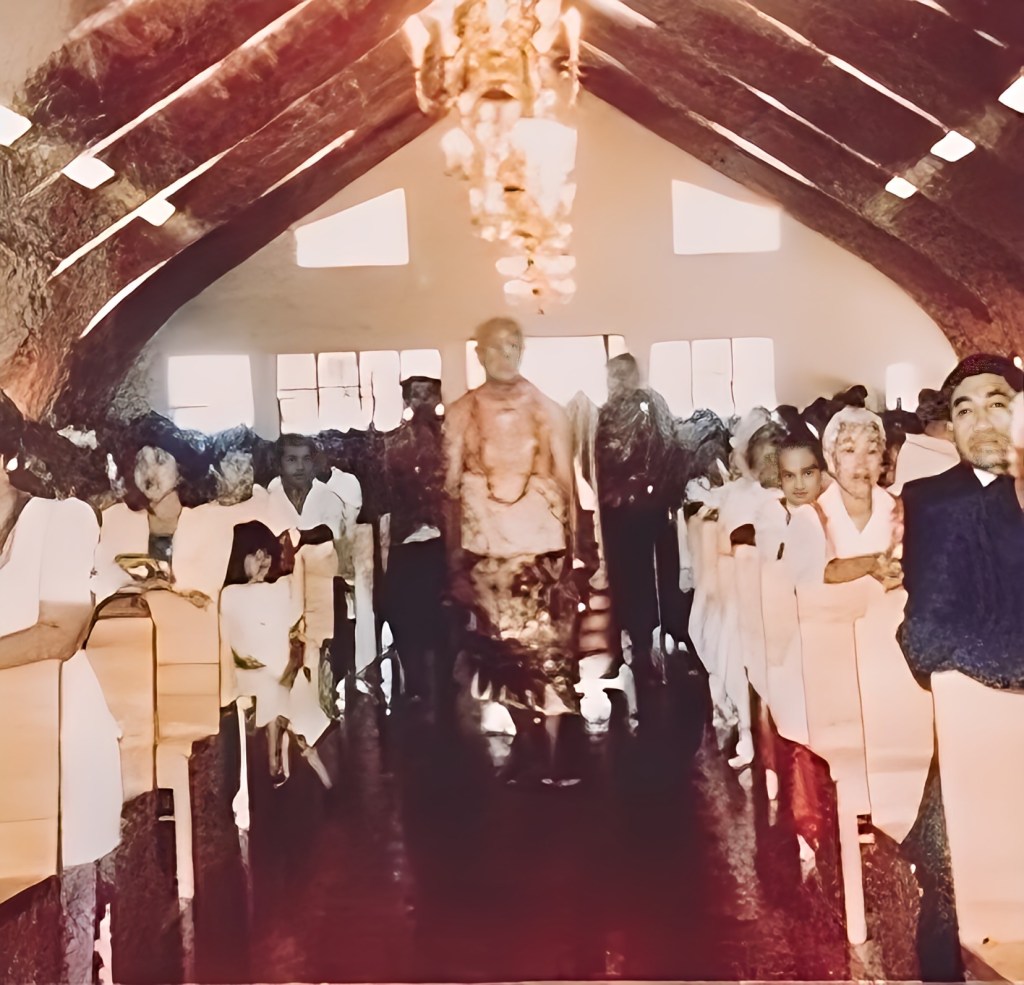
 I was raised by my paternal Samoan grandparents and my grandfather was a Matai Ali’i (High Chief) of his village in American Samoa. Although at formal gatherings he was always served first and no one could eat until he ate, what stuck with me most as a young child was watching him navigate difficult political decisions with fairness—whether that was settling land disputes or figuring out how and when to best support his village. He was most proud of building a church in and for his village, and when you understand the other important Fa’a Samoa cornerstones of faith and community/extended family, you understand how important and impactful this was and continues to be, long past his passing and for generations to come.    

 I strive to not only represent my culture and community, but to lead as Samoan culture has taught me—with service, purpose and impact, as expected of a matai.    

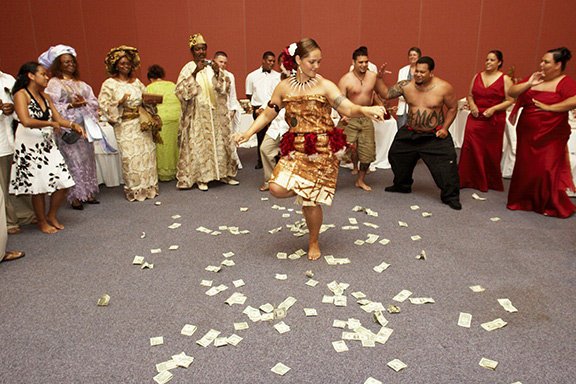
Angela on her wedding day.

2.     What did it mean to you to see representation at the executive level when you first started your career?   

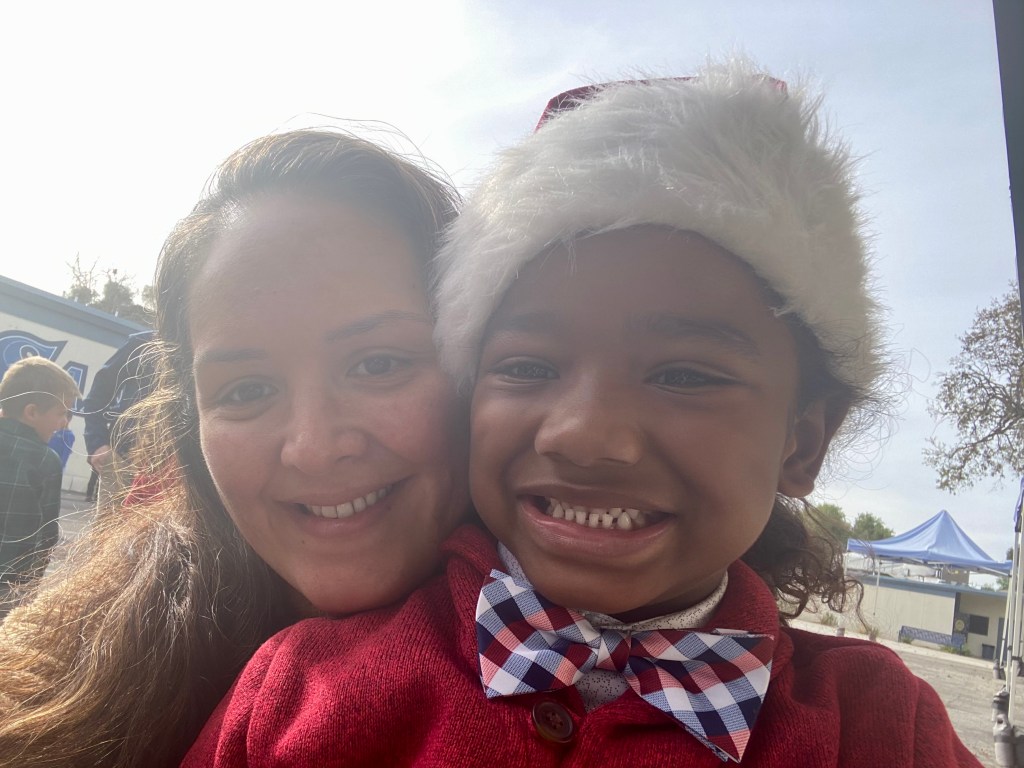
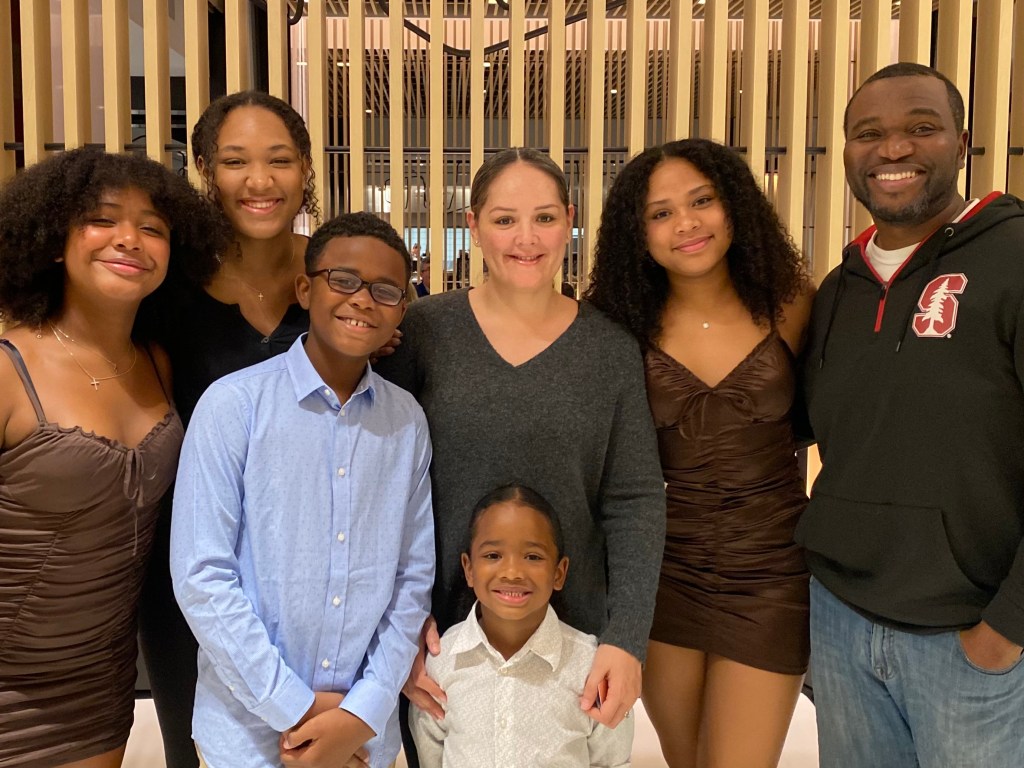
I get excited, inspired, and encouraged whenever and wherever I see representation, and probably more so now than when I first started my career because I understand the impact.  Representation matters, period, full stop. I can give you a recent personal example. My husband is Nigerian, and we have five children, ages 16, 14, 12, 10, and 5. During the holiday season, I discovered Target’s inclusive holiday collection and purchased various items from it, like angel tree ornaments of different skin colors and cookie plates with Black Santa. When I got home, one of my teenage daughters, partly annoyed that she had to unpack and wash the new items, provocatively asked me why I bought so much of it. I retorted that it mattered to me.  Almost as if it was scripted, my 5-year-old son, excited to see what was new, looked at the Black Santa cookie plate and said the following, “That Santa is brown like me!  So, I can be Santa when I grow up?”  My husband, without missing a beat, yelled in his booming voice, “And THAT is why!”  

When I clicked on the UGG website over a year ago and surprisingly saw award-winning choreographer Perris Goebel (of Samoan decent) as the face of the Feel You campaign, highlighting her strong Polynesian body and thick, muscular legs, I almost cried with joy! When I walk into a board meeting and see one of our board directors, Maha Ibrahim (female, of Egyptian descent), sitting at the table with curly hair and no makeup, showing up as her authentic, natural, and powerful self, I immediately identify with her and my feelings of insecurity of not “fitting in” are disarmed, allowing me to focus on impact.    

Representation matters, consciously and subconsciously, and for both emotional and rational reasons.  Period.  Full stop.  

Angela and her son.

3.     How have your personal experiences informed your leadership style, and what steps do you take to create a more inclusive work environment for your employees?  

Honestly, I feel like I have a competitive advantage, particularly as a servant-leader, because of my Samoan culture.  We learn as small children how to serve, we learn and respect hierarchy, roles and responsibilities, and tradition, and we learn accountability to a larger family and community.  So, culture has shaped who I am and my leadership style.  Without writing a book, I would also include being a mother of five children while building a career, being abandoned by parents as a young child, being part of a competitive family and playing team sports and having a foundation of faith and being part of a supportive family and community. All these experiences have taught me grit, perseverance, and perspective to allow me to lead the way I do.    

In terms of creating an inclusive environment, it is difficult for me to describe “steps,” because it is natural for me to be inclusive. As described earlier, my mindset and ethos are around building and serving my family, my team, and my village. In addition, through my faith, I’ve been taught to love people as and where they are, which corresponds well with Deckers’ value of “come as you are.”  When you put these things together, it lends itself to an inclusive environment that I hope our employees feel daily.    

4.     Can you describe a time when you felt especially proud of your identity as a person of color, and how does that sense of pride inform your work at Deckers Brands?   

Every day I am blessed to wake up, I am proud to be Samoan, a person of color, and afatasi!  In Samoan, afatasi means half of one. My maternal side is Irish/Scottish/English, but I didn’t know anyone from that side, which is why I identify so strongly with being Samoan, as that is how I was raised and who I was raised by. (And, THAT is why identity matters, regardless of how others categorize you!)   

This amount of pride gives me the privilege of wanting to celebrate others and their identities because I understand the importance and embrace the opportunity.  I am extremely grateful to be the leader of the Supply Chain in particular, which is incredibly diverse from a cultural, socio-economic, age, gender, and country of origin perspective. I get joy out of seeing others show up as their authentic selves and celebrate their identities (in a respectful way).  For example, for Asian American & Native Hawaiian/Pacific Islander month, I posted on our internal company Teams channel an “ethnicity roll call” that allowed others to celebrate their AANHPI backgrounds and stories.  Of course, the whole village was invited, not just AANHPI folks. The response was overwhelming and incredibly touching—some shared recipes, one volunteered to cook for everyone knowing it would make their mom proud, one recognized the sacrifice of their parents who immigrated via a refugee camp, etc. Each story was different and incredible!  

Picture of Angela’s grandfather celebrating mass at his village church.

5.     In your opinion, what is the most important lesson that the industry can learn from AANHPI cultures and communities, and how can this lesson be incorporated into business practices?   

That is an extremely complex question, and I can analyze it from both the supply and the demand side of the equation when I think through business impact.  I guess I would sum up my lesson as, “Don’t sleep on AANHPI communities!”  When you think through the backbone of the fashion industry’s supply chain, it is mainly built by Asian communities.  From a demand side, you cannot deny that one of the most influential influencers of our time is Dwayne “The Rock” Johnson (of Samoan descent).  The AANHPI community is hugely diverse but equally as powerful—take care of and pay attention to them!  (Breaking News: the new American Idol is of Samoan and Tongan descent and from Hawai’i.)  

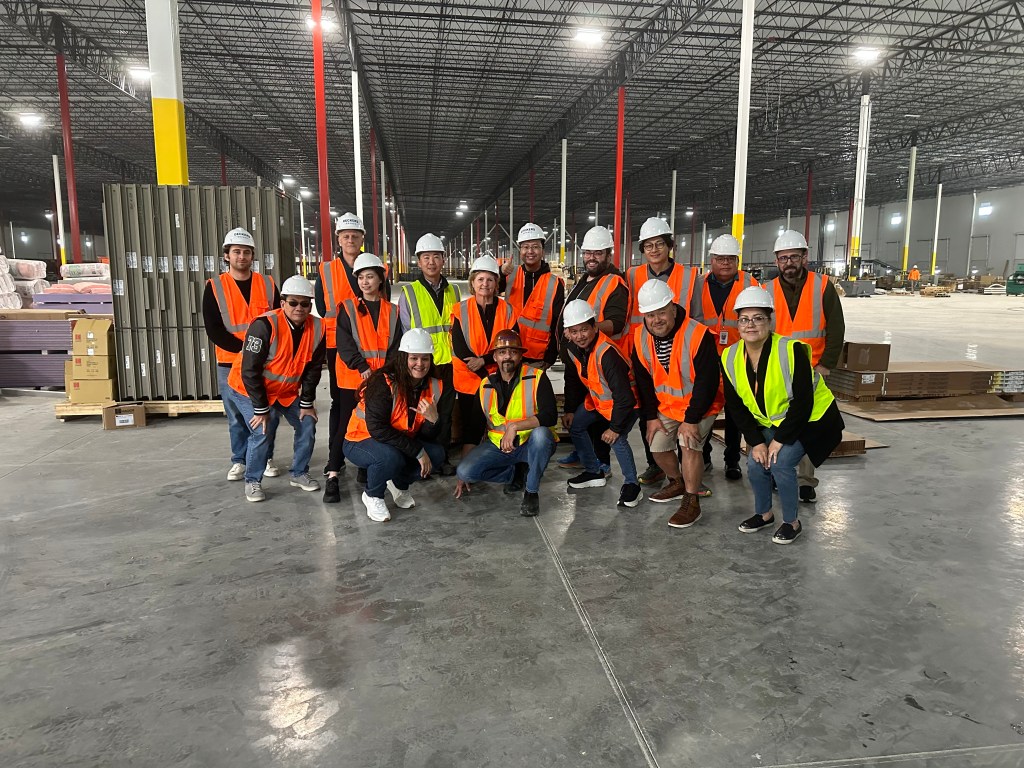
Part of Angela’s Supply Chain Team.

6.     What legacy do you hope to leave behind as an AANHPI executive leader, and how do you hope to inspire future generations of AANHPI professionals?   

I hope to leave behind a legacy of authentic, value-based, inclusive leadership, which allows for and inspires individuals to show up as their authentic selves and thrive.  I hope my example serves as an invitation for AANHPI and non-AANHPI professionals alike to lead with authenticity and care.  

7.     What advice would you give to young AANHPI professionals looking to break into our industry and achieve leadership positions?   

Be the exception! In a lot of cases, you may not see many people that look like you or share the same background as you in certain parts of our industry or in leadership positions, but that is okay.  Operate as the exception, knowing that being one of the few is a position of strength—people don’t know what to expect and you will likely bring something unique to the table.  It is that uniqueness that creates value—be you!  

Angela and her family.
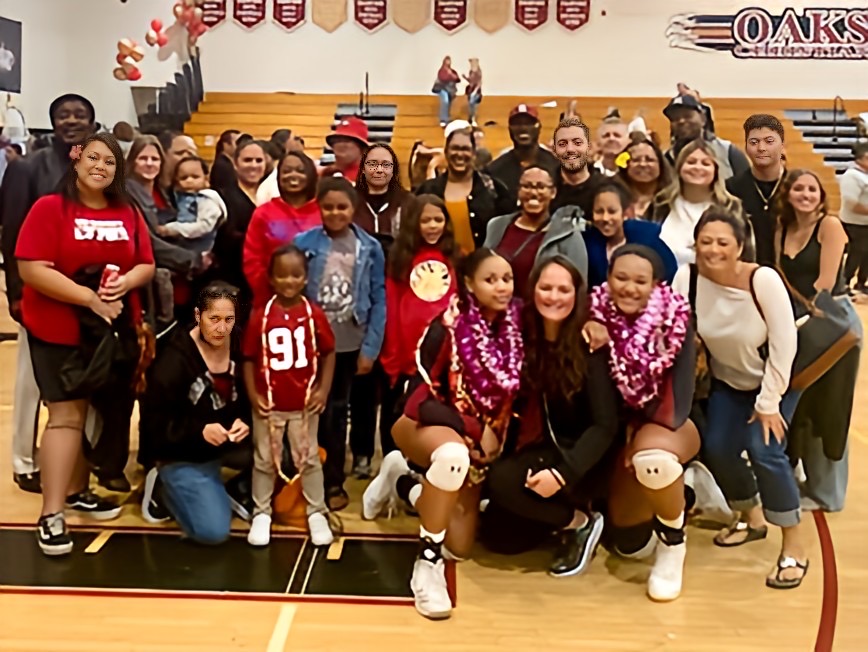
Angela and her tribe (fam, church fam, work fam, etc.) who come out to support her daughters’ high school volleyball games.

Celebrating Veterans Day Employee Spotlight

  • In which branch did you serve?  

I served in the Air Force for about 6 years. I spent majority of my enlistment in North Dakota, but I did get the chance to travel to 4 different countries.  

  • Why did you join the Veteran’s ERG?  

I joined Veteran’s ERG because I knew that I would find a connection there. Anywhere I go, I find myself meeting veterans who simply want to be of service to others regardless of what branch they were in. The good energy and comradery are always there and that even extends to spouses and dependents. 

  • Which of the goals of the Veteran’s ERG are you most excited about? 

Aside from being more involved, I love that volunteering is encouraged in VERG. I’m sure many agree that it feels great to serve others and while I haven’t volunteered much in recent years, I look forward to adding that back into the balance of everything I have going on. It’s also a good way to explore other areas while getting to know different communities in Santa Barbara.  

  • Do you want to share a story about yourself and your journey before you came to Deckers? 

It’s been an interesting career transition coming from the military to product design and development. The best way to describe my experience is like going from keeping my head down and coloring within the lines to crafting lines and colors to tell stories through product. I was surprised to find out more veterans were pursuing a career path in art/design as well so being involved in veteran groups allowed me to network and create long-lasting friendships.  

The biggest challenge initially was going from 6 years of using my left brain to using the right. In the military I was comfortable being given detailed instructions on what needed to be done; there’s a manual for every little thing so there’d be less thinking and more doing. To go from that to exploring new ideas and developing creativity, it took quite a while to find and trust the creative process within myself. Reflecting on what I’ve learned and experienced, I see the growth that helped me reach where I am now and I’m proud of it.  

Celebrating AAPI Heritage Month Employee Spotlight

Laurie Rose Lubiano

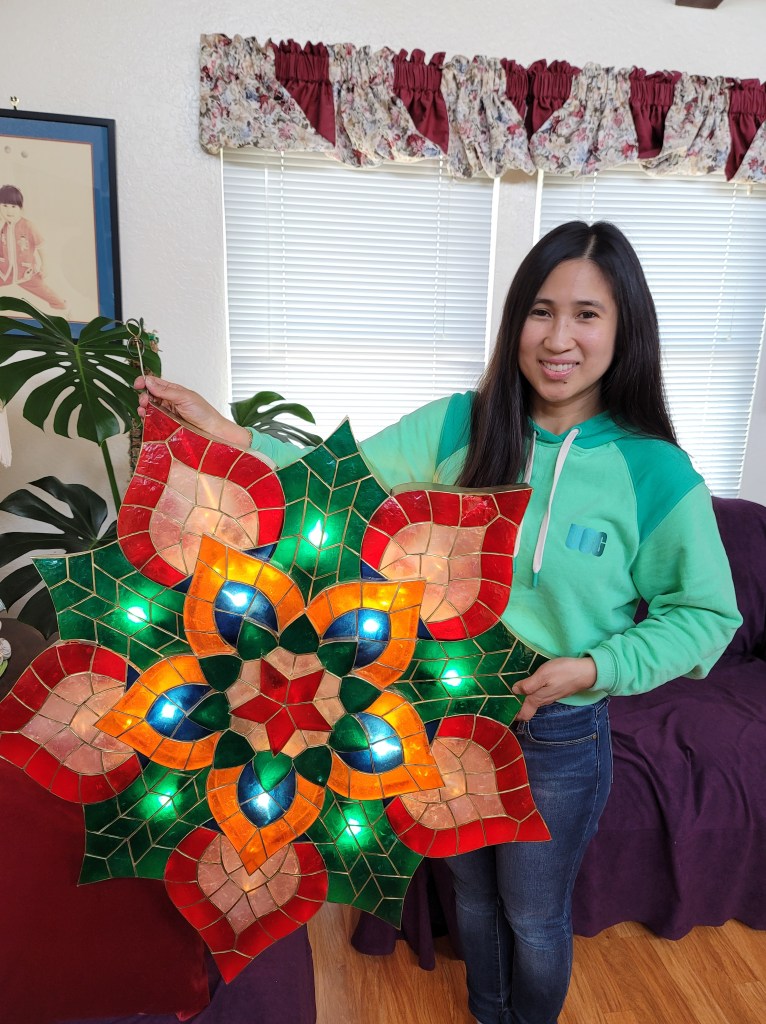
Here is my one my favorite parols at my Grandma’s house where I grew up. (The parol happened to be hanging above the fire place before I took this picture) 

“To me, nothing screams tradition more than my Filipino family Christmas celebration that is rooted in faith, family and food. If I were to think of holidays as foot races, Christmas would be a marathon and Filipinos would be your ultramarathoners. In the Philippines, Christmas decorations light up as early as September. I live in Daly City, California in the San Francisco Bay Area where nearly 1 in 3 people identify as Filipino and it’s no different. In our neighboring city of South San Francisco, an electric Christmas tree, on top of Sign Hill, can also be seen lit up in September! Filipino Catholics also partake in a nine-day novena leading up to Christmas which includes daily evening masses called “Simbang Gabi,” culminating in midnight mass on Christmas Eve.   

Growing up, celebrating Christmas meant Christmas Eve with Christmas music on blast, and 40-plus family and extended family members packing our house, anxiously yet excitedly staying up until midnight to celebrate Christmas and exchange presents. Christmas Eve also meant a “Noche Buena” feast of traditional dishes like lechon (roast pig), Filipino spaghetti (yes it has hotdog slices in it!), jamon, queso de bola with warm pan de sal, pancit, lumpia, and traditional desserts like leche flan, fruit salad, bibingka, and puto. In addition to a mountain of presents, our house was adorned with “parols” which are colorful, handmade, lanterns often made from materials like capiz shells, bamboo and glass that are shaped as a five-point star representing the Star of Bethlehem. Inspired by the “slug bug” game, our family created a “Parol game” during the Christmas season. When we are driving in the evening and see a flashing parol decorating a home, we shout out “PAROL!” The first one to call out a parol scores a point. At the end of the holidays, the person who has the most points wins!”

Employee Spotlight: Magda Ochoa

Why do you volunteer—why is it important to you? 

I volunteer to make an impact in my community. So many are less fortunate than I and I want them to know there are people out there that care about them, what they are going through, and can help even if it is just in the moment. 

Name an organization(s) you volunteer for regularly? 

TIP (Trauma Intervention Program) and HOPE (Helping Our People of Elsinore) food pantry.  

How were you introduced to those organizations?   

My mother actually introduced me to TIP. She is a volunteer and is now actually the COO. It is a program that is there for people during traumatic events such as suicides, drownings, accidents, etc.  They are there to assist the victim’s family with information, keeping them safe and out of the way of first responders and sometimes just being a shoulder. HOPE actually helped me when I was a single mother and homeless for a brief moment. It was help that I needed with food and clothing, so I regularly donate to them and have assisted on food box distribution days. 

What causes are you passionate about supporting and why? 

I am passionate about helping people however they need—if they need someone to just listen or food, clothes, information, etc. I was in a bad place about 18 years ago, and if it wasn’t for someone reaching out to me to help, I don’t know where I would be. So I want to pay it forward. 

Are you able to lend your work/professional expertise to the causes/organization you care about? 

In a sense, my work has helped me become a better listener so being able to listen when someone just needs to talk.  

What are some of your favorite volunteer activities? 

Handing out food and supplies to needy families is my favorite. The smiles you get from them when they truly need the support, is so gratifying. 

Share a memory of your first service/volunteering experience. 

I was with my mom, helping with document preparation for TIP volunteer training, and a lady came to her saying how amazing TIP is and that they helped her get through the suicide of her 18-year-old son. She said she would be forever grateful and is now a volunteer herself. 

Has anyone in your life influenced you to prioritize giving back through volunteering? 

My mother and grandparents. The struggles they went through to build the life they have now—coming from Cuba with nothing and having people reach out and help them. It impacted them, which in turn impacted me. 

How have you witnessed volunteering impact your community, family, or yourself? 

It has helped me be more grateful for what I have.  

How do you feel after volunteering? 

Satisfied, grateful, emotional, many different feelings run through depending on the volunteer event I have participated in.  

Employee Spotlight: Jessica Leong

Why do you volunteer—why is it important to you? 

I have taken time to join in different volunteer actives since I was studying in middle school.  I have children now, so I hope they can know the importance of helping the disadvantaged. When we join the activities, we can create our own memories, which is important for me. 

What organizations do you volunteer for regularly? 

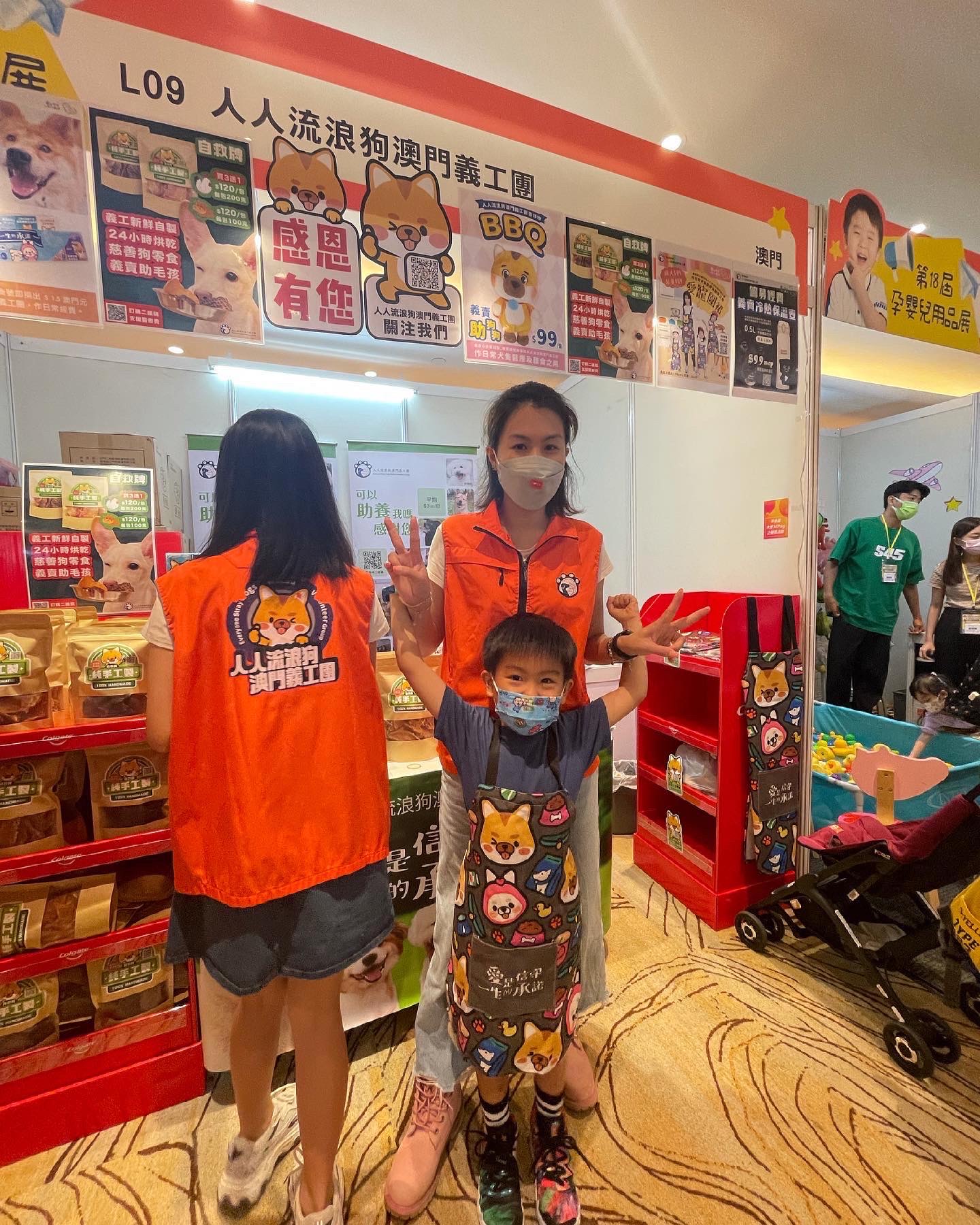
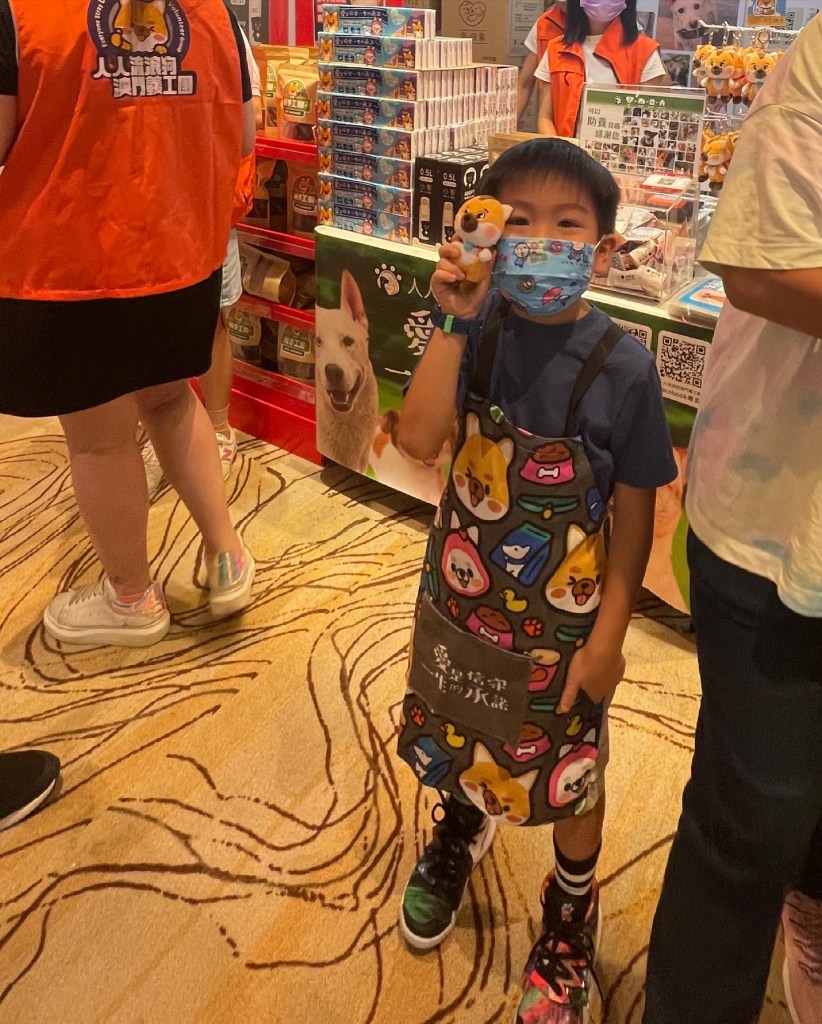
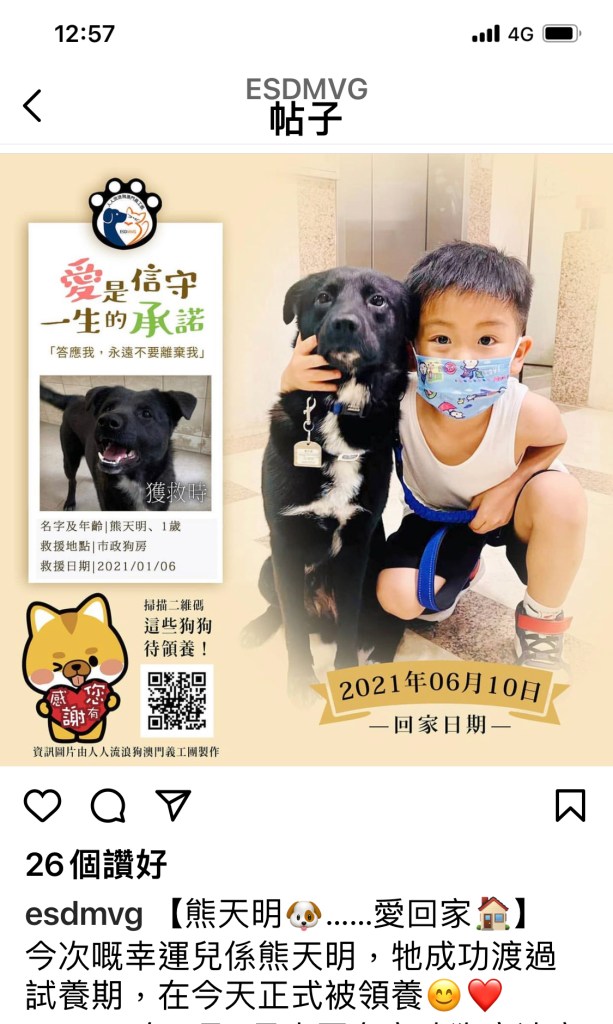
The name of the organization is Everyone Stray Dogs Macau Volunteer group. We joined this group in March because I adopted a stray dog for my son as a pet. The organization focuses on abandoned pets who are over eight years old since many of them need need surgery, physical therapy, medication and treatment. That kind of care is expensive, so they regularly organize different charity sales activities in Macau.  

Why are you passionate about supporting this cause? 

There are many people who think that these dogs are just an animal, treating them as toys and abandoning them when they are no longer interested. This is too cruel. In addition to the charity sales, we also urge people to adopt pets instead of buying a pet and to treat their pet as a member of the family. 

How do you feel after volunteering? 

I feel deeply that I am very lucky, because I have everything I want—and the most important thing is there are many people who love me and are beside me. 

Employee Spotlight: Manny Roldan

Why do you volunteer—why is it important to you?

I volunteer because I feel it’s great to feel part of the community and share my experience and expertise—also, selfishly, I feel gratitude and humility when I help and give selflessly.

Name an organization you volunteer for regularly and share your volunteer experience.

I volunteer with VADA, an art and design academy within Santa Barbara High School I was introduced to this org by Anna Demon, an accessories designer at UGG, a few years ago.

VADA is my go-to volunteering org, as they can benefit the most from my experience both as a student and in my career. I get to mentor kids, showing them the footwear design processes and engaging with the students and faculty about designs specifics, as well as education.

Most recently, I started working with the staff to edit their curriculum based on what we look for in a design candidate at UGG, as well as personal experience.

Last month, I volunteered at VADA’s fund raiser by speaking to the board and possible investors. I spoke to my education, career and how much this would have benefited me in my early school days. I also spoke about the presentations and discussions I’ve had with the kids and teachers.

My favorite presentation was when Ari Montanez, Alex Dann (UGG men’s design team) and I spoke to the teachers about our education path. All of our paths were so different, and many good questions came out that discussion, which helped form decisions on changing the curriculum for Fall 2021.

How has our culture of doing good at Deckers impacted your involvement in volunteering?

I feel supported by the Deckers Doing Good value. I think it allows me to free up my mind for mentoring and discussion; in return I feel serene, open and purposeful, which serves as a great detachment from my everyday (freeing up space to process and make better decisions!)

Design a site like this with WordPress.com
Get started