Diwali is a part of each one of you! ‘How so?’ you may ask. It’s simple… it signifies light over darkness just as the everyday choices we make of good over evil.
Going by traditions, Diwali is an age-old festival celebrated in many countries in honor of some historical figures. Whatever one’s belief and religious significance, for me it is a celebration of life and a time to share with those in need. In today’s extraordinary circumstances, it means so much more to be part of a community supporting one another to be resilient and praying for a stronger tomorrow. And that’s exactly what Diwali is all about- a time to rejoice with family and friends, thankfully reflecting the good and bad times, spread cheer and share kindness.
Reflections from some of my special Diwali moments: Fond memories of Diwali include family get-togethers with cousins, aunts, uncles, grandparents busy preparing tasty sweets and snacks, sharing the food with neighbors and friends, staying up late playing games and lighting fireworks and firecrackers.
One of the most important life’s learning was from my father (an ex-Navy man) who was not a very religious person but on any festive occasion, he would make a donation to a place of charity and taught us that even if all other rituals were to change, remember to be human.
Here at Deckers, celebrating Diwali symbolizes unity in diversity bringing forward a unique flavor combining goodwill, generosity and community spirit.
Let today be filled with light for a brighter tomorrow! Wishing every one of you a Happy Diwali!
For as far back as I can remember, Diwali has been my favorite festival. For me and my family, Diwali symbolizes celebration, new beginnings and being grateful for what we have. It is the time to celebrate with family and friends, feasting, celebrating and sharing joy together.
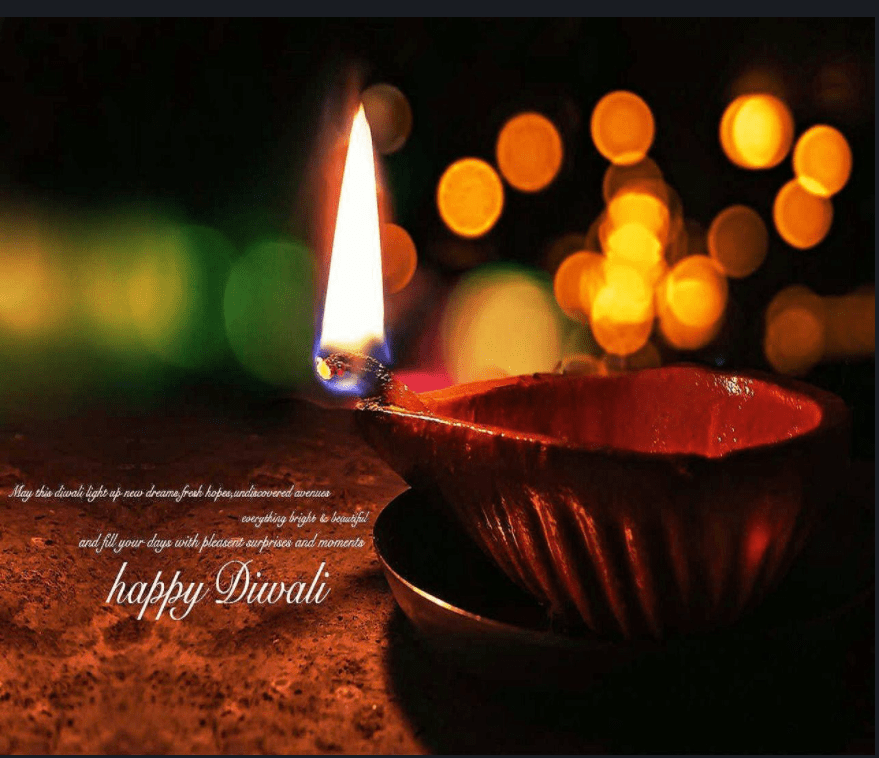
Diwali symbolizes the victory of good over evil, knowledge over ignorance and light over darkness. Diwali literally means a row of lights (diyas) referring to how the houses are traditionally decorated with lots of clay oil lamps. The light from such lamps guided Lord Rama back to his kingdom from 14 year exile on the moonless night. India is one of the most culturally diverse countries in the world. Although certain aspects of Diwali are common throughout the country, different regions have their own ways of celebrating. Diwali is celebrated for 5 days with each day having its own significance.
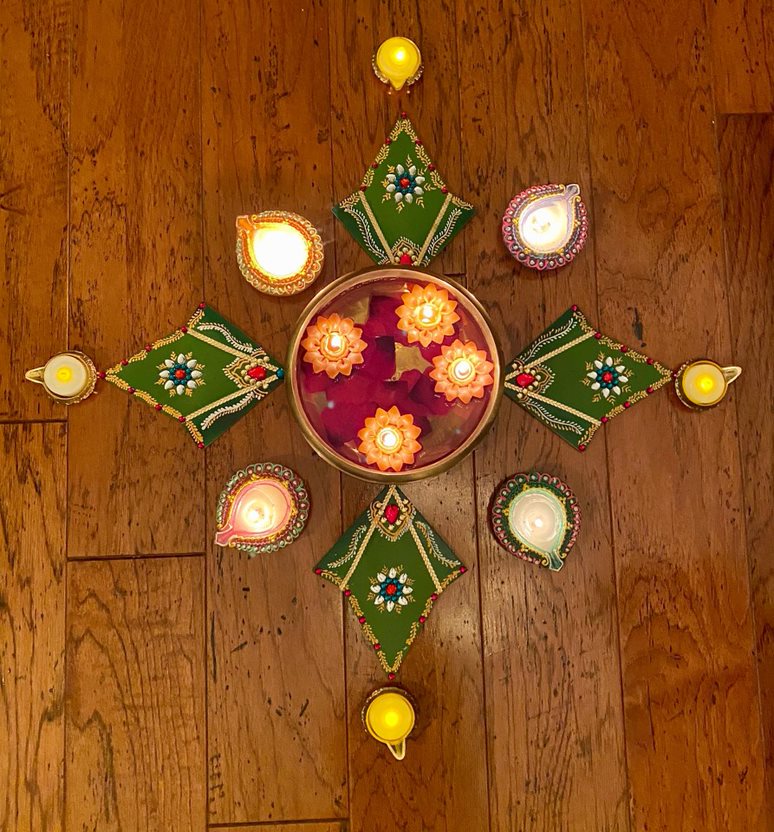
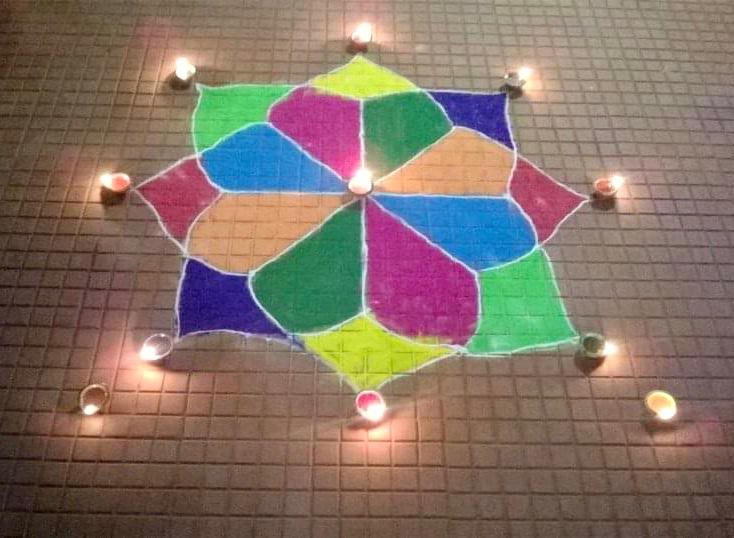
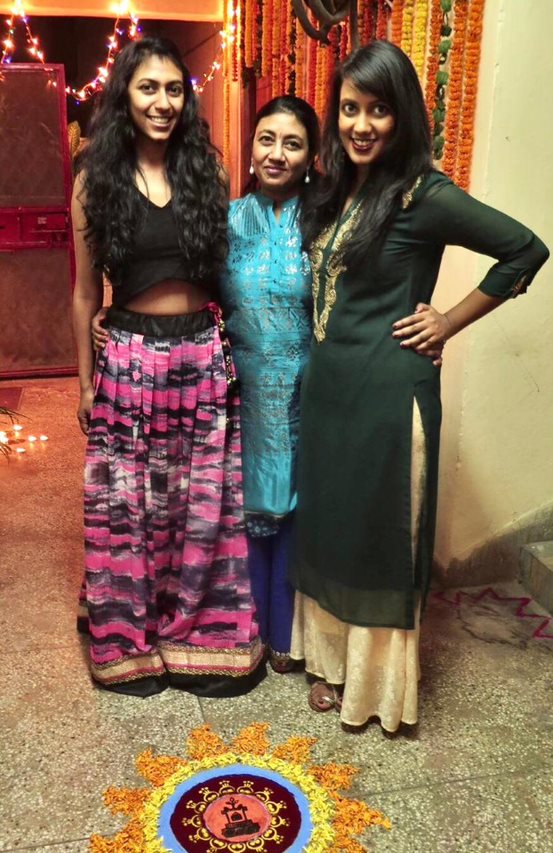
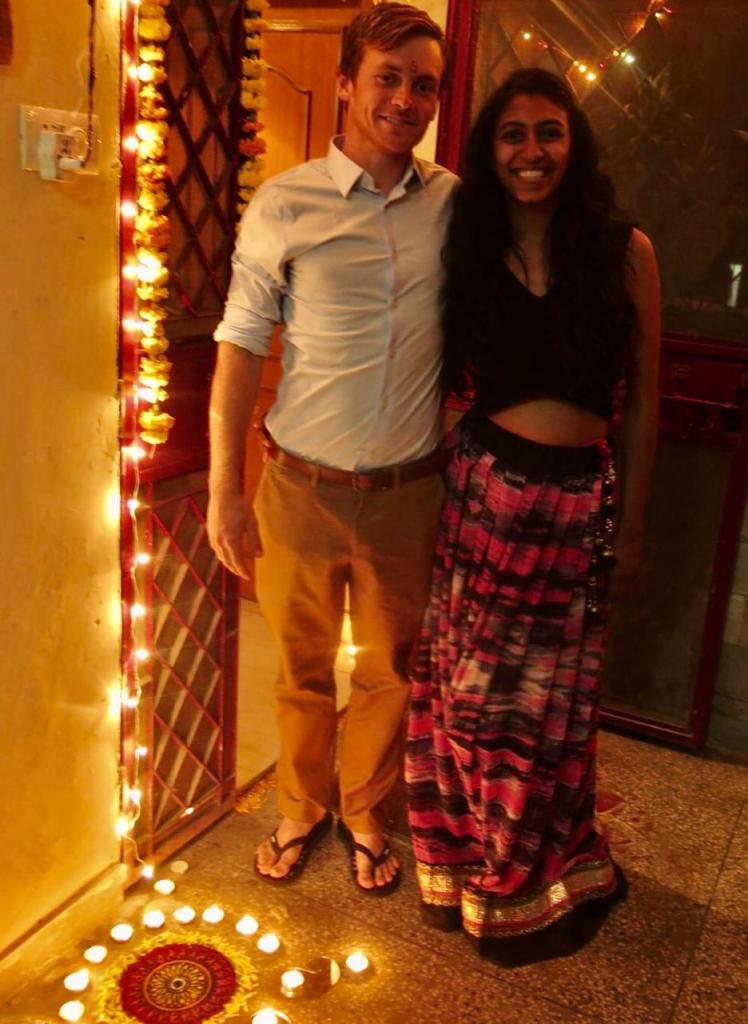
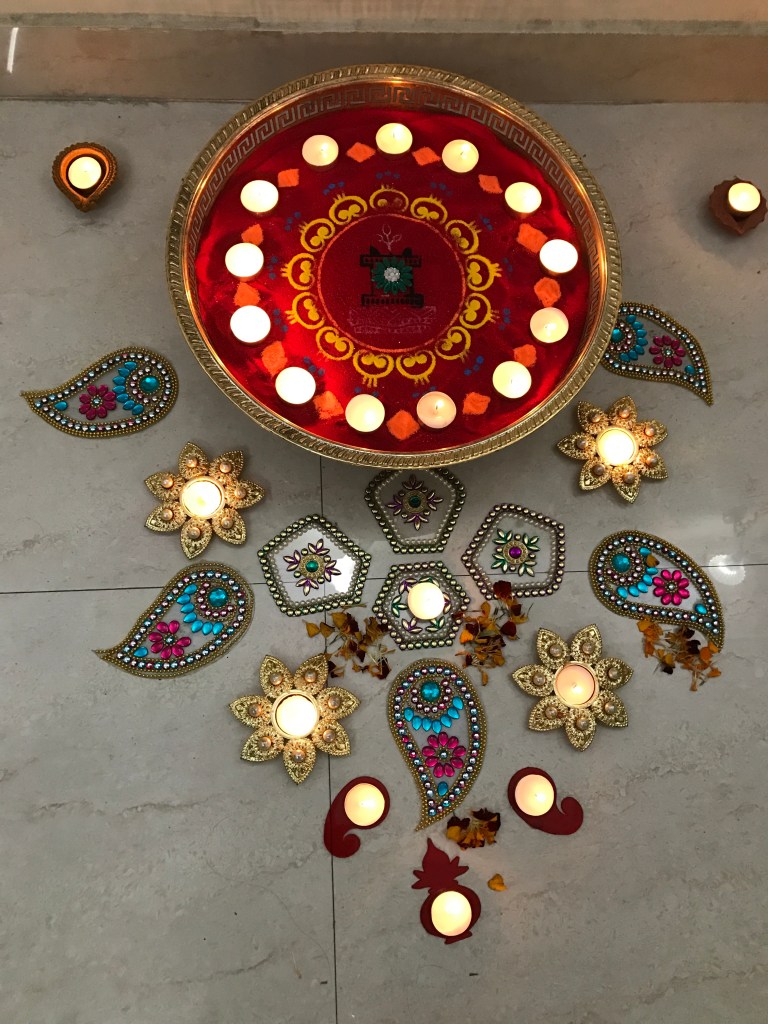
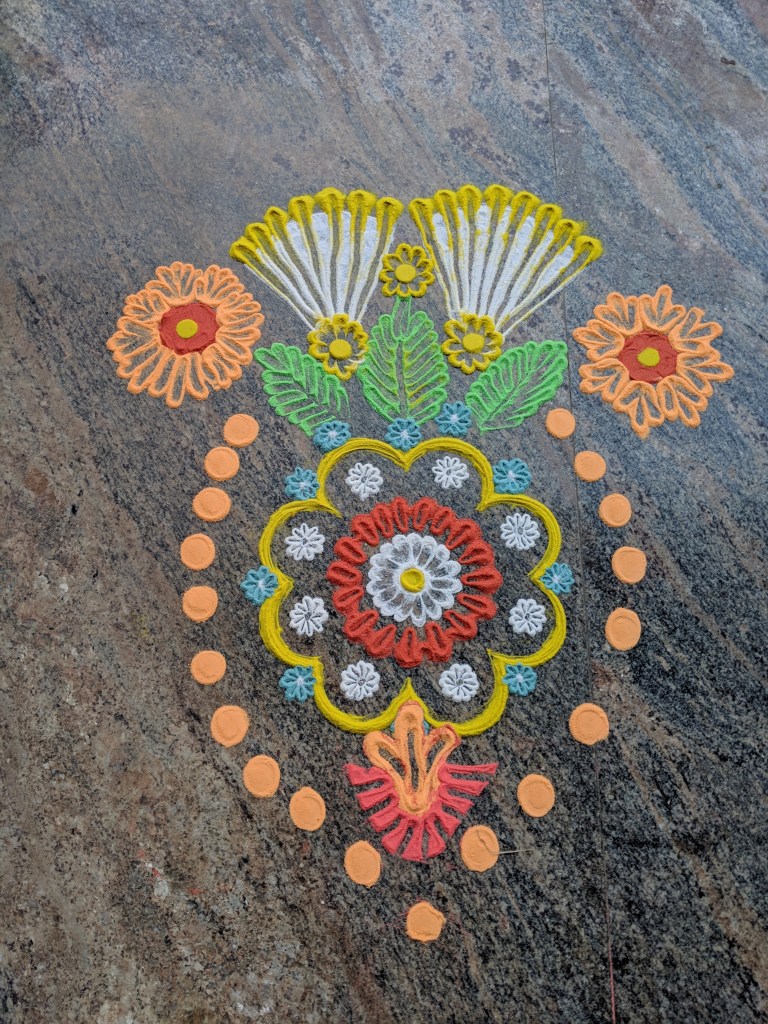
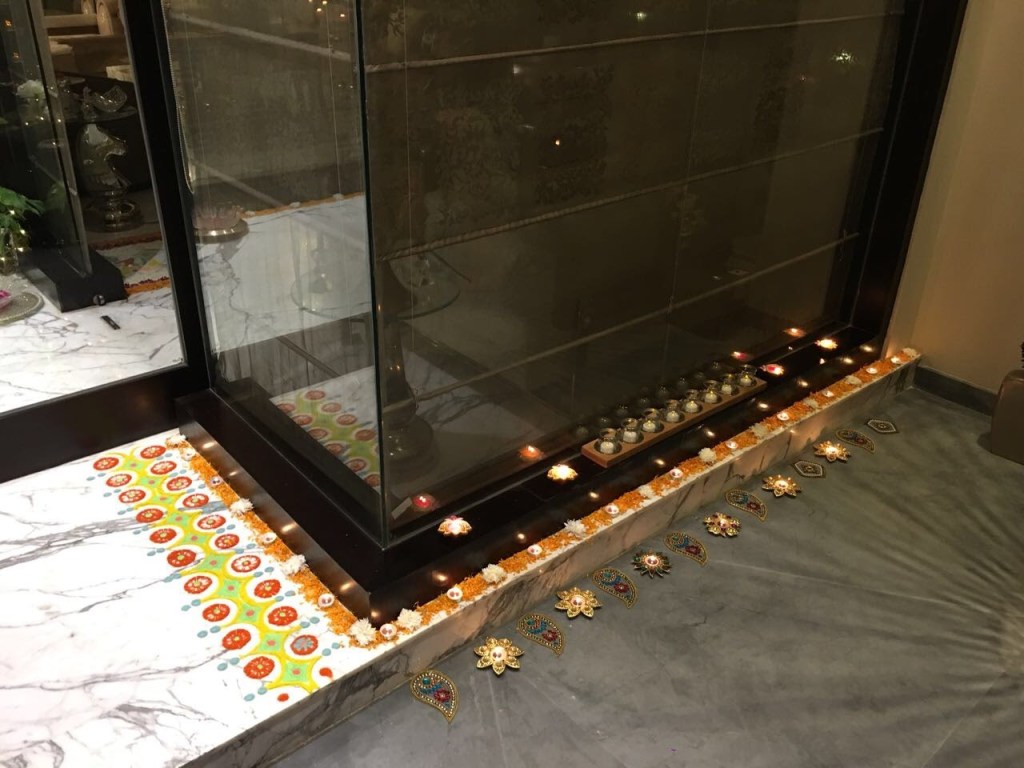
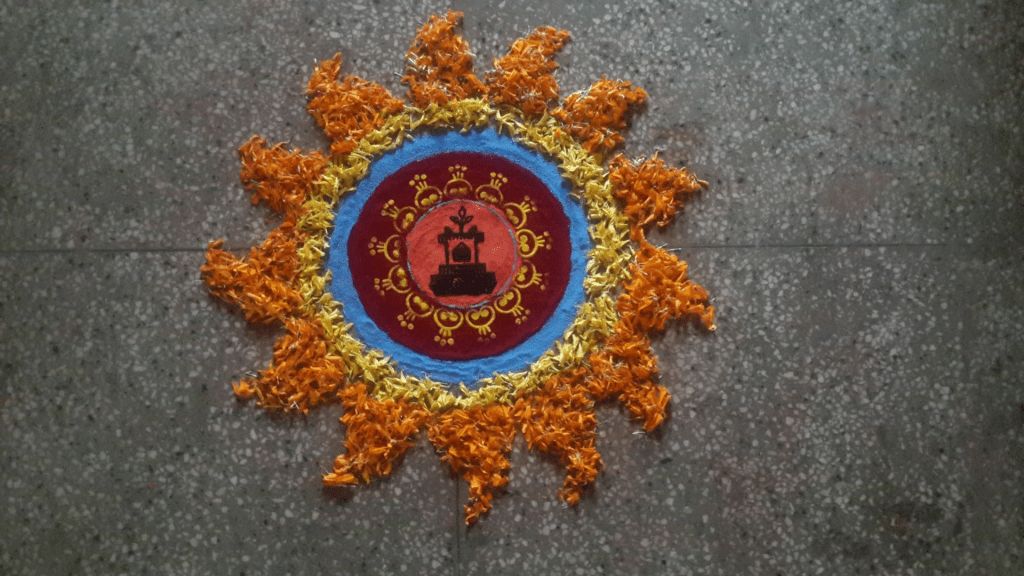
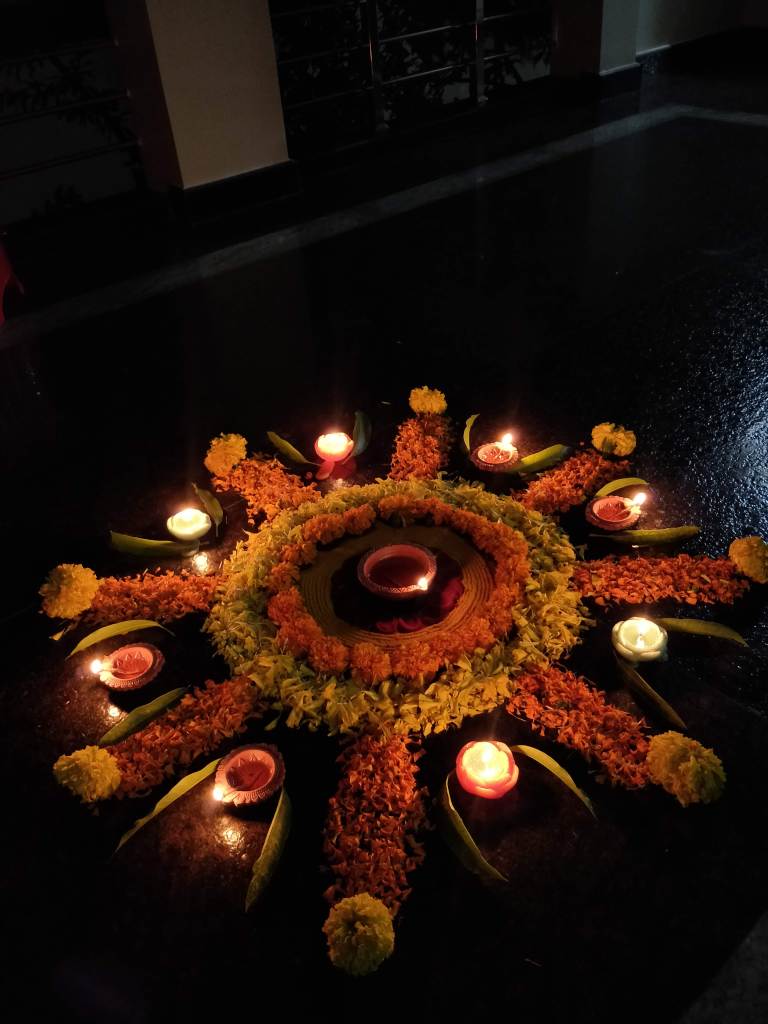
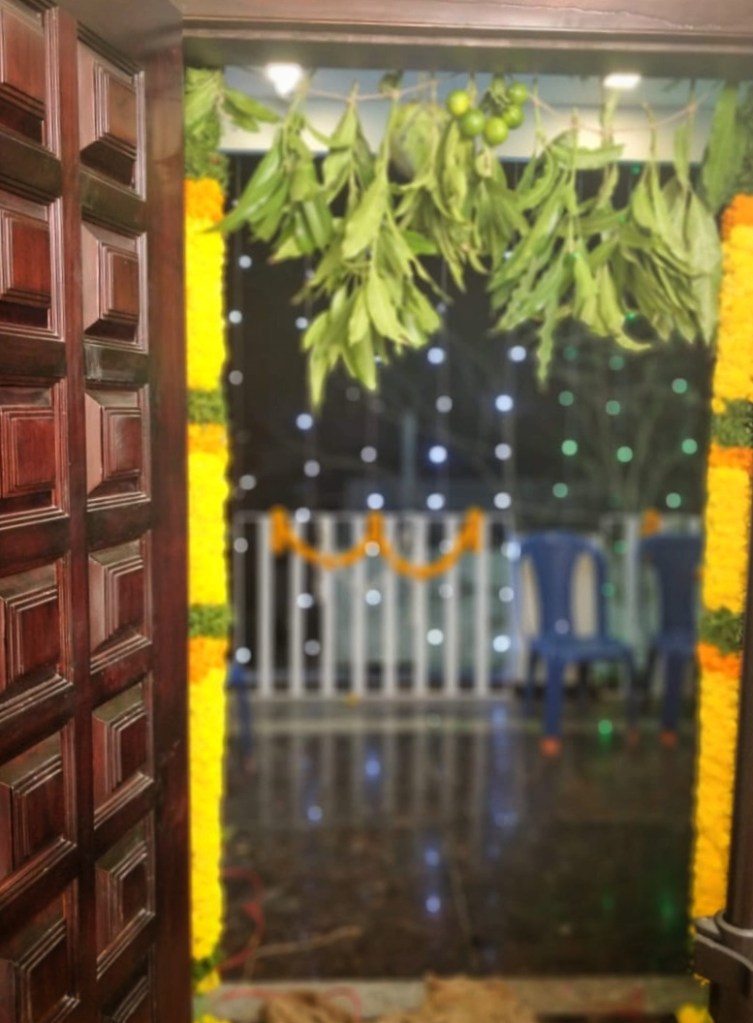
It is very easy to spot a Diwali house. If you see a house decorated with fairy lights in your neighborhood, a row of lamps and rangoli (Designs made with colored powder) outside the house on porch, you should be able to guess that it is Diwali time.
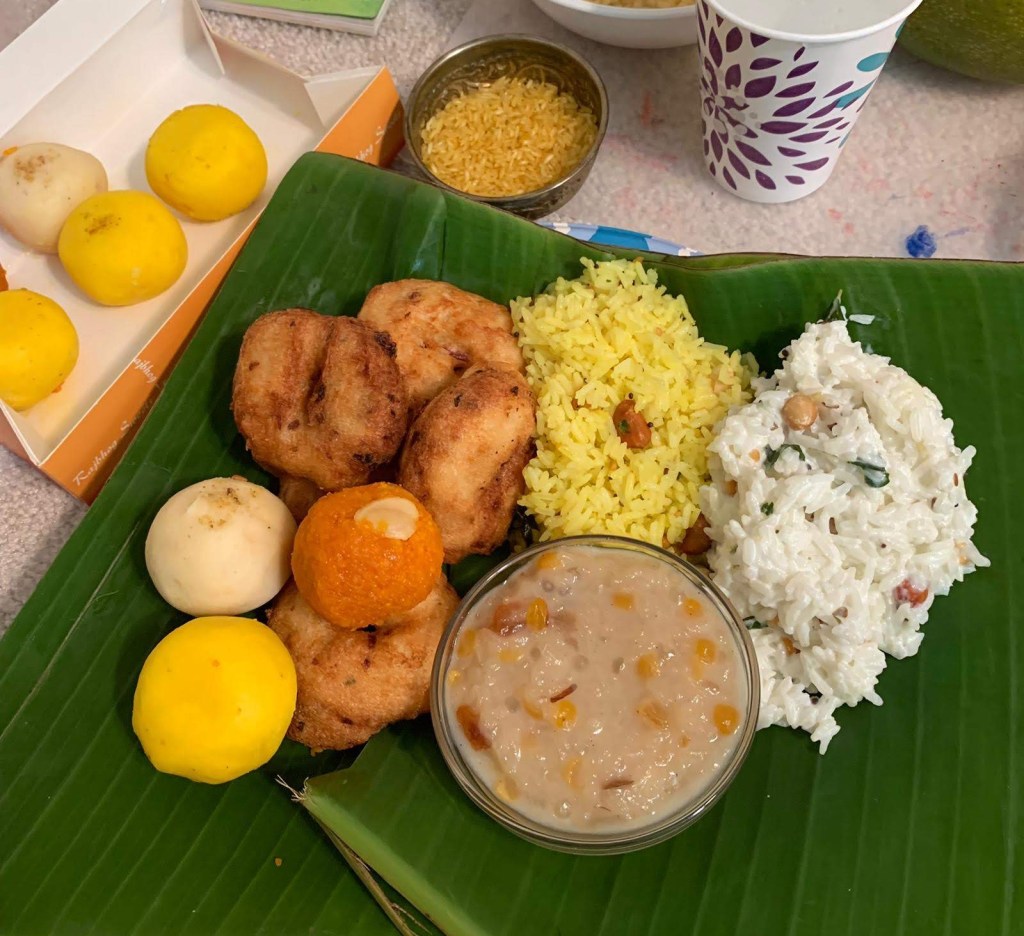
Celebrating Diwali for me means re-creating the nostalgia of what I experienced as a child. When I was growing up in Mumbai, India, I always used to look forward to the festival. The preparations used to start weeks in advance. We will start cleaning the house and my Mom would start making sweets and savory treats. This will go on for weeks leading up to the festival. I used to be very excited to go around the neighborhood and burst firecrackers and sparklers. This is changing now for the better, as we want to make sure we do not harm the environment ensuring a clean Diwali. Now that I have been living in the US for long, we still follow the same traditions of cleaning the home, putting fairy lights around the house, decorating our patio with Rangoli. Also no Indian festival is complete without loads of delicacies. I do miss my extended family though.
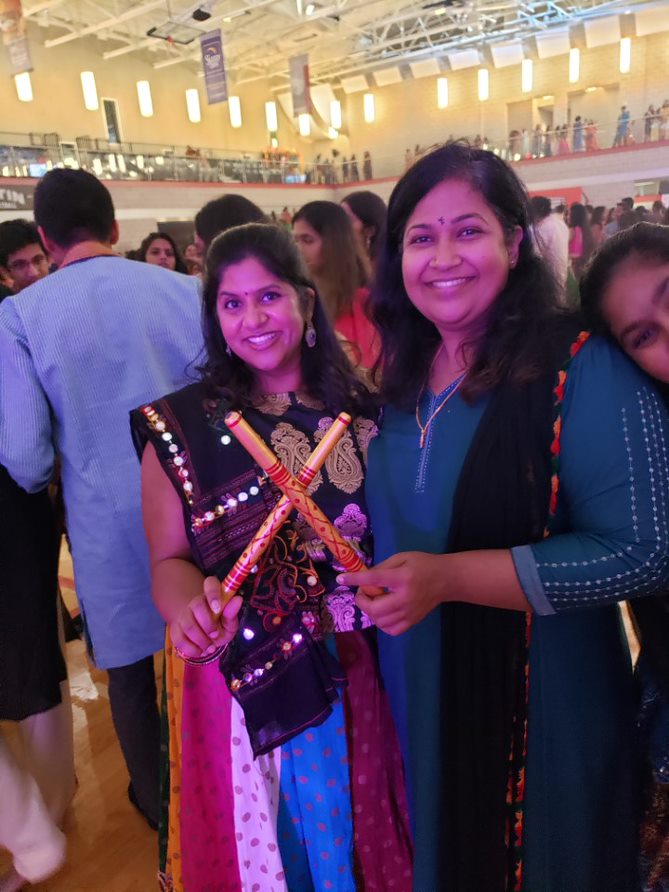
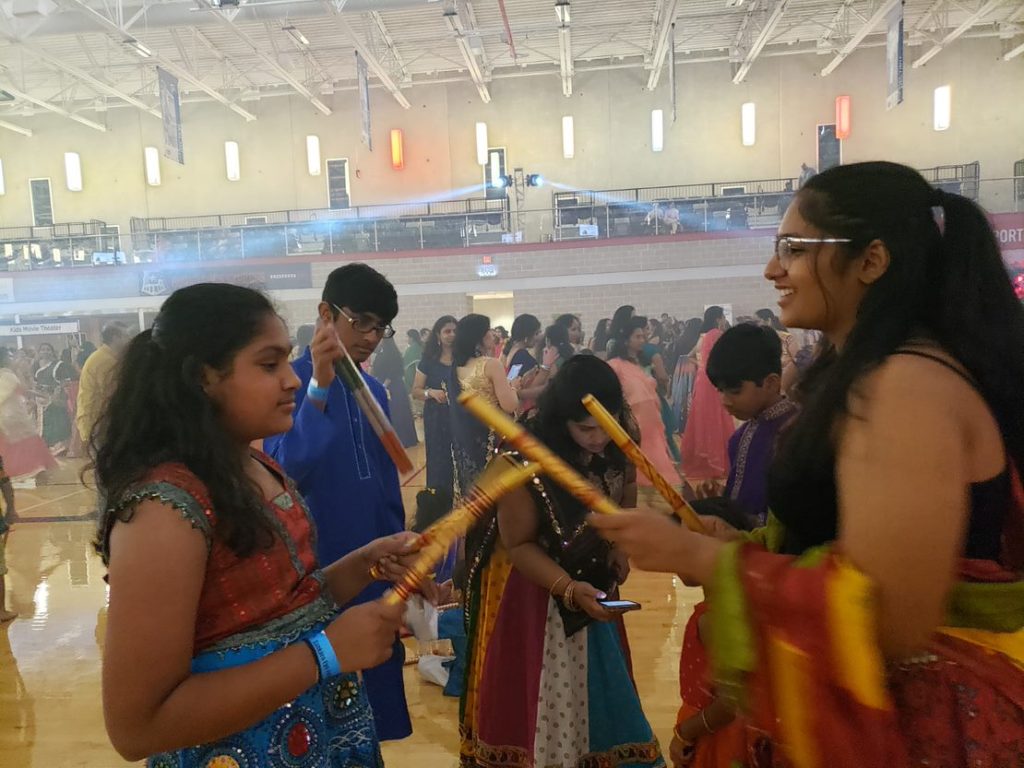
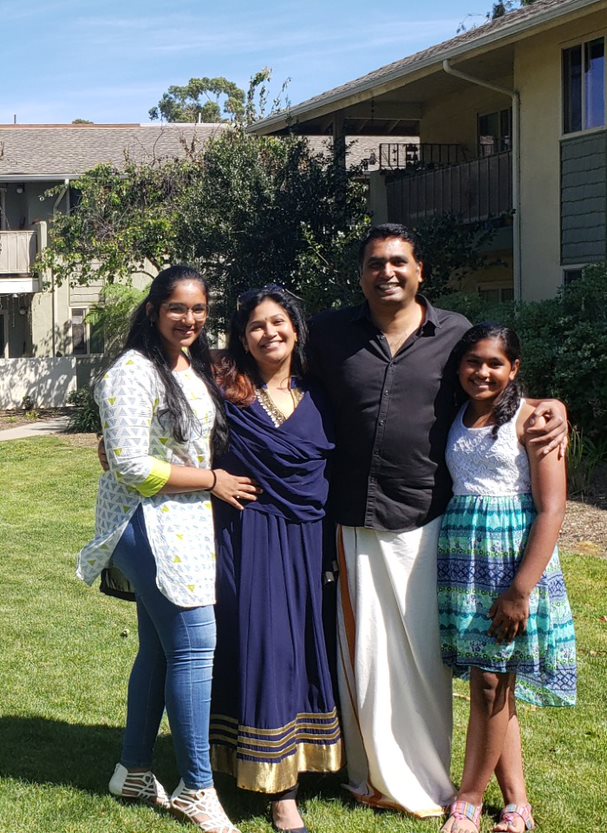
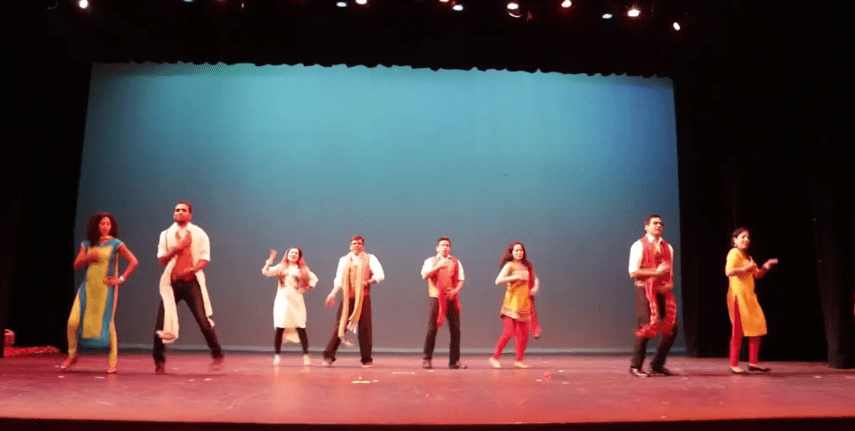
My kids were born in the US and we feel it is even more important now for us to celebrate the festival so that they can learn our traditions. We have a small Indian community in and around Santa Barbara and we are lucky that we get a chance to celebrate the festival with the community. Every year there is a huge Diwali celebration where kids and adults alike get a chance to do dance and musical performances in front of a packed crowd. Although, this year there is no Diwali gathering because of the pandemic, we will be celebrating in our homes and keeping the spirit alive.
I wish everyone a very Happy and prosperous Diwali.
Diwali is more than a festival for many Indians like me living away from our homes, it’s a feeling of victory and prosperity!
Diwali is celebrated to honor lord Rama who returned to his kingdom in Ayodhya, after staying in exile for 14 years during which he fought and won battle against evil king Ravana. It is a festival of new beginnings and the triumph of good over evil, and light over darkness.
While growing up Diwali began with adorning the house with a multitude of decorations, colorful lights, buying new clothes, and gifts for family and friends. On Diwali day, the family would decorate the entrance of the house with rangoli and diyas followed by pooja (offering prayers to the almighty) in the evening and a grand dinner.
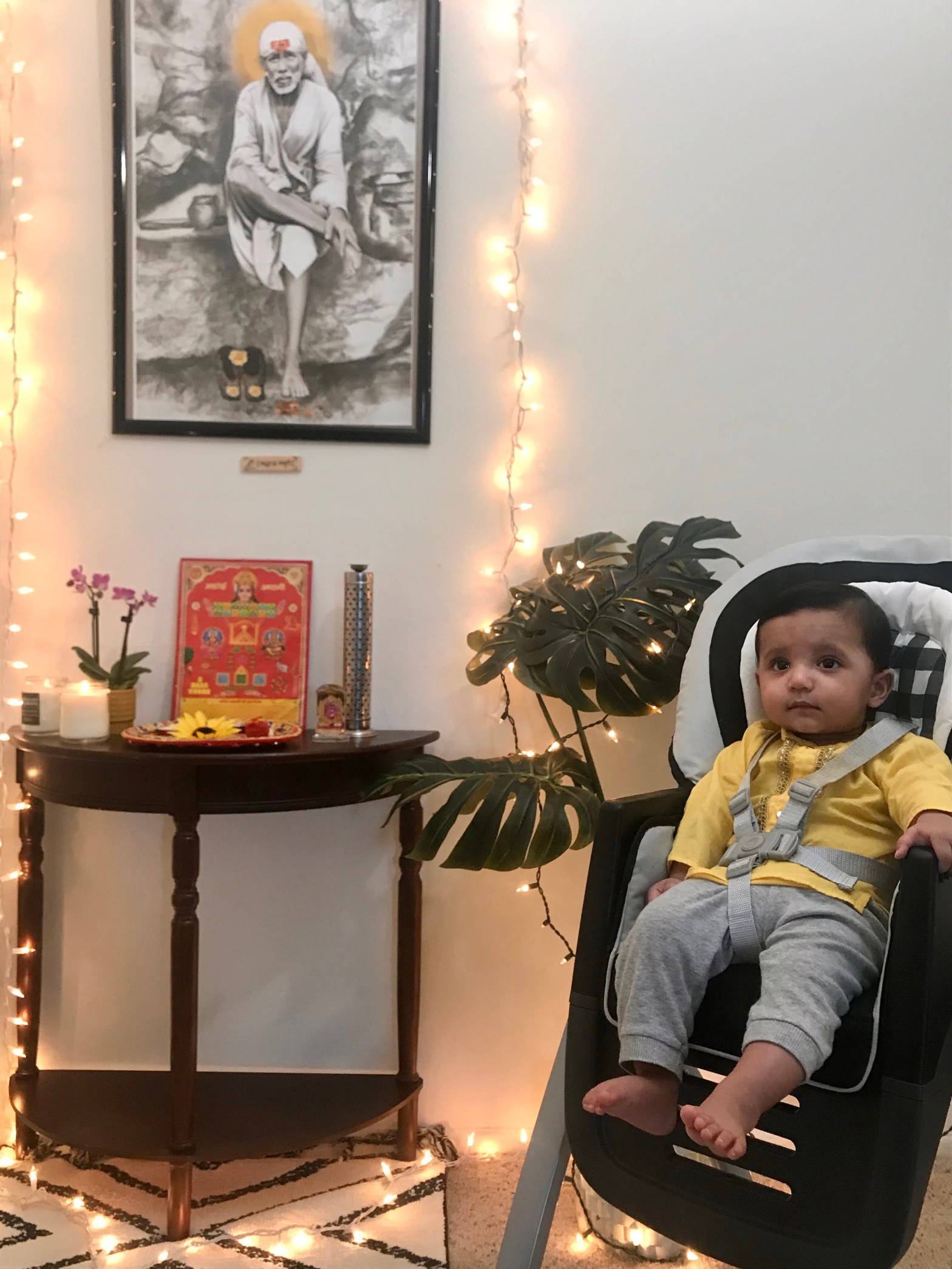
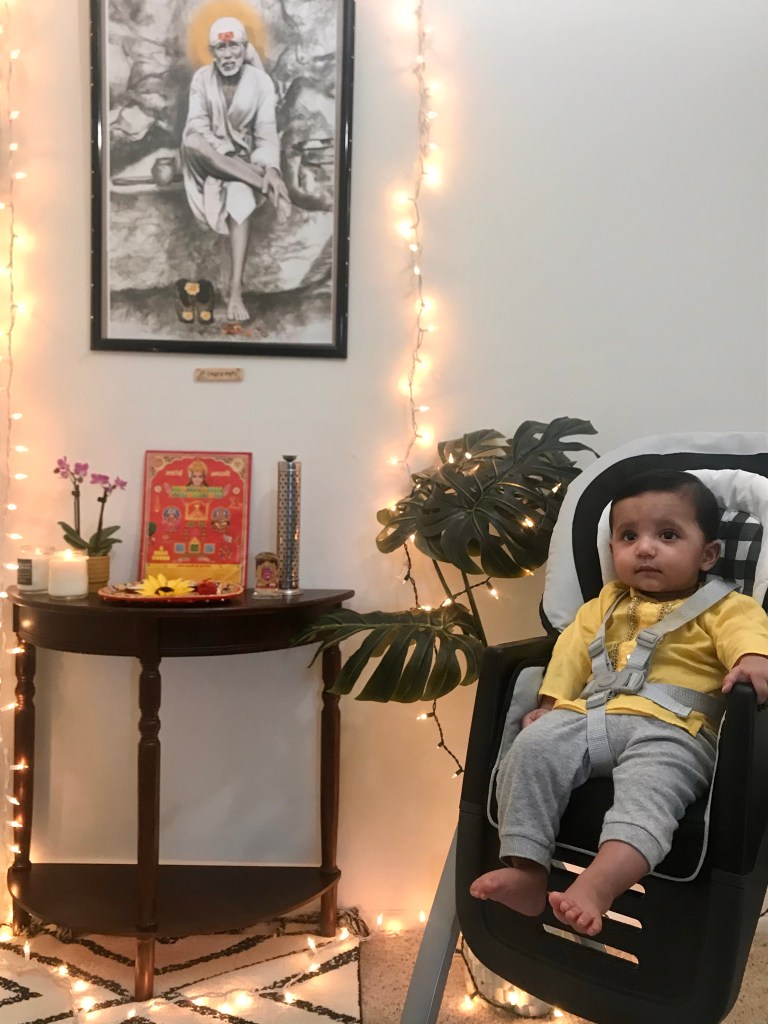
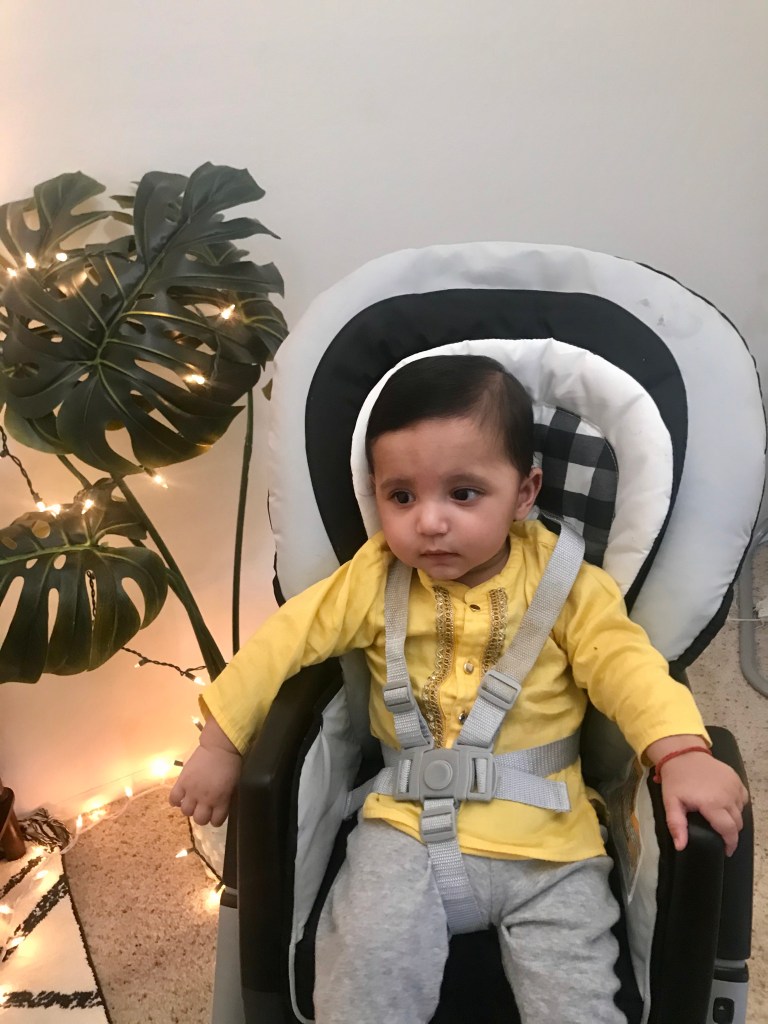
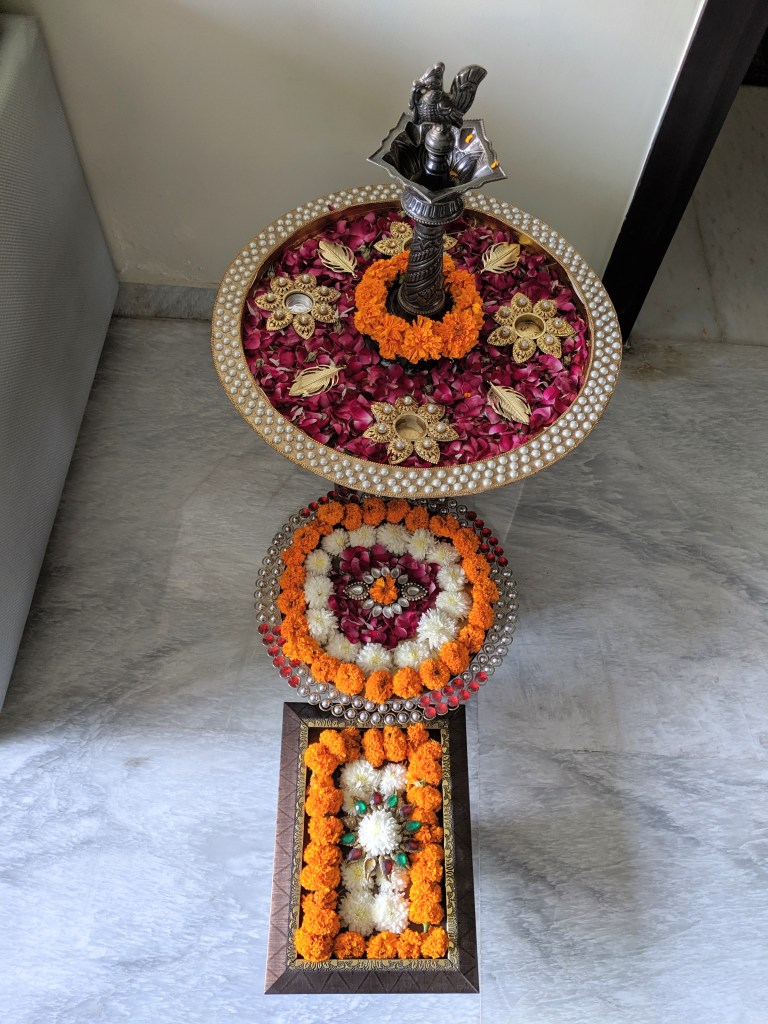
This Diwali is a bit more special for our family as it is my son’s first Diwali. Even though we are miles away from the newly appointed grandparents and extended family, I am happy to be in the company of people eager to share my culture and joy. Here are a few pictures of my handsome boy dressed in a traditional kurta next to the little setup I have at home for performing pooja on Diwali night.
This Diwali even though most of us are distanced from our loved ones, united we pray for good health, peace, and joy for all beings (“Sarve Jana Sukhino Bhavantu” translates to “Let the entire world be happy”.).
Wishing you all an incredibly happy Diwali from my family to yours.
Diwali is the festival of lights. It symbolizes the triumph of good over evil and the homecoming of the triumphant Lord Ram after 14 years in exile. As evil is warded off, there becomes more room for light in life. So, it is also the day we hold prayers to invite Goddess Laxmi and Lord Ganesh into our homes. They are the gods of wealth, prosperity, intellect and wisdom. Culturally, this translates to celebrating new beginnings and reviving old ties with friends and family.
Diwali prep always began a couple of weeks in advance with a thorough cleaning of our home—picture spring cleaning on steroids. When my sister and I were little, this was also the time when mom would find all the things we’d broken and hidden away in dark corners 😀 Once the house was spotless, we’d string up fairy lights at the entrance and balcony of our 8th floor apartment. It is an incredible sight to see every balcony glimmering in multi-colored lights as far as the eye can see. The fun part, of course, was when we went shopping for new clothes, decorations and presents. We’d know Diwali was close because boxes of sweets, chocolates, dried fruits sent as tokens of well wishes by family friends would start arriving in droves. The week before Diwali was spent visiting with friends, eating the most decadent dishes and trying our hand at various card games.
Diwali day was usually spent with close family, decorating all day and eating all night. The morning always started with running over to the flower shop to get fresh flowers. We’d draw rangolis at the entrance of the home and set out a few hundred dias or tea lights all around the house. A rangoli is an art form where patterns are drawn on the floor with colored powder, paint and flowers. As the sun started to set, we’d get decked up in our traditional garb and my grandma would hold a small prayer for Laxmi and Ganesh. Then, we’d walk around the house lighting all the dias (tee lights) and putting out sweets and snacks for company. My memories of the rest of the evening are just of rapturous conversation against a sky lit up with fireworks.
I moved to the States back in 2005 and while I’m lucky enough to go home every year, it is seldom for Diwali. But, I’ve managed to continue celebrating Diwali in one way or another with Indian communities wherever I happen to be. For those who are trying to imagine what the festival is like, picture the feeling of Thanksgiving and Christmas wrapped in the colors of spring and fall.
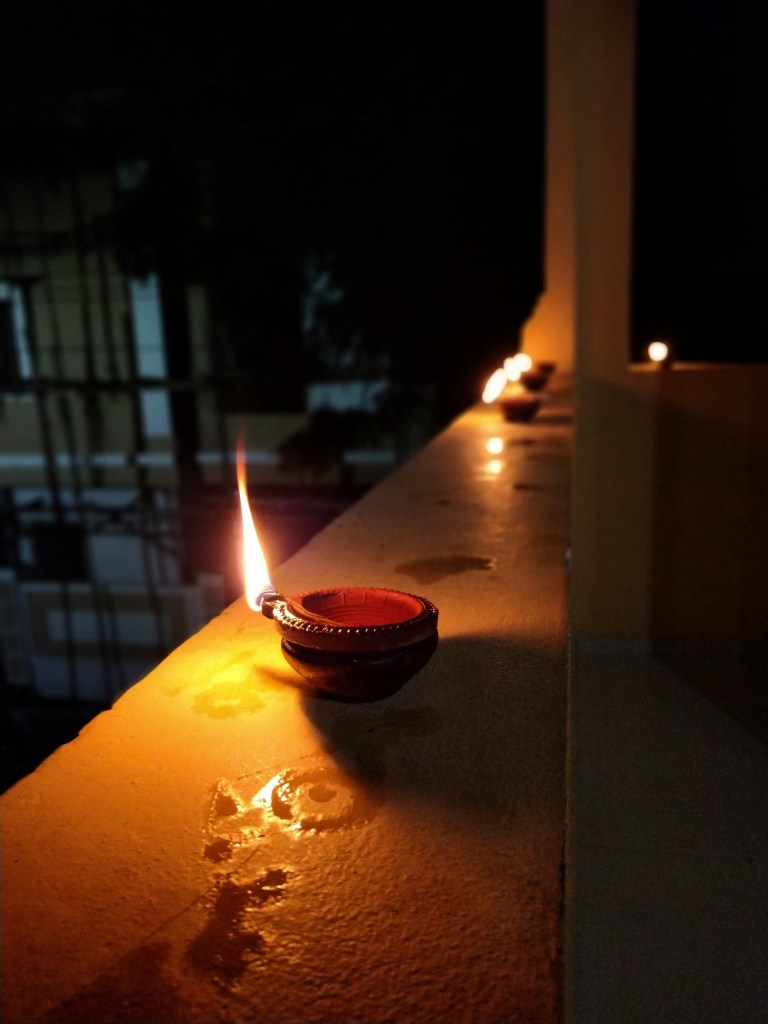
Diwali or Deepavali (as called in the southern part of India) – the festival of lights has all the charm, grandeur and is one of the most gloriously celebrated of all Indian festivals. It is celebrated on the new moon day (Kartika Amavasya) when there is supreme darkness everywhere which is why the whole of India transcends into a land of myriad lamps. The presence of light means the non- existence of darkness and evil forces. So diyas (earthen lamps) are lit in every corner of the house to weaken the negative energy. While people will be wearing new clothes, buying lanterns and other decors for the home, a big part of the Festival of Lights is lighting diyas.
At my home, festivals are always celebrated with lots of food with family and friends. Diwali was a little more special than the other festivals. The day was filled with tons of excitement and energy. While the afternoons were spent overeating all the delicious food and chatting; in the evenings we would light dozens of diyas often making a little competition of it with our neighbors to see whose house had more. This was one of the little joys of Diwali.
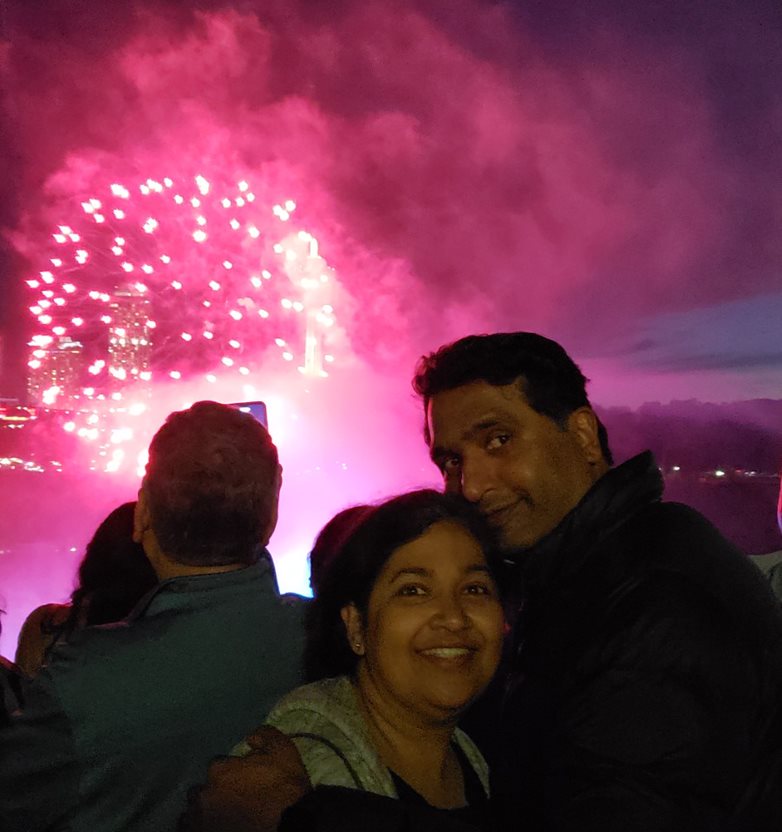
And then, of course, the much-awaited part of the festival – the fireworks. We would light piles of firecrackers, lighting up our driveways, and the skies with showers of sparkles. As a child, I remember those very young days where I used to load my Patakha gun (toy-gun) with the cracker reels and spent the whole week of Diwali firing it and scaring my sisters with it.
As years went by, we stopped burning firecrackers realizing its social impact and the dangerously increasing pollutions levels on the environment and animals, especially on this day.
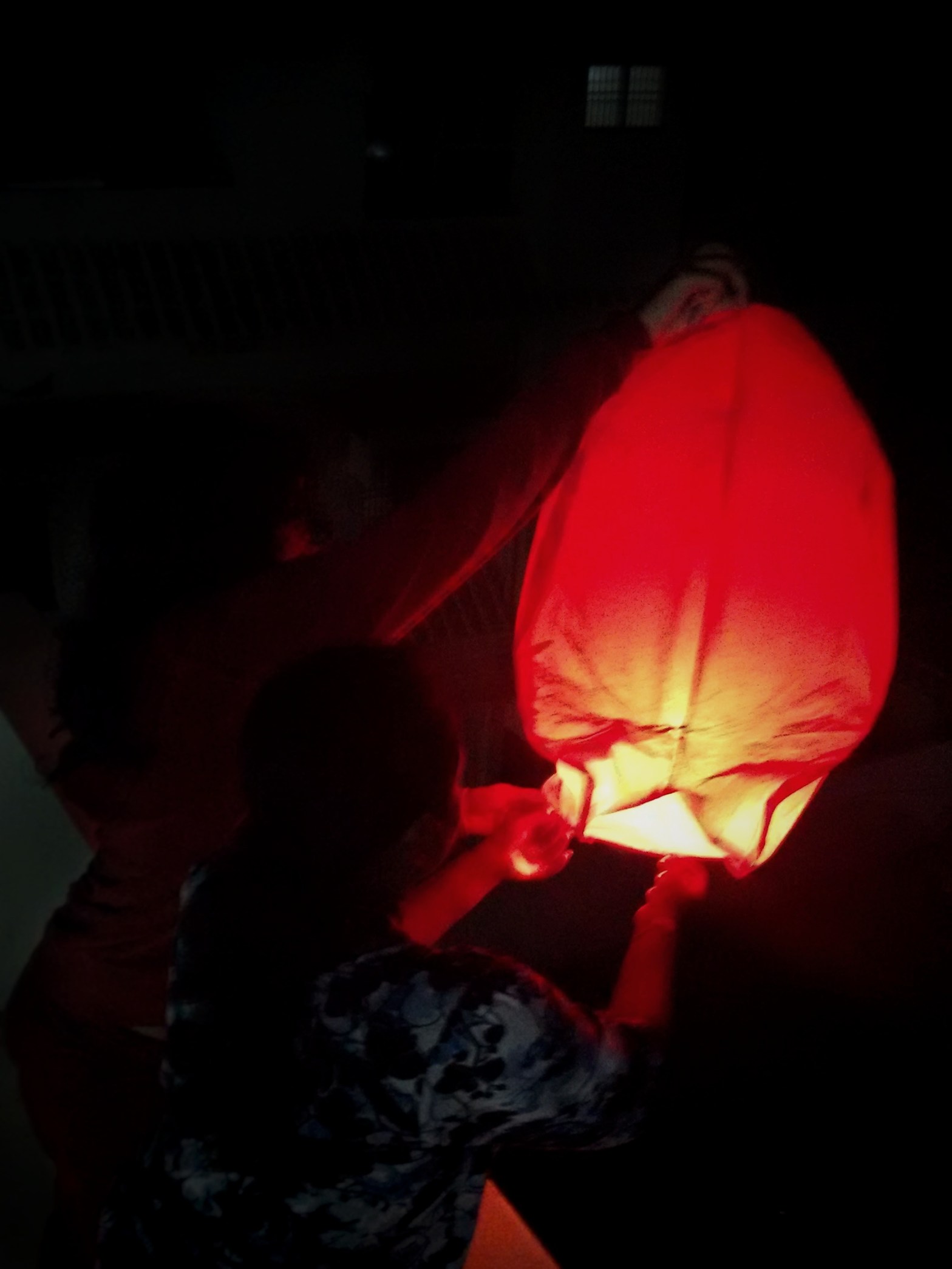
We decided to let go of all the usual celebration ways and just enjoyed the festival by lighting diyas and spending more quality time with family at home. Since that time we celebrated Diwali by lighting sky lanterns instead of burning firecrackers. Making a wish while the lantern flew up and above in the sky; in the silence of it all, I felt the true essence of the festival.
It is perhaps in our best interest to let go of certain traditions and embrace the change, no matter how hard it may feel. And there are some traditions we should hold on to, at least so long as they continue to make sense.
While traditions are meant to stay the same, I have learnt that the traditions must evolve and change with the times.
Reminiscing through my last few Diwalis at home, what I miss the most is being with family and celebrating with them. Being away from home and with all the nostalgia I am flooded with, I try to recreate a little of those experiences. I call my mom to find out the festive recipes and try cooking the same way though it rarely comes close to that taste of mom-made food. But anything was never quite the same so far away from home.
What I was missing wasn’t the toy gun or the firecrackers, or the new clothes. It was the shared joy between friends & family; it was having lunch together on our dining table and spending time in the company of loved ones. It was that feeling that I am nostalgic for, especially during festivals. This Diwali again, I will miss my family so much. I hope to see them soon.
Whether you are celebrating a happy silent Diwali, or one echoing with the sounds of firecrackers and laughter, I hope that it is a joyous one, filled with memories of togetherness and love.
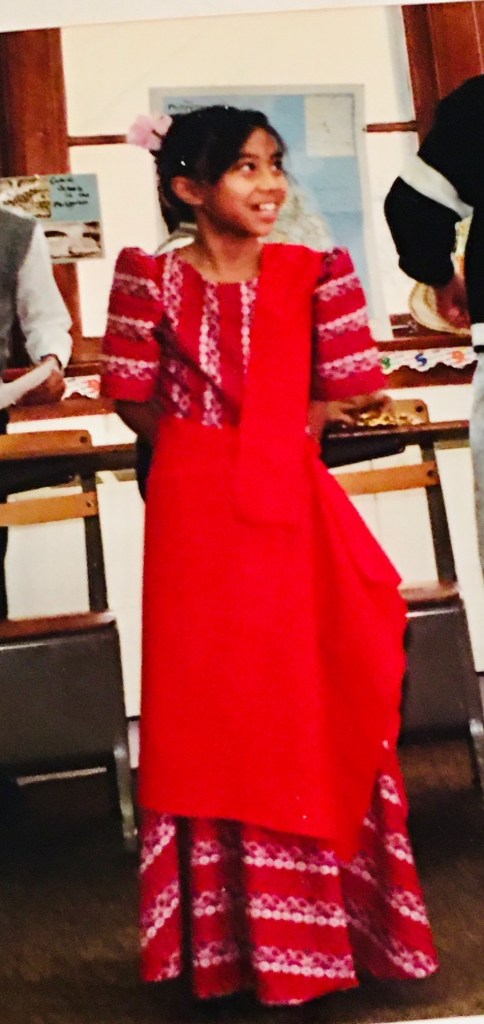
Teaching my kids about Filipino culture – reading books about the Philippines and traditions, my Mom loves to teach the kids phrases and words, using respectful terms for elders (Lola, Lolo, Kuya, Ate, Tita, Tita, Ninong, Ninang), incorporating Filipino toys
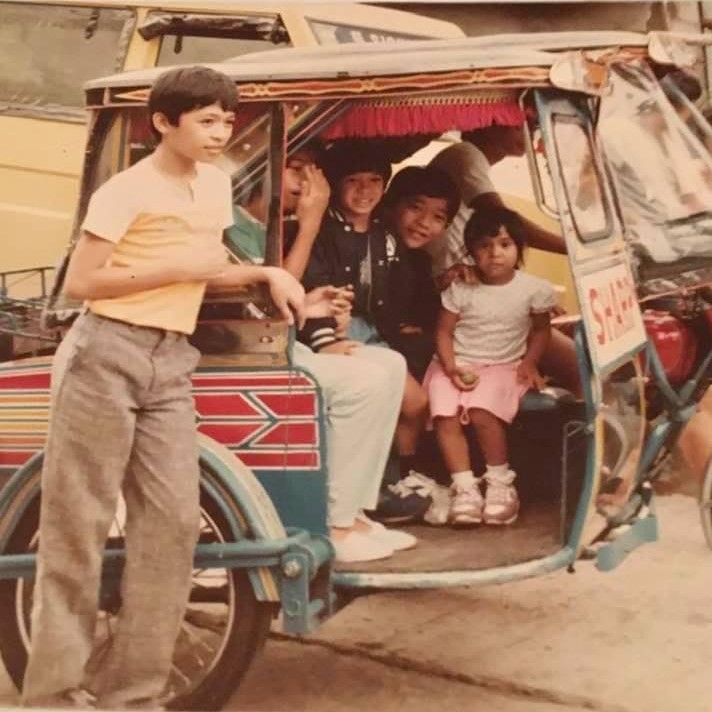
Growing up, I rarely called my brother by his first name…I always called him “Kuya”. I love hearing my youngest son call his older brother “Kuya” too – all the kids at their preschool know who the Kuya is 😉
Dance. It has been a long time since I’ve danced any traditional Filipino dances but I am so happy I had the opportunity to learn some – Tinikling, Pandanggo sa Ilaw, Singkil, Binasuan, Carinosa
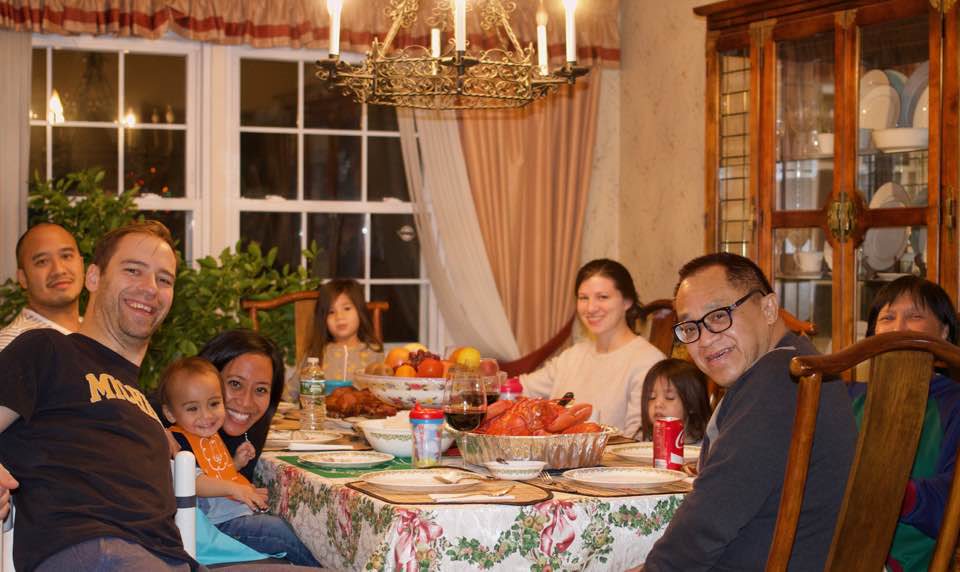
By far, my favorite way to celebrate my culture is to eat! I love to make Filipino food but can’t get enough of my Mom’s delicious cooking – adobo, pancit, lumpia, turon, sinigang, kaldereta, arroz caldo, kare-kare, lechon, leche flan, cassava cake – I could go on forever! Growing up, our parents always had an open door to friends and family and the first thing people would get asked when they would come over is, “Did you eat?” Life is busy with a 3 year old and a 5 year old but I too LOVE to feed people when I can, looking forward to making a feast for friends when it is safe to gather again.
At Christmas time, my Dad loved parol decorations. The kids and I plan to make some for this coming Christmas.
Do you have favorite recipes, playlists, or family traditions that you like to incorporate throughout the month?
Not necessarily through the month but I have so many happy memories of having a noche buena at midnight on Christmas & New Year’s Day. Growing up, my Dad would do a thorough cleaning of the house while my Mom cooked up a delicious meal for our family to eat at midnight. On Christmas, after we ate, we would open all of our presents. Right now, we do this a little earlier with the kids but when they can make it to midnight, we’ll be staying true to this tradition!
Influential Filipinx Leaders/Celebrities
Growing up, I didn’t see many Filipinos on tv or in movies, hear them on the radio or see them in magazines. Once I finally did (Lea Salonga, apl.de.ap), it was so inspirational and comforting to see Filipinos represented.
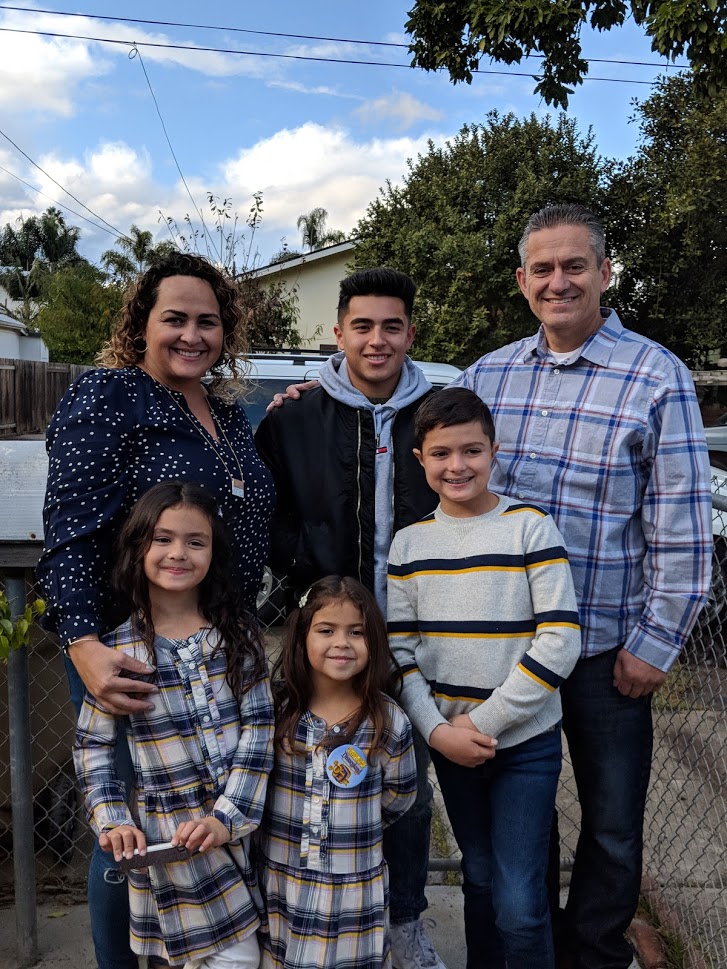
How amazing it is that I work for a company who is striving to be a more diverse and inclusive company! I am lucky and glad to know that Deckers celebrates Latinx Heritage Month. I am a Latina who is so proud of where I come from and who I am. Life has always thrown so many challenges at me, but I continue to persevere, live by core values, and look forward to sharing my Mexican culture with my own kids.
One of my favorite things about being Latina is the celebrations. I love how we look for any reason to get together and celebrate. From holidays like Easter and Christmas, to Baptisms and First Communions, to any day just because we want to get together and have a good time. Of course, there is always amazing Mexican food, good Tequila, Mexican music, dancing, tons of kids running around playing and a lot of laughing.
Another thing I love about being a Latina is our culture. Although I didn’t appreciate it as much when I was a kid, my parents always taught me to be proud of being Mexican. They made sure we didn’t lose speaking our native language, Spanish. The gift of knowing another language opened our world. When we would go to Mexico, we were able to understand and enjoy our extended family. It has allowed me to appreciate our music and family traditions. I love Mexican sayings or “dichos”. Dichos don’t translate well so it’s always fun to be around other Mexican or Latinos that can laugh with you.
Hard work and a good education were engrained in me since I was little. My parents only got through middle school and then had to work to help their families. They showed us that through hard work and a little sacrifice, you can achieve so many things. My parents were able to purchase a home and help send my sister and me to college. I wanted to make my parents proud. My college graduation was just as much theirs as it was mine.
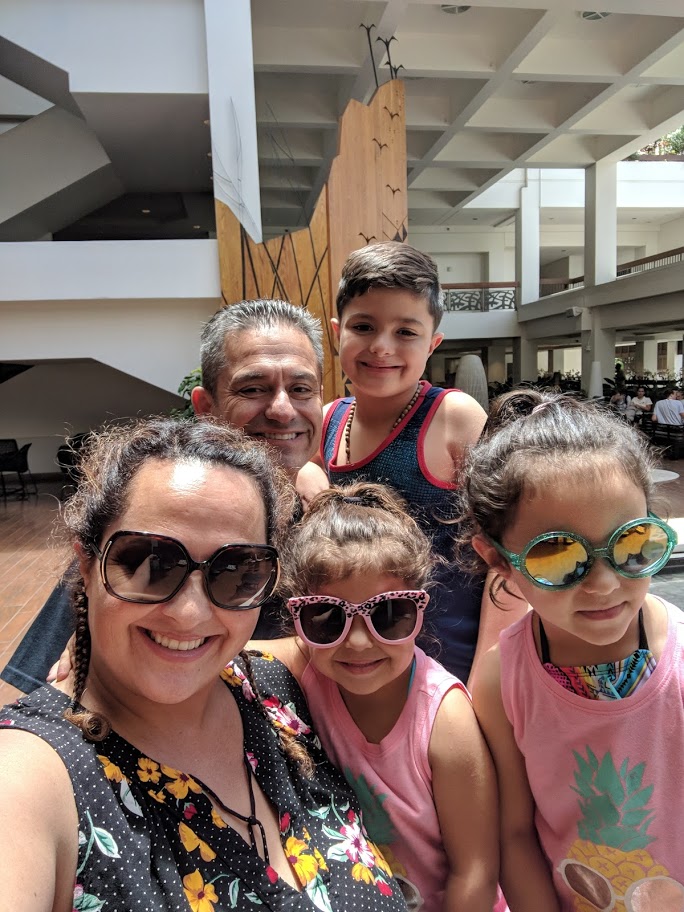
And finally, at the center of everything, there is family. Family is at the center of everything we do and live for. It takes a village to raise a family. That saying is very true for Latinas. We are raised in families with a lot of love and who are always there for us. Grandparents, aunts, cousins, and extended family have been and continue to be involved in my life. Now that I have my own family, I rely on my family to help me raise my own family and be there for me when I need them. I have 3 kids and have a child with medical needs. When my daughter received a kidney transplant back in January, I can’t even imagine how I would have managed it all on my own without everyone’s help. My family all stepped in with prayers and helped me take care of my other 2 children while I had to be at CHLA with my daughter. This is what I love most about our family. In good times, and most importantly the tough times, everyone comes together to help and lift you up.
Diversity is beautiful and essential in all aspects of our lives. In a very divisive political time, I think being Latina and understanding different worlds, I respect that we may not all be the same or think the same, but it has taught me to be respectful of our differences. This is how we make a better workplace and a kinder world.
My name is Karen Quintana and my story began back in 1987 in beautiful Los Angeles, California. My father, a recent immigrant from El Salvador, and my mother, a recent immigrant from Guatemala, had just welcomed me into this world. They had both left their home countries to escape the civil war that went on for years in Central America. And like many others that come here, were in search of the many opportunities the U.S. had to offer.
Growing up my parents would always tell me stories about “cuando yo era niña” or “cuando yo era niño” – you know those “when I was a kid” stories parents tell their children. My dad’s stories were always filled with the many jobs he had as a child. My father had to stop going to school at a very young age to help support him and his mom as the “man” of the house. My mother on the other hand, had many stories of helping raise her siblings (she was 1 of 12 children). She also had to give up the opportunity of going to school in order to help at home. They shared these stories as motivators for me and would always emphasize how important education was so that one day I would not need to work as hard as they did.
Fast forward to today and their eyes gleam with joy at my accomplishments. They look at me as living proof that the American Dream exists – you know college graduate, married, 2.5 kids (does our dog count as the .5 kid?), and homeowners. They tell me how proud they are of me and always say “sigue adelante, mija!” But really, I reflect on my parents’ stories and cannot express how proud I am of them.
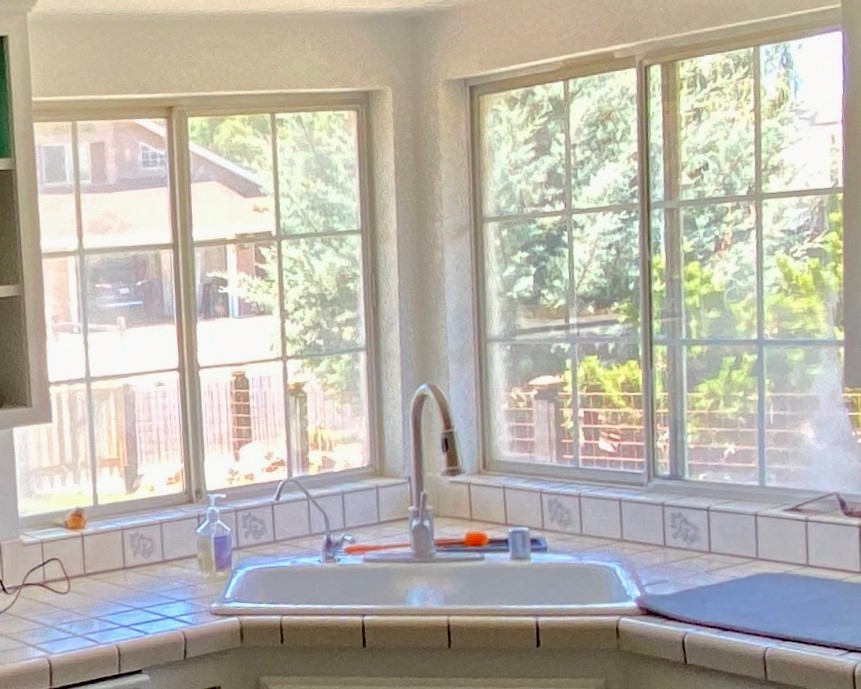
Kitchen “before” photo
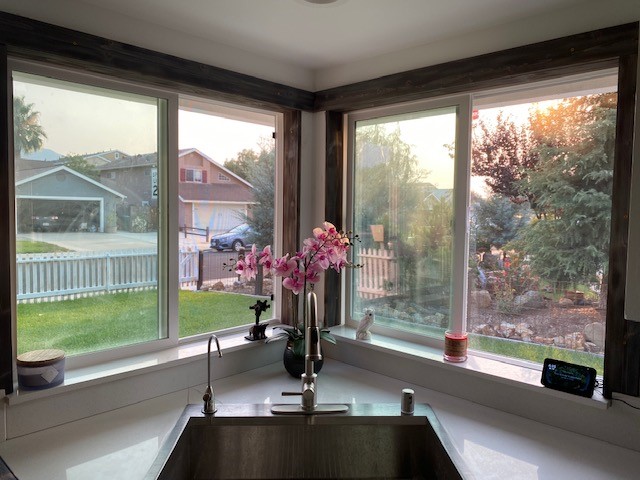
Kitchen remodel done by my dad
My father is the king of DIY. He can literally do ANYTHING. That late 1980’s fixer upper we bought; he’s done most of the remodeling. Lighting, plumbing, landscape, – you name it, he can do it. Need a mechanic? He’s your guy. He’s a man of many talents and a man with a creative mind. He’s truly an artist.
Then there’s my mom, who is my very own personal doctor. I need some remedy to cure something, she will tell me what I need to do or take. Did I mention that she is also a chef? Because no one and I mean no one beats my mom’s cooking, although one of my Tia’s comes close but don’t tell her I said that. She always makes us savory dishes from her country and is so talented that has also picked up how to cook Salvadorian dishes and Peruvian dishes (my husband is Peruvian.) I mean really, she can cook anything. However, don’t ask her for a recipe because one thing I have learned is that there’s no measuring tools in her kitchen, it’s all by feeling and tasting.
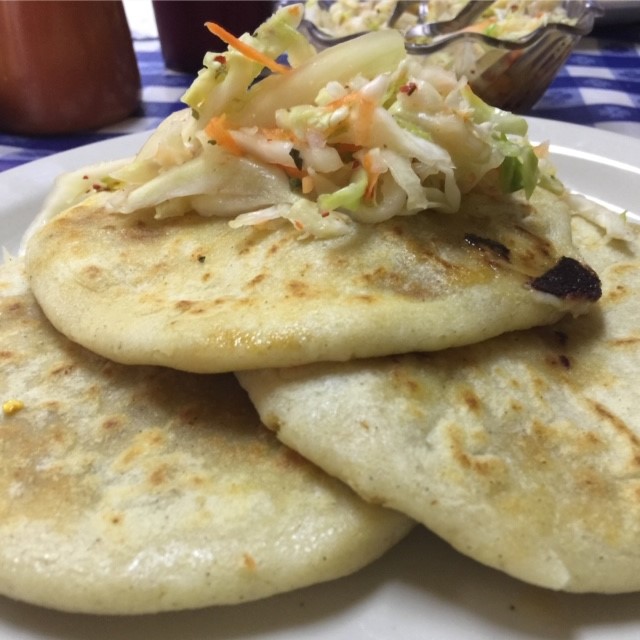
Pupusas
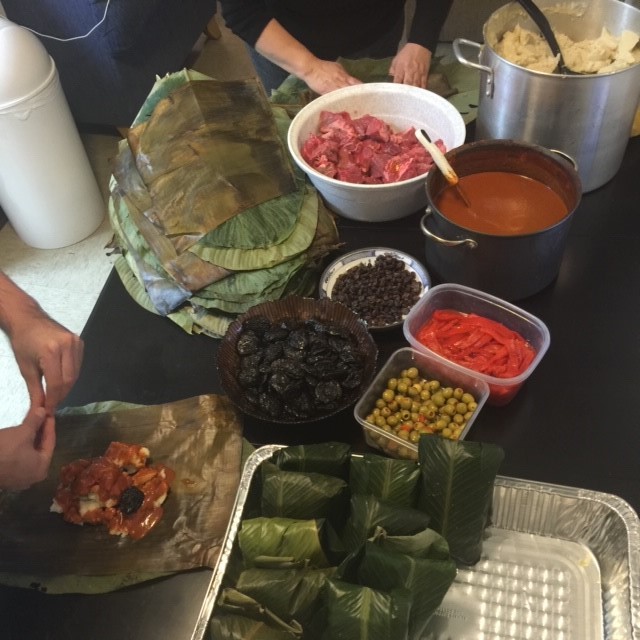
Guatamalan Tamales
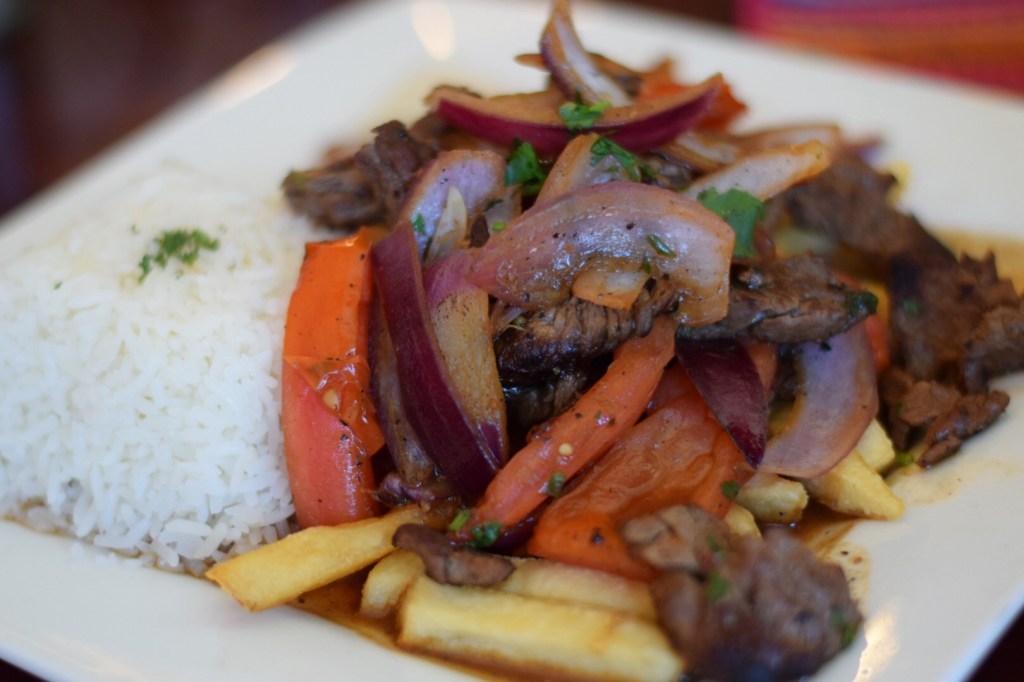
Lomo Saltado – Peruvian dish my family makes
The most important lessons I have ever learned were from my parents. They taught me the meaning of hard work, they taught me the importance of family, and they taught me love. Their experiences are part of my history, my identity. I am forever grateful for their lessons, as they have helped shaped the wife, mother, and woman I am today.
My name is Tom Garcia (he/him/his) and I’m proudly Mexican-American.
A quick story about my background: my parents met in Mexico in the late 60’s when my dad (Guillermo) was in medical school in Mexico City. He was 21 and spoke no English when he met my mom (Paddy), who was visiting from Pennsylvania. I was born a few years later at a clinic in Salamanca, Guanajuato when my parents were living in Irapuato, as my dad was doing his social service after graduating. My parents ultimately moved to Harrisburg, PA in the mid-70s to be near my mom’s family.
My dad grew up in a very humble household where hard work, reading and a huge emphasis on continued learning were a focus. As a teenager, he became interested in medicine and became a frequent volunteer at the hospital in Mexico City. As the story goes, he showed up to the hospital at 16 years old asking to volunteer, a doctor told him to put on a white lab coat, and the next thing he knew he was delivering babies – apparently there was a staff shortage!
Though I grew up in PA, Mexico and my Mexican heritage were never far away. We frequently visited my dad’s side of the family in Irapuato, Ebano, Mante, Salamanca, Guanajuato, Mexico City, and with many, many trips to Tampico. As a prickly teenager, I sometimes wondered why we only traveled to Mexico, but I will forever be thankful to my parents for ensuring that my Mexican family and heritage became such an important part of my life.
Growing up, we were the only Mexican-Americans in our community, which was challenging at times, but we were very fortunate that my grandparents, aunts, uncles and cousins likewise came to visit us as much as they did. I even had a live-in tennis coach as a teenager when my Uncle Mundo, who taught at a local tennis club, lived with us for a few years.
As I reflect on all of the ways that my heritage has impacted me, I think the biggest impact is the value of family and hard work. This is something that my wife and I are striving to instill in our teenage kids.
With my dad moving back to Mexico permanently a few years ago, we make sure to visit him as much as possible and feel fortunate to be able to spend these visits with extended family as well.
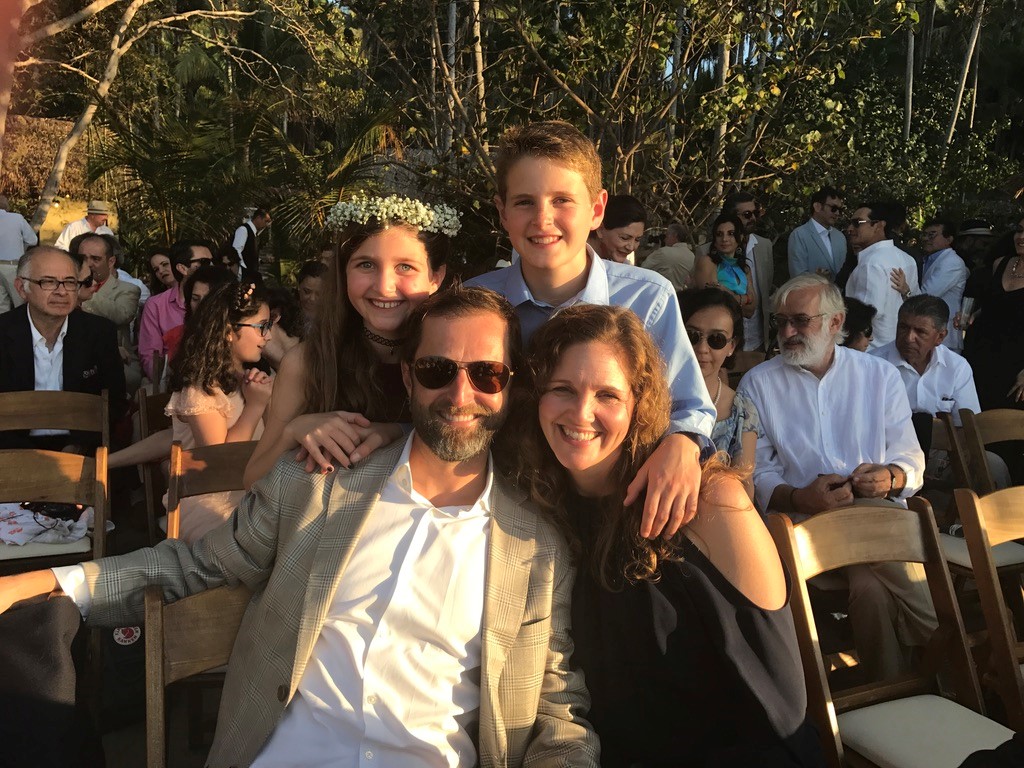
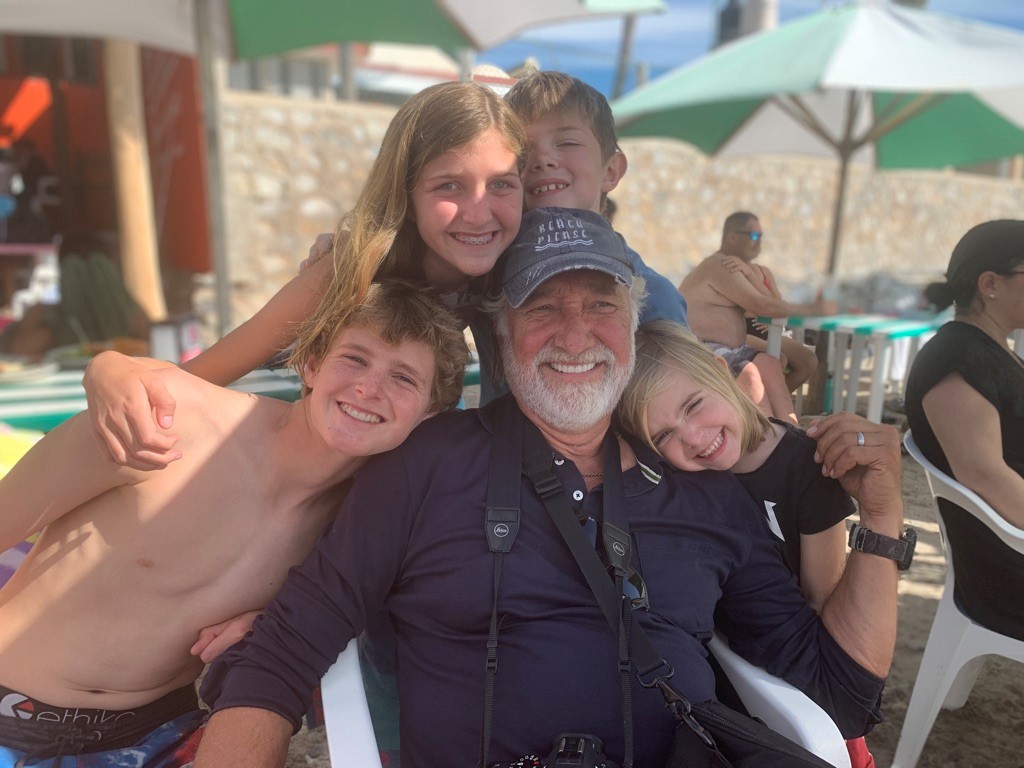
Guillermo with the grandkids for Christmas BreakAirport pickup visiting dad in La Manzanilla, MexicoTom and Guillermo – GolfCousin’s wedding in Nayarit, Mexico
Question: What does this month of reflection mean to you?
Answer: For me, it’s a reminder about the importance of celebrating my culture and ancestors. It’s also a reminder about the importance of being myself and honoring my roots.
Question: Given the pandemic and national reckoning on racial injustice, does celebrating this year take on a new meaning?
Answer: It’s definitely an opportunity to reflect. I also think about how can I show up for other BIPOC in celebrating who they are year-round.
Question: How do you and your family celebrate your heritage?
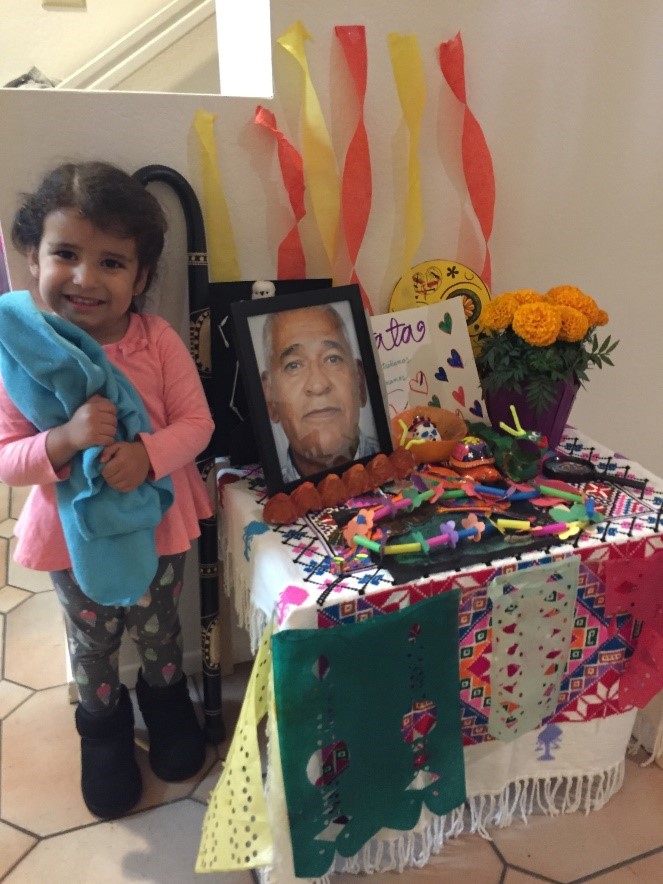
Answer: One way we celebrate our heritage is by honoring family members (and fur family!) who have passed during Dia de los Muertos. This is a tradition that I started with my daughter Luz when she was 7 months old. My father-in-law passed away when Luz was 4 weeks old so honoring his memory is important to us because we want Luz to feel connected to her tata and to know how much he loved her. We create an altar with bright marigold flowers and other ofrendas (offerings). Luz also likes to add her special touch by putting her toys and writing a letter.


 Deckers Careers