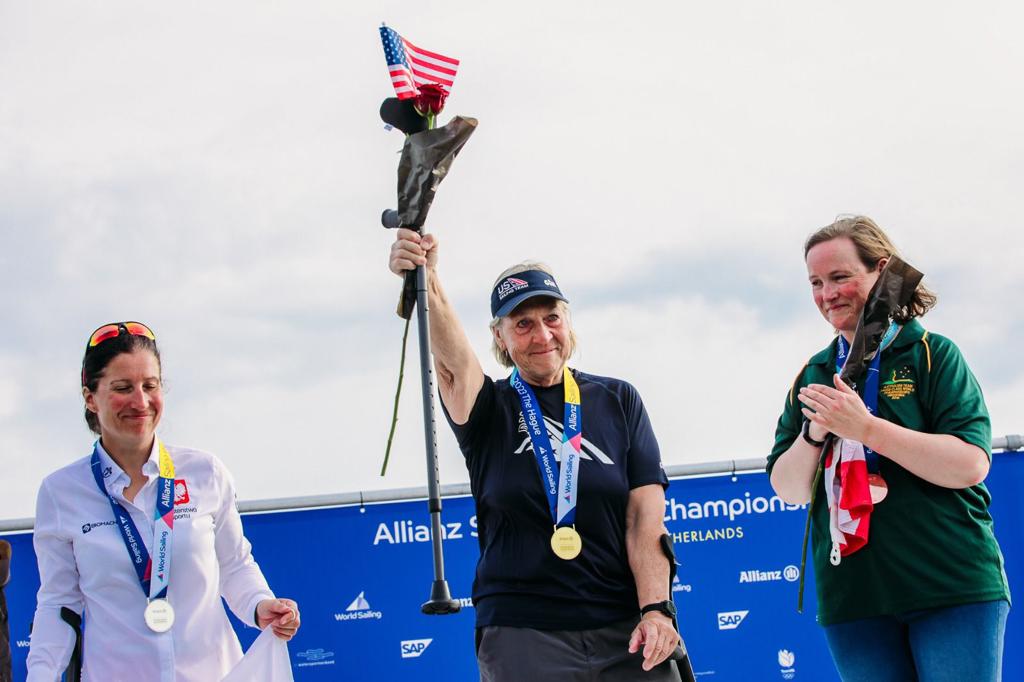
In the world of sailing, Betsy Alison is a legendary figure, a five-time Yachtswoman of the Year, and a Hall of Fame sailing athlete and coach. She recently won gold at the World Championships just nine months after becoming a para-athlete. Last year, Betsy was faced with the daunting challenge of battling cancer, leading to the removal of her Iliac Flange and leaving her with a 1.5-inch leg length discrepancy. She was subsequently connected with HOKA and our Innovation Team (DxLabs) through her good friend and Deckers Brands employee, Christy Evans, in order to create a custom shoe. In this exclusive Q&A session, Betsy shares her inspirational story, shedding light on her incredible journey to recovery and the pivotal role played by Stephen Kass in creating a custom running shoe that not only aided her recovery but also symbolized the spirit of “DO GOOD AND DO GREAT” at the heart of Deckers Brands. Betsy’s story exemplifies how great people can make a great company and how, even in the face of adversity, remarkable individuals can be a catalyst for positive change.
Can you share your journey into sailing, starting from when you first began at the age of 7 to becoming a 5-time Yachtswoman of the Year and a Hall of Fame former sailing athlete and coach?
Sailing was an activity that my parents encouraged us to take part in as kids, for the social aspect and from the point of view that anyone can continue to sail recreationally (or competitively) until you are well into your sunset years. I was a good local sailor from a competitive standpoint but my competitive trajectory really started in college and beyond when I was surrounded by sailors of excellence and found that I had a lot of mentors that helped me to understand the finer points of sailboat racing as well as the ability to technically tune the boat for maximum speed.
You discovered your natural aptitude for sailing while at Tufts University. How did this realization shape your future and lead you to dedicate the last 20+ years to Disabled Sailing?
Like any activity, when you are mentored in a way that maximizes your personal potential and you see marked improvements in performance, the motivation to continue to improve is always there. I think the discipline I learned and applied to my own personal performance on the water was what helped me when I started coaching our US Para sailors with disabilities. My approach was to impart what I knew from rules, tactics, strategy and tuning to the sailors not teaching those things any differently than with able bodied sailors. The way I handled the disability side of things was to try to better understand the impact of the disability on a sailors physical performance and then use/develop adaptations to minimize that impact and maximize the sailor’s potential.
Could you tell us about the challenges you faced after having your Iliac Flange removed and dealing with a 1.5″ leg length discrepancy due to cancer?
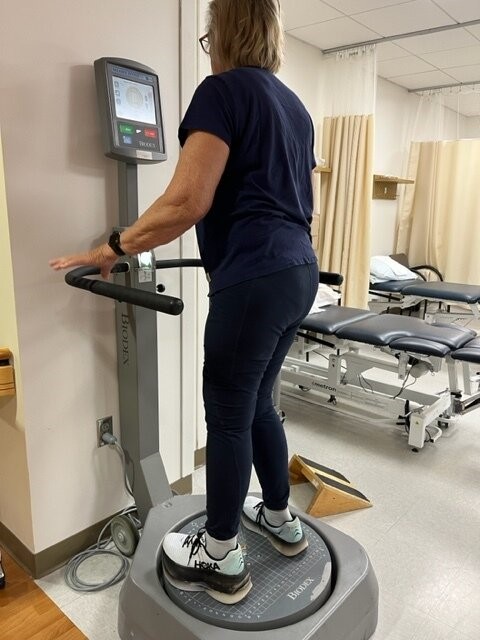
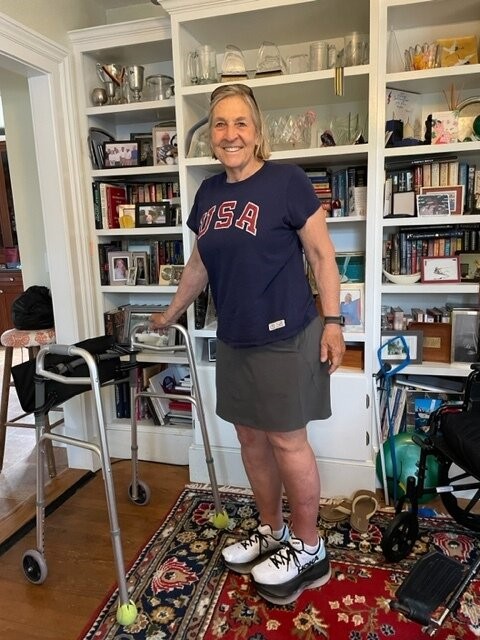
No one ever expects to have cancer knock on their door, and I certainly never expected my physical mobility to be as impacted by the surgery as it has been. The biggest challenge for me has been learning how to walk again and to weight bear on a leg that presents as shorter than the other due to having no structural support in the left hip. My leg sinks up into the pelvic cavity before the acetabulum (socket) and the femur head press into scar tissue and muscle. Once they “nest” into a stable spot, I can weight bear on the leg and then apply a somewhat normal walking gait. I am about 80% of the way to full weight bearing and now walking with forearm crutches for support. The long-term challenge will be how much support I will need permanently to give me some balance stability – my hope is that a walking stick will be the ultimate support mechanism – fingers crossed. When I can equalize the limb discrepancy, my balance and muscular pain in hip and low back improves.
Most shoes designed for such disabilities are typically stiff and heavy, but you were looking for something different. How did you come across the opportunity to work with HOKA and our innovation team (DxLabs) to craft a customized running shoe tailored specifically to your needs?
I became familiar with the HOKA brand through my good friend, Christy Evans, who works for Deckers. She had told me how great the shoes were for her as a runner and how they helped her as an orthotics user. The wide base of the shoe and the softness in the insole for impact was impressive. When Christy came to visit me post-surgery when I was finally able to move home and she saw the limb discrepancy, she went back to Santa Barbara and talked to Stephen Kass about me and the challenges that I was facing. As an athlete in recovery with a major walking challenge, I think I posed an interesting case to take a shot on. I am so grateful that Stephen decided to take a chance on me by creating a sole for the left shoe that balanced my body and allowed me to progress as quickly as I have. My therapists and oncologists have said that I have exceeded all expectations so far – and I am not done yet! The HOKAs have been a godsend.
You’ve been involved in mentoring disabled sailors and coaching the US Disabled Sailing Team. How do you see your experiences influencing and inspiring the next generation of sailors and athletes with disabilities?
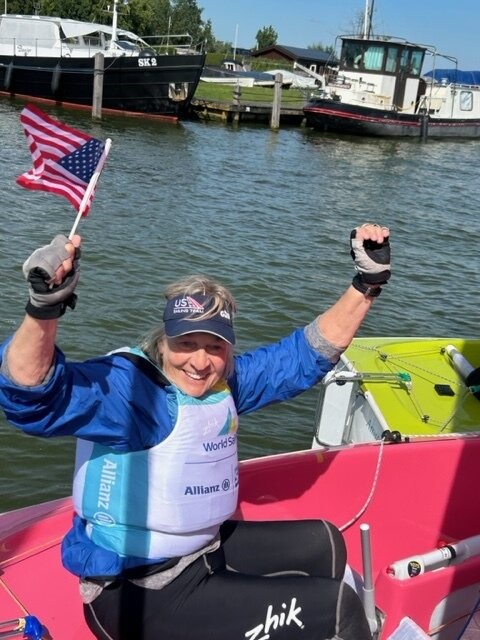
I hope that my journey and recovery can show the next generation of athletes and potential athletes that acquiring a disability doesn’t mean your life is over or that you need to stop doing what you love. Sailing is a sport that anyone can take up, especially for folks with a disability. With the right adaptations and with proper physical training shoreside (with the right shoes and equipment), you can easily leave the disability on the dock and experience a freedom that may not be possible on land. I have always been forward thinking in my sailing career. I am a firm believer that you can do anything until you prove to me that you can’t! Being able to compete in a World Championship 9 months out of surgery having had a hemipelvectomy, missing 90% of my glutes and all of my abductor muscles was an amazing feat – and to win was a bonus!
Can you take us through the process of working with Stephen Kass on designing the adapted running shoes? How did it feel to have someone invest their time and expertise to create something tailored specifically to your needs?
To be honest, my interaction with Stephen was via Christy. She initiated the discussion with Stephen about me as an athlete and friend, describing to him the leg length discrepancy. He indicated that there was a chance that he might be able to help construct a shoe sole that could help level my pelvis. Christy came back to me asking what the actual discrepancy is – and off he went! Not knowing the process of designing and constructing a pair of shoes that would help with my challenge is far beyond my understanding (ask me about sailboat racing and the answer would be different), but I am certain that it takes someone like Stephen with the technical expertise and a curiosity for solving problems who loves a challenge that can and did create a pair of shoes that have definitely changed my life for the better. When a box arrived in the mail and I opened it up, it was like being a little kid at Christmas – finding a present that I could only have dreamed about. I feel so blessed that Stephen took on the challenge and that Christy approached him to see what could be done. I am eternally grateful to both and to the company for allowing Stephen to create a tailor-made pair of HOKAs that are unique, practical and impactful. I cannot tell you how many folks have noticed the shoes and tell me that they are HOKA users, or that the shoes are so cool, or that it is amazing how well they work while looking fantastic!
As you tried on the HOKA shoes for the first time and experienced the difference they made, what emotions and thoughts ran through your mind? Were there any specific moments when you realized how significant these shoes would be in your recovery?
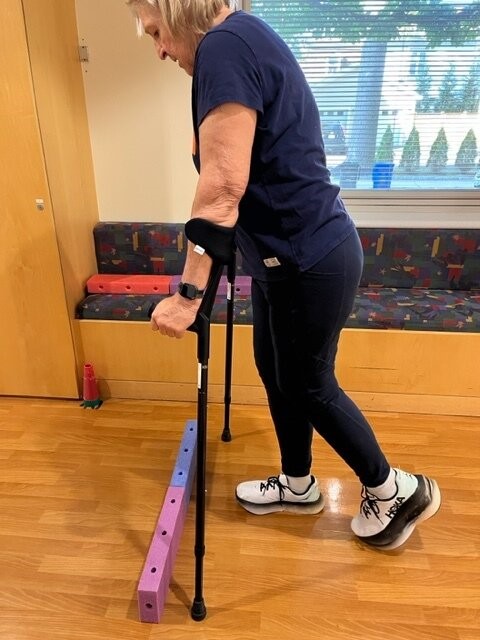
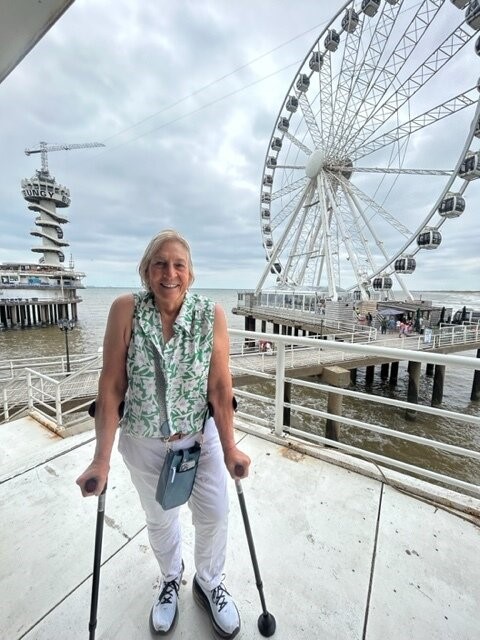
When I put them on for the first time, the immediate observation was “OMG, these shoes are so comfortable and stable.” I had been strictly using lift inserts in my left sneaker which only got me part of the way (maybe ½-3/4”). When I used them in PT the first time, I cried – yes, I do get emotional when it comes to my recovery. I was so happy and so grateful that I had this new tool to help me progress so much faster. Getting used to the height differential in the soles when stepping over obstacles or walking up ramps was challenging at first, but it also forced me to work even harder to engage my hip flexors and other remaining muscles to use proper form to improve my walking gait. From the first time I put the shoes on, I knew they were a game changer. It was the very first time that I really believed that I was going to be able to walk more normally again and that my long-term stretch goal of being able to eventually walk unassisted (with no other support) could be possible. Significant moments: feeling balanced and stable on a Biodex Balance machine where I have to push into the left leg for weight bearing; being able to travel unassisted to Europe and walk relatively long distances to and from the car to the club to go sailing and not being exhausted from it (this contributed to peak performance on the water for me); being able to go out to public functions without having the fear of losing my balance; noticing that the torque on my pubic bone when I walk is reduced, and thus reduces muscle pain and cramping from imbalance.
The adapted running shoes have contributed to your stability and your overall recovery. How has this positive outcome impacted your life and your path to recovery?
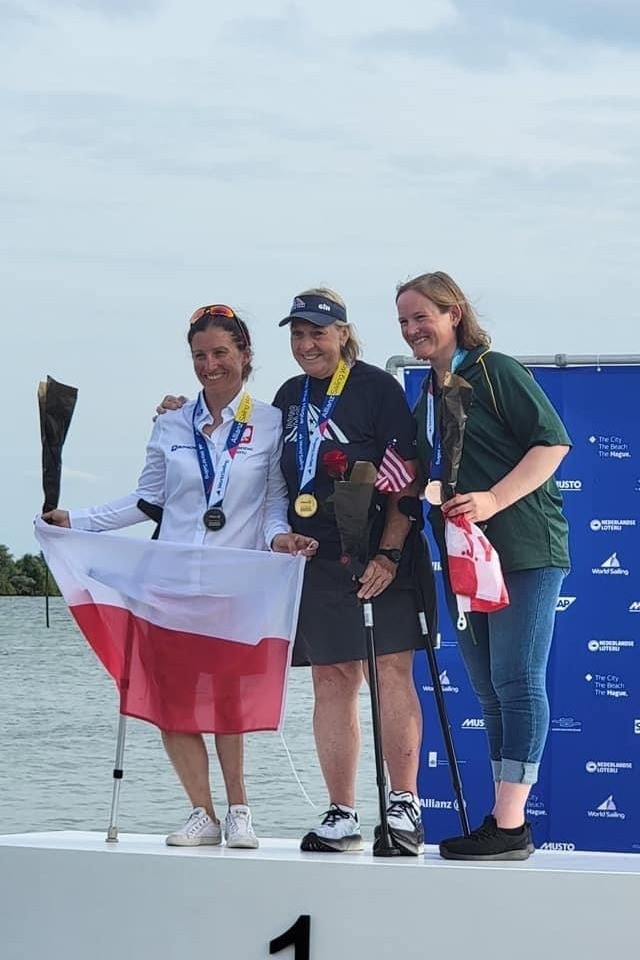
I firmly believe that I would not be where I am today in my recovery without these shoes. There has only been positive impact on my life since receiving these HOKA shoes. Standing on the podium in the Netherlands and being able to stand tall, with one crutch in the air as a World Champion is a tribute to the stability that they impart to my health and wellbeing. Someone asked me what the low points have been for me during this journey – and to be honest, except for some periods of managing a lot of pain, there have been no low points. I have really tried to have a positive outlook and set goals to keep moving forward. I never believed I was going to die either before or during this journey, but having blessings come to me through the support of friends, through the generosity of people in contributions and helping with tasks, and in surprises like the HOKA shoes have made an enormous difference to my progress and recover enabling me to plow forward with a positive attitude.
In closing, is there a special message you would like to share with Stephen and the team about the impact they’ve made on your life and the lives of others facing similar challenges?
Saying “THANK YOU” to the Deckers team may seem so simple, but please know is sincere and so heartfelt. You have made my life better through technology that I could never have dreamed of or expected. To Stephen, you are part-magician, part-technician, part genius – but especially to me, you are an angel beyond belief. My very special thanks to you for accepting the challenge to helping me be a better physical version of myself as I continue to progress along my journey to becoming whole again. I am so grateful to have HOKA along on it with me!
 Deckers Careers